Caramelized Onions
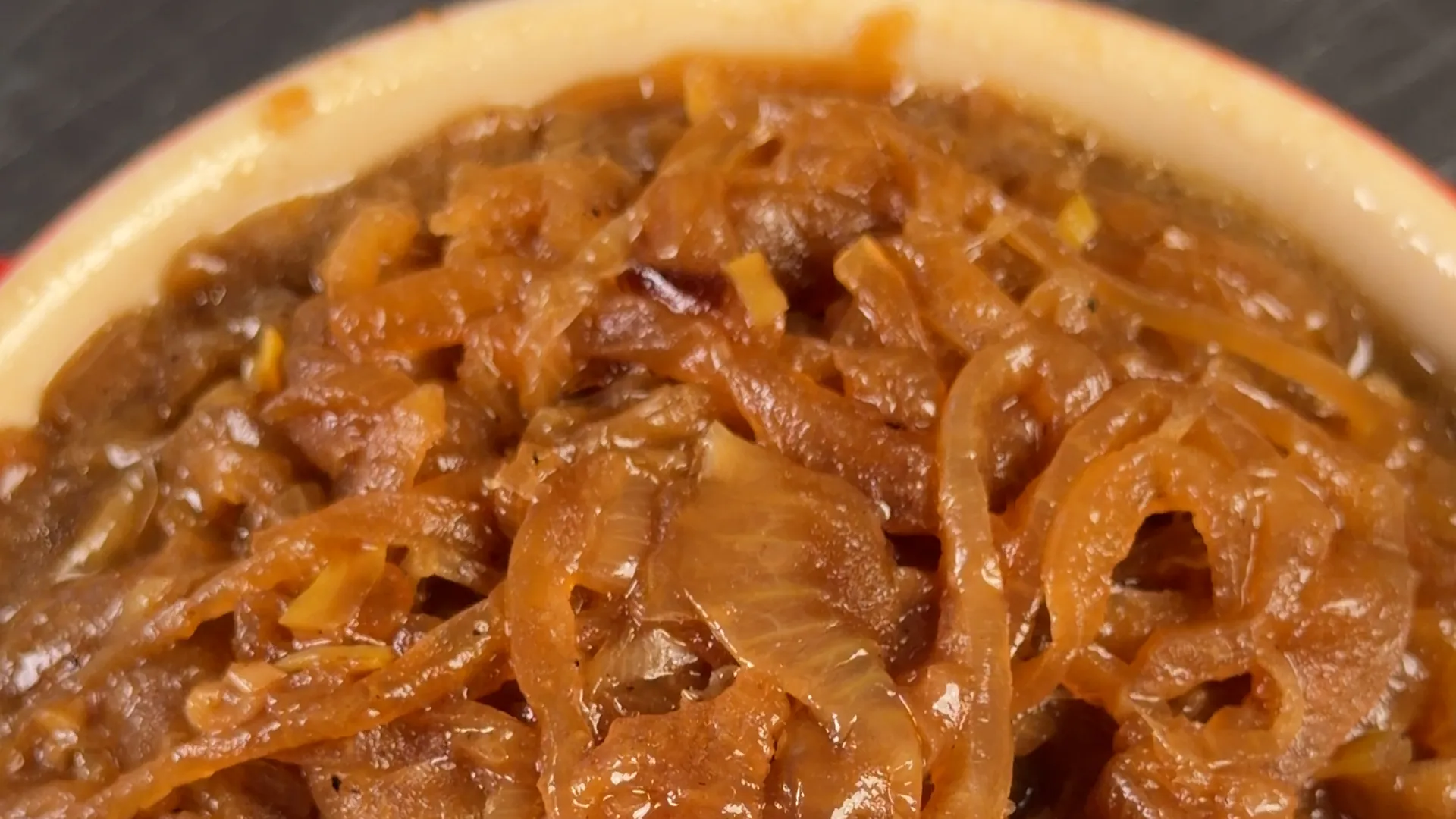
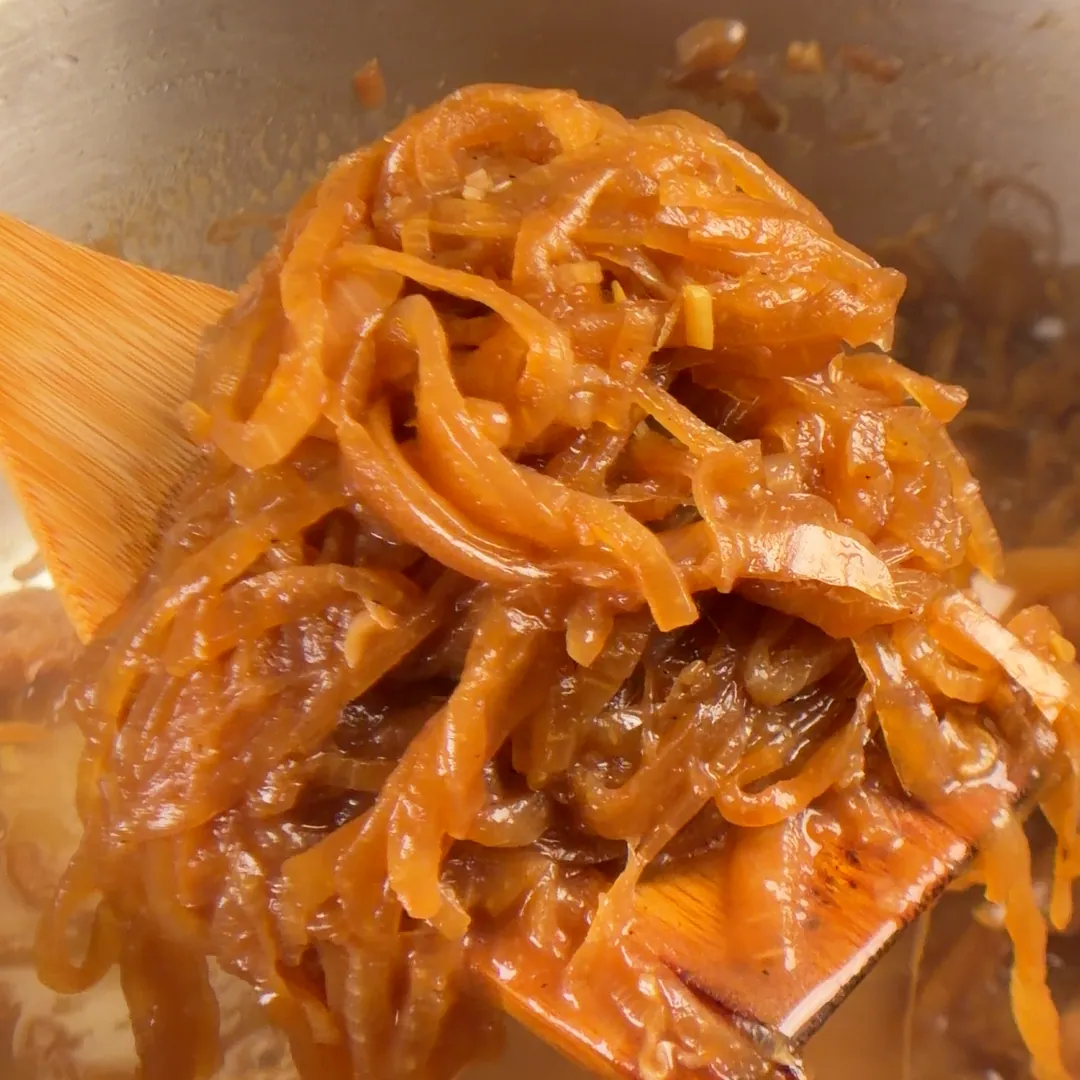
Deeply browned, jammy caramelized onions with under 30 minutes of cook time, instead of the hour-plus that standard recipes take. A microwave-first trick does the heavy lifting.
Some product links are Amazon affiliate links. As an Amazon Associate I earn from qualifying purchases at no extra cost to you.
Every recipe tells you to slowly cook onions for more than an hour to get them jammy, sweet, and deeply caramelized. Low and slow, stirring almost the whole time, waiting for that deep brown color to build. It works, but it eats most of an afternoon.
But with a little science, we can make it much faster. The slow part of caramelizing is breaking the onions down, and a microwave does that fast because it targets the water inside the cells and bursts them open. Ten minutes in the microwave gets you the structural breakdown that an hour of slow stovetop cooking is really after. From there it all goes into the pan, liquid and all, and cooks down on high heat. Every splash of water you add breaks the fibers down further and keeps the bottom from burning, until the onions melt into soft, jammy strands. A spoonful of brown sugar leans into the onion's heavy natural sweetness, a knob of butter makes everything rich and glossy, and a pinch of salt at the end is all it needs.
Halve Against the Grain
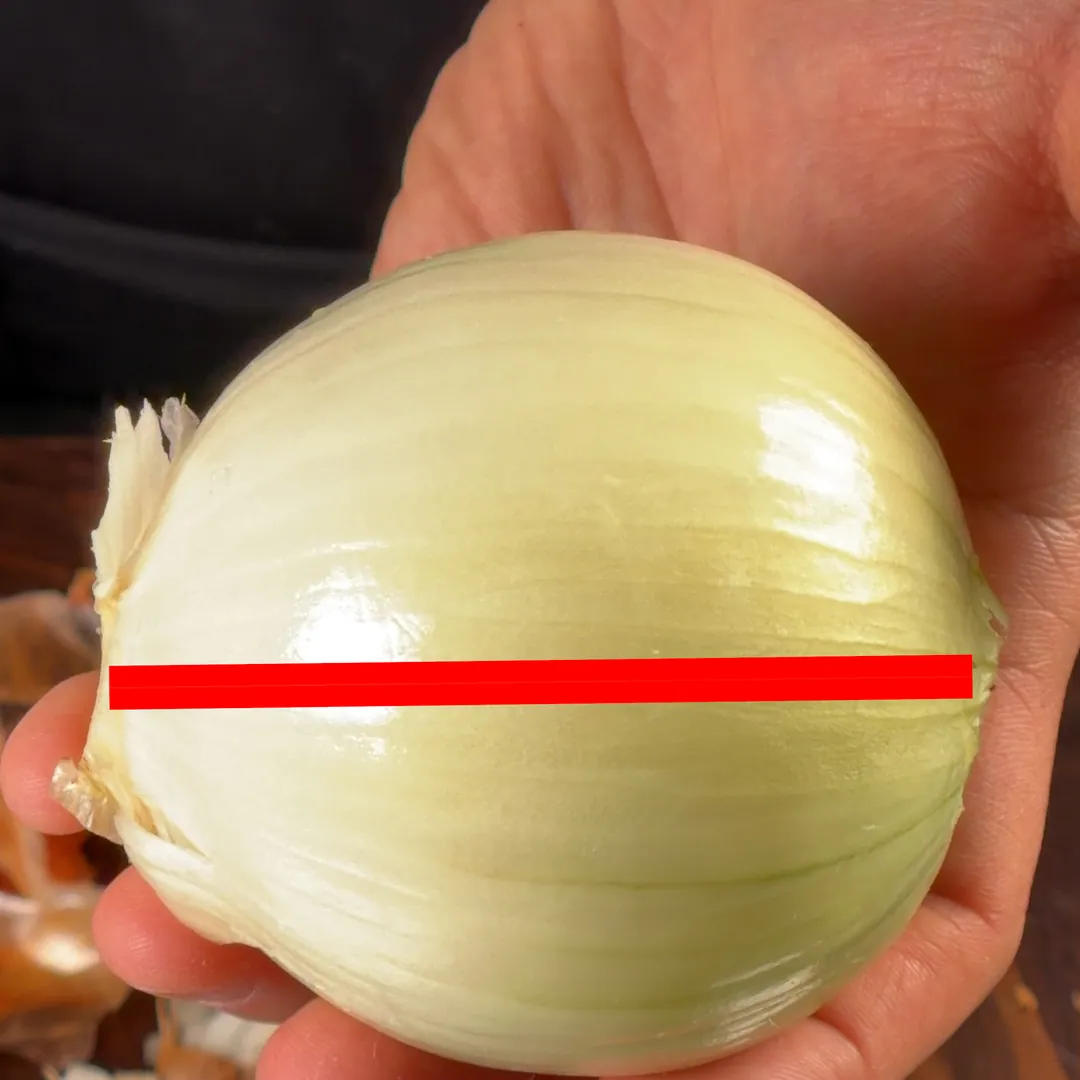
- 01Peel the onions. The grain runs in lines from the root to the top of the onion. You want to cut across it, not with it, which gives you softer strands that break down evenly. The red line in the photo marks the direction of the grain, so make your halving cut perpendicular to it.
Slice Thin Until Translucent
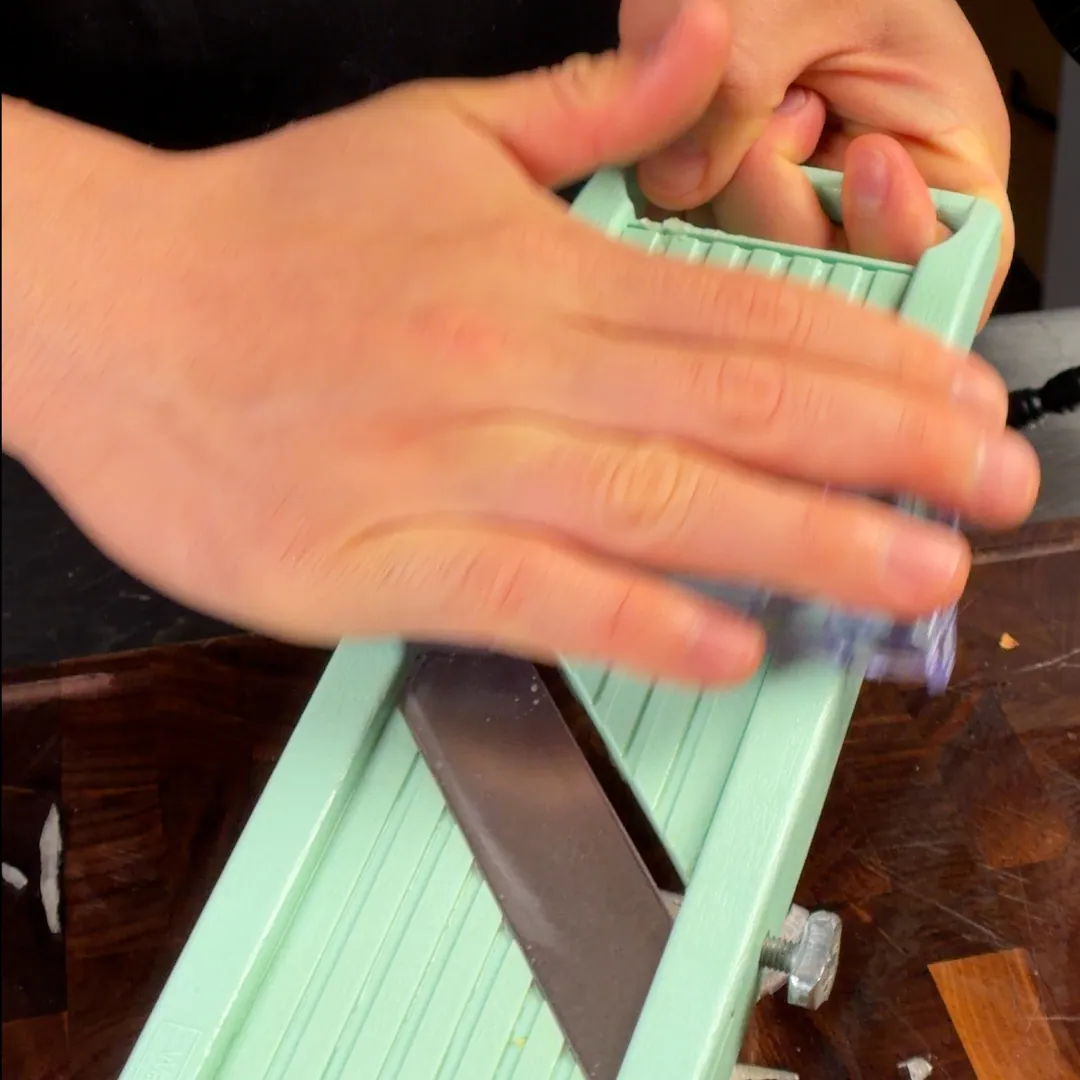
- 02Slice the onion as thin as you can. The thinnest setting on a mandoline is the fast, even way to do it. A knife works too, just go slow and watch your fingers.
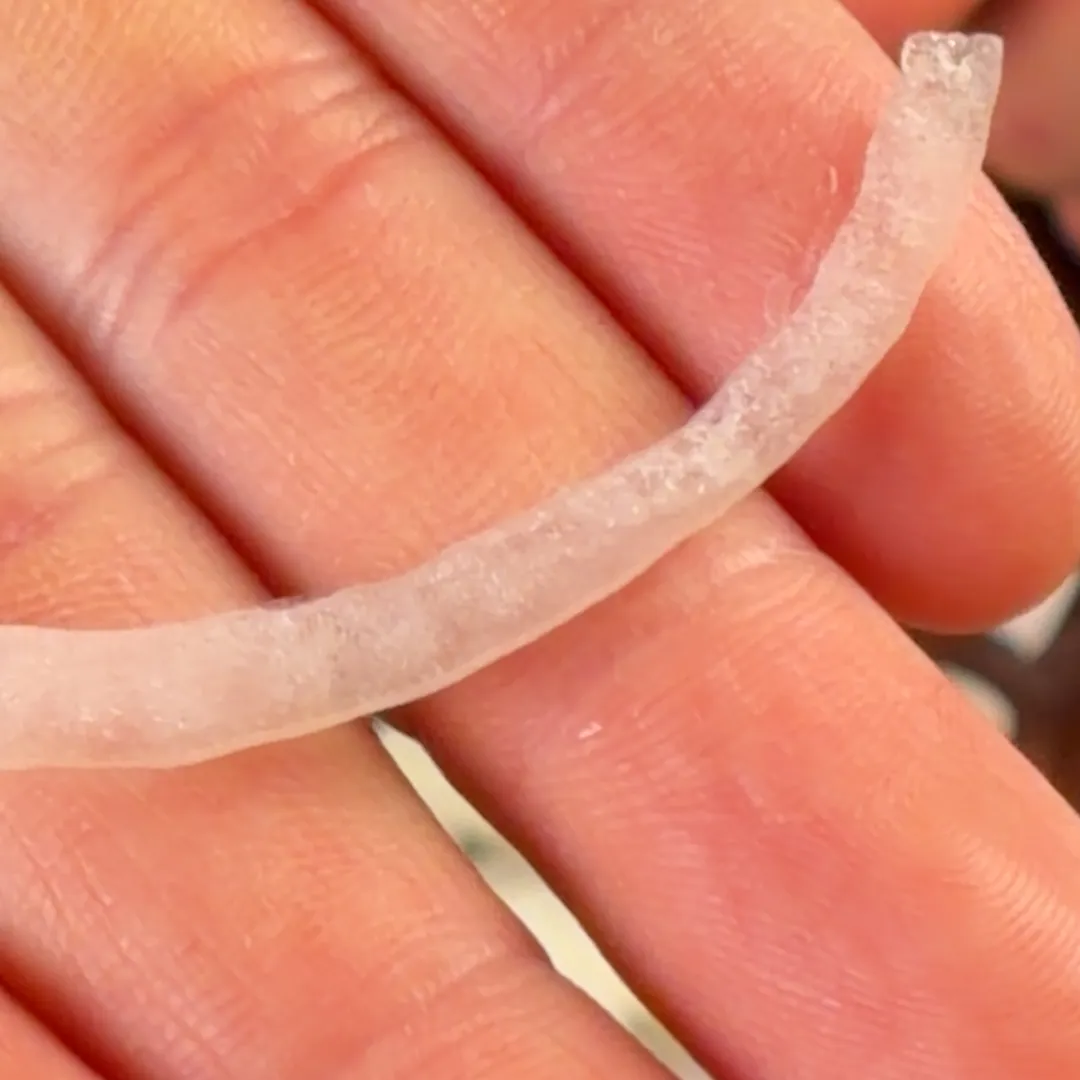
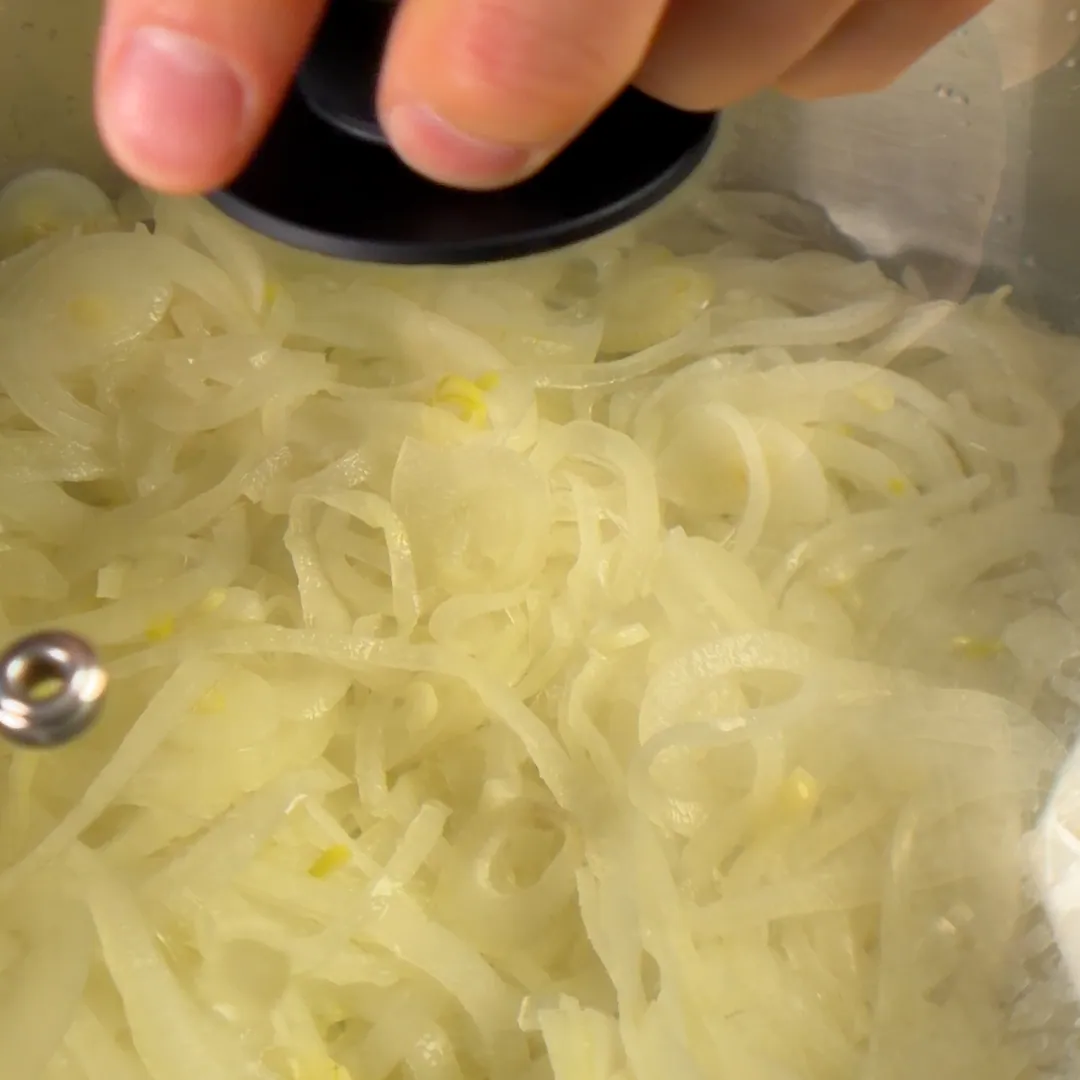
- 03You are aiming for slices this thin, thin enough to be translucent. That is what lets them break down quickly.
Microwave on High
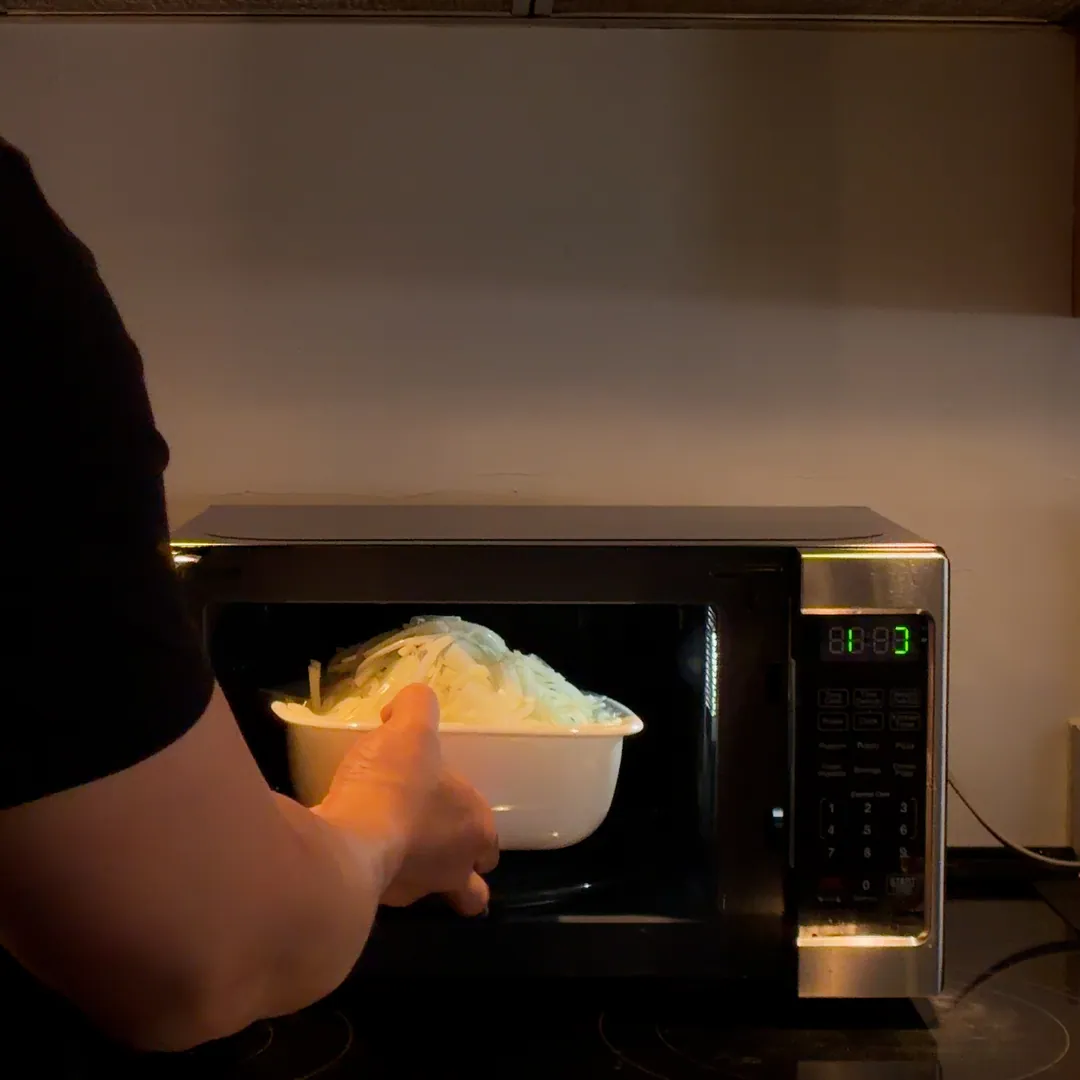
- 04Put the sliced onions in a microwave-safe bowl and microwave on high for 10 minutes. The microwave targets the water inside the cells and bursts them open, breaking the onions down fast. This is the structural breakdown that an hour of slow stovetop cooking is really after.
Into the Pan, Liquid and All
- 05Tip the onions and all of their released liquid into a wide skillet. Do not drain it, the liquid goes in. Add 1/2 cup of water and turn the heat to high.
Cook Down on High
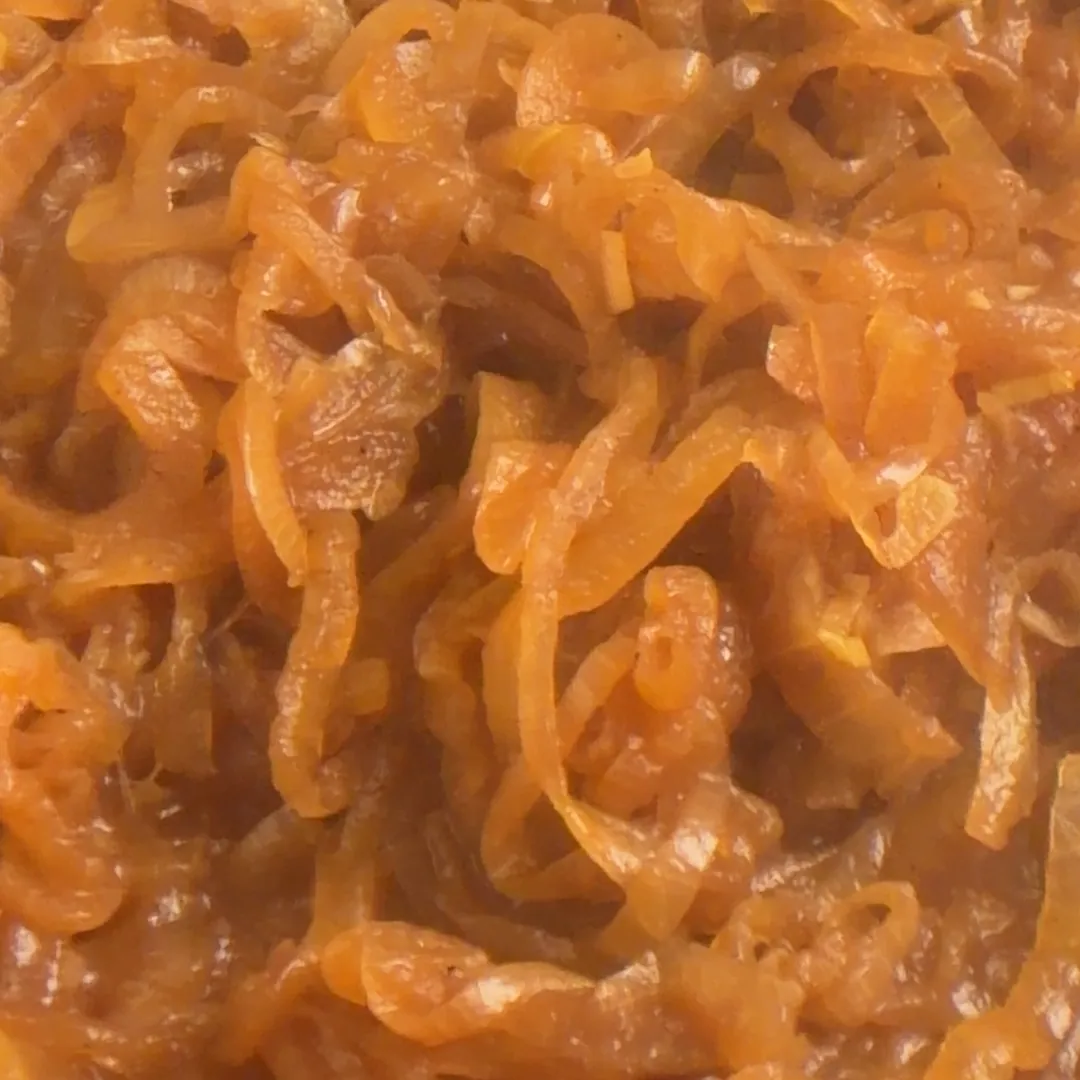
- 06Cook the onions down on high, stirring and checking occasionally. Add a splash of water as you go whenever the bottom starts to brown or stick, which keeps it from burning and breaks the fibers down further into jammy strands. Keep going until the liquid is gone and the onions are deeply browned, about 15 minutes.
Finish with Butter and Brown Sugar
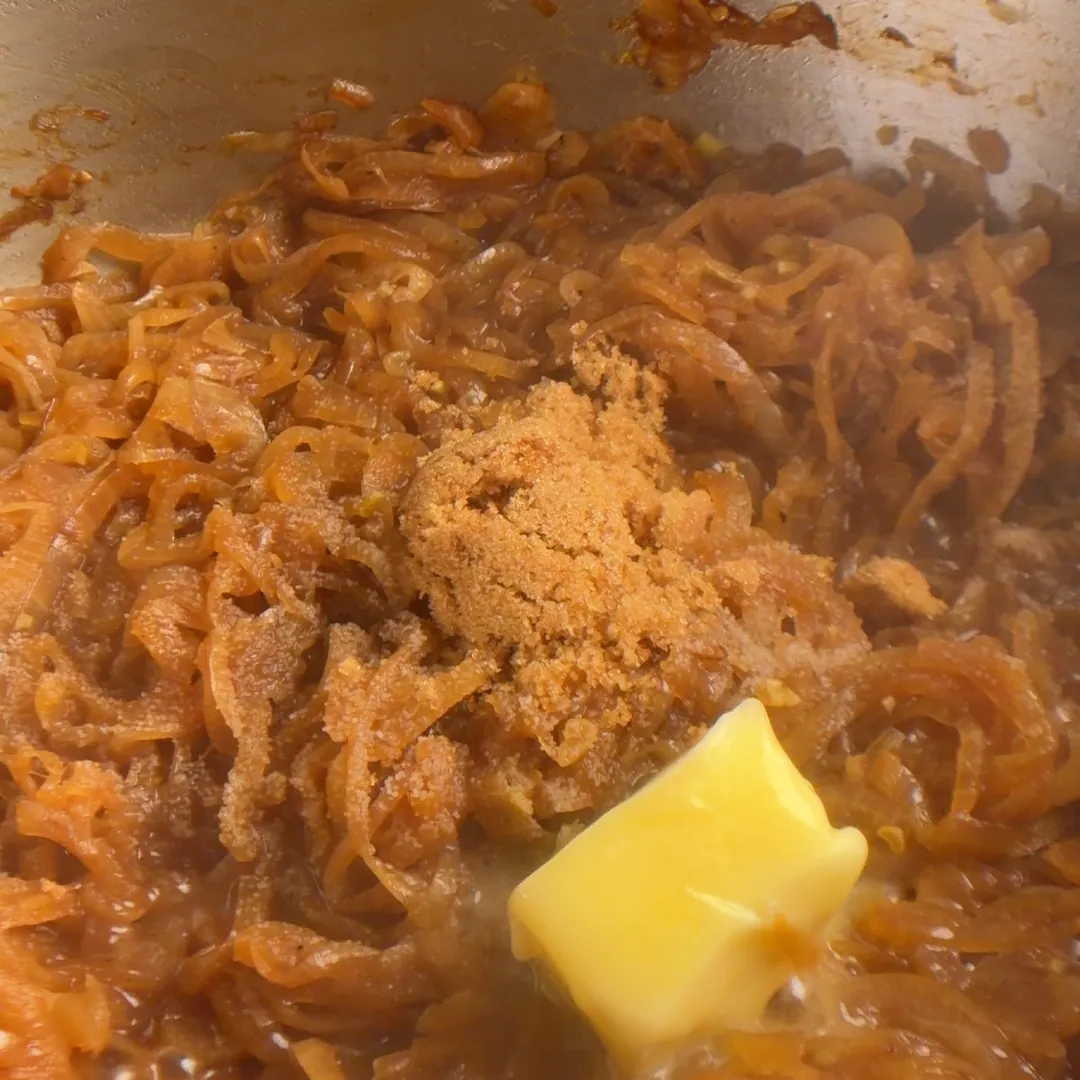
- 07Stir in the butter and brown sugar. The butter makes everything rich and glossy, and the brown sugar leans into the onion's heavy natural sweetness.
- Why microwave first. The slow part of caramelizing is breaking the onions down. The microwave does it fast by exciting the water inside the cells and rupturing them, so 10 minutes gets you what an hour of slow cooking is after. You keep all that released liquid, it cooks off in the pan.
- Cut across the grain. The grain runs root to tip. Slicing across it (perpendicular) gives softer strands that break down evenly into a jammy texture.
- Add water as you go. Once it is on high heat, keep a cup of water nearby. Every time the bottom starts to brown or stick, add a splash and stir. The water stops it burning and keeps breaking the fibers down into that soft, jammy texture.
- Brown sugar for the sweetness. Onions are already heavy with natural sugar. A spoonful of brown sugar leans into that and rounds it out. It is an enhancer, not the source of the sweetness.
- Salt at the end, not the start. Salt keeps the pan wet two ways: it pulls water out of the onions (osmosis), and dissolved salt slightly slows the water from evaporating (it lowers the vapor pressure, so salty water boils off a touch slower). Both delay browning, so hold the salt until the onions are done and use it just to season.
- Expect soft and jammy. These break down completely, so they are perfect for French onion soup, dip, burgers, or anything that wants a sweet savory hit. They will not hold their shape like quick sauteed onions.