Recipe
Crispy Chili Bacon Noodles

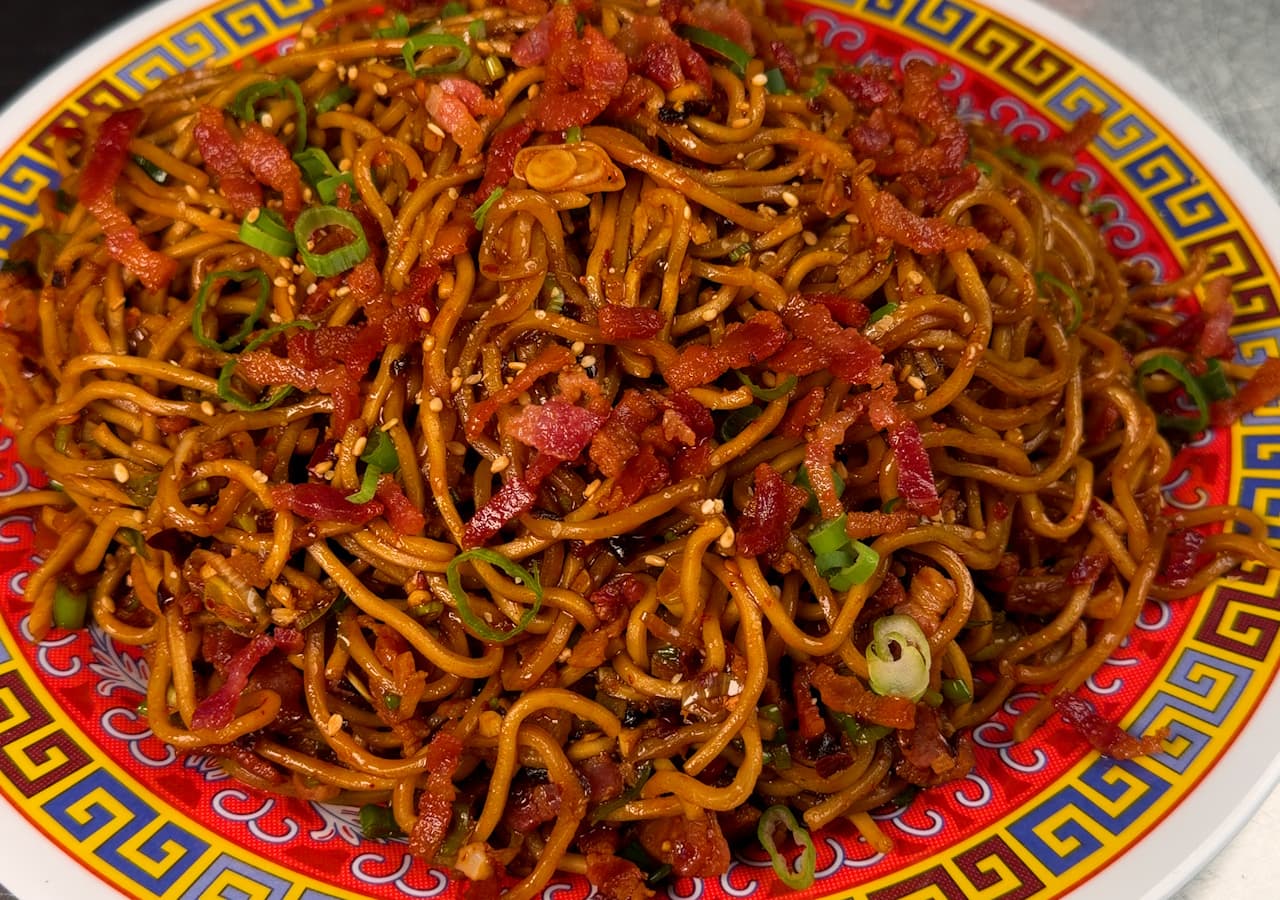
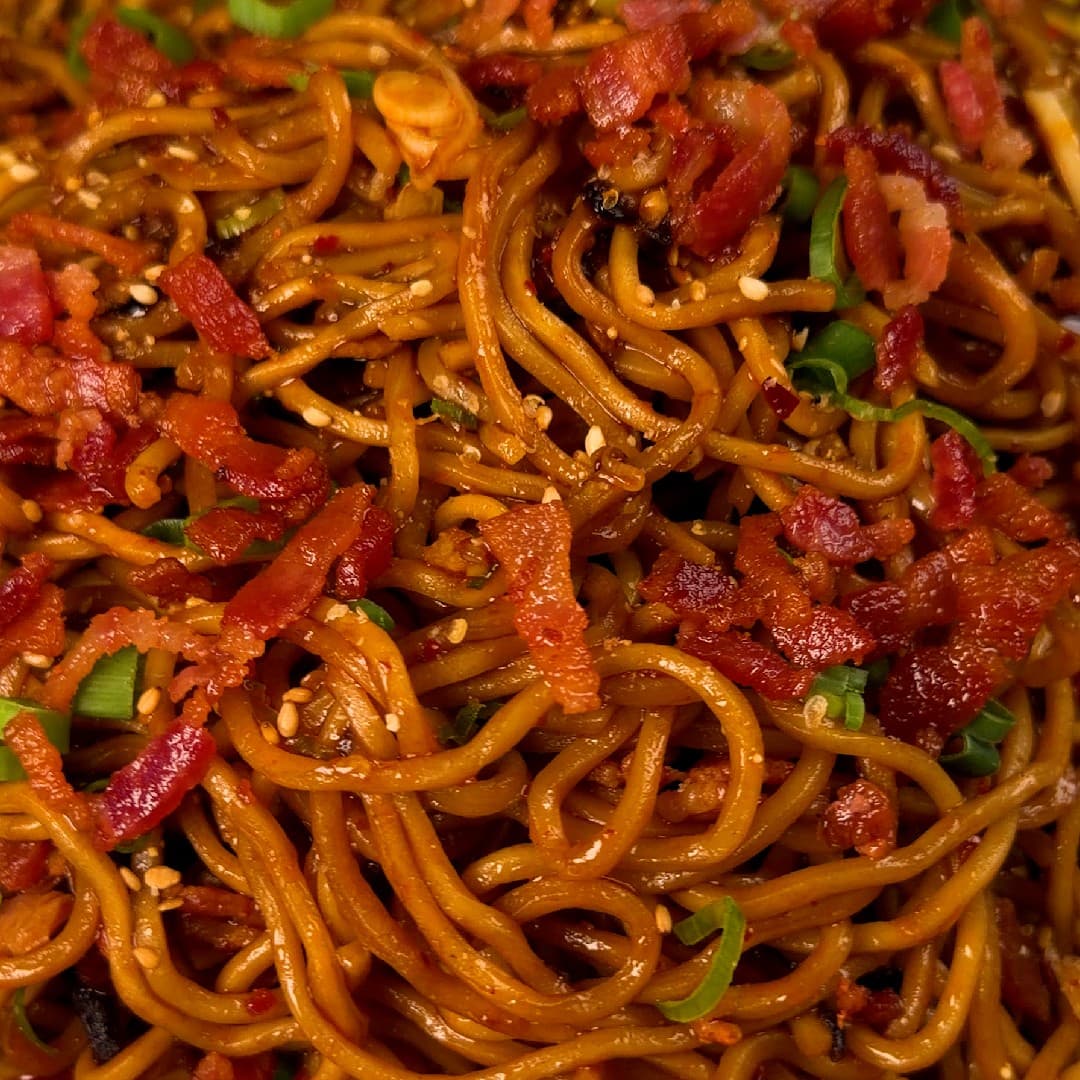
Bacon rendered until it shatters, chili crisp bloomed in the fat, and lo mein tossed through it all.
Bacon rendered until it shatters, chili crisp bloomed in the fat, and lo mein tossed through it all.
▶ Watch
Some product links are Amazon affiliate links. As an Amazon Associate I earn from qualifying purchases at no extra cost to you.
Bacon gets rendered two ways in American kitchens: the rushed version, where you crank the heat to get dinner on the table, and the patient version, where you start in a cold pan and let the fat slowly come out. The patient version makes better bacon, and it makes better sauce. This recipe demands the patient version.
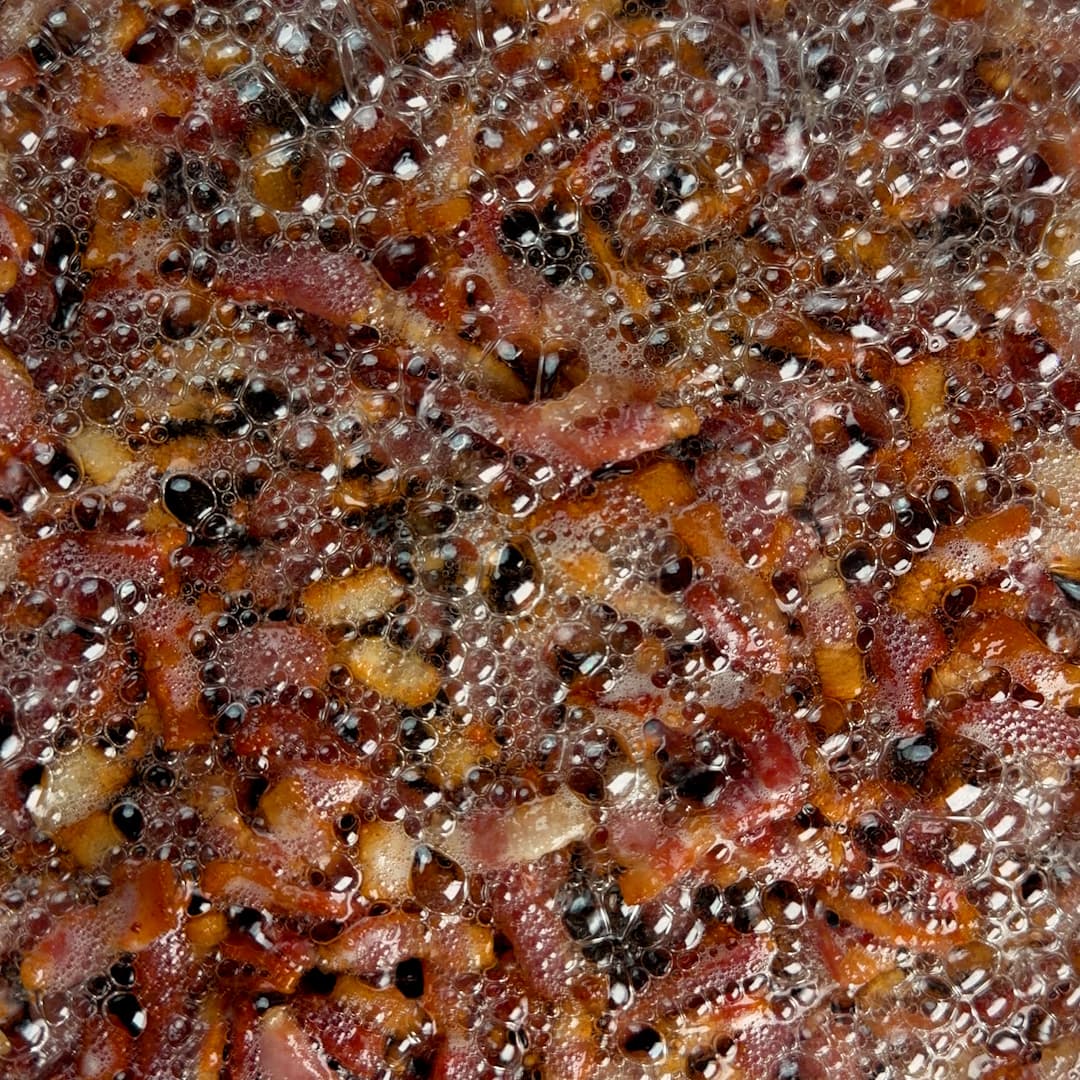
Start the bacon in a cold pan with a small drizzle of oil. Turn the heat to medium. As the pan warms, the fat renders slowly and evenly, drawing out the most flavor possible. Six to eight minutes of gentle rendering gives you deeply golden, shatteringly crisp bacon pieces and two to three tablespoons of clear, clean fat pooled underneath. That fat is the emulsifier, the flavor base, and the cooking medium for everything that follows.
Pull the bacon to a wire rack, not paper towels. Paper towels trap steam and re-soften the crisp you just worked for. A wire rack lets air circulate and keeps the crunch.
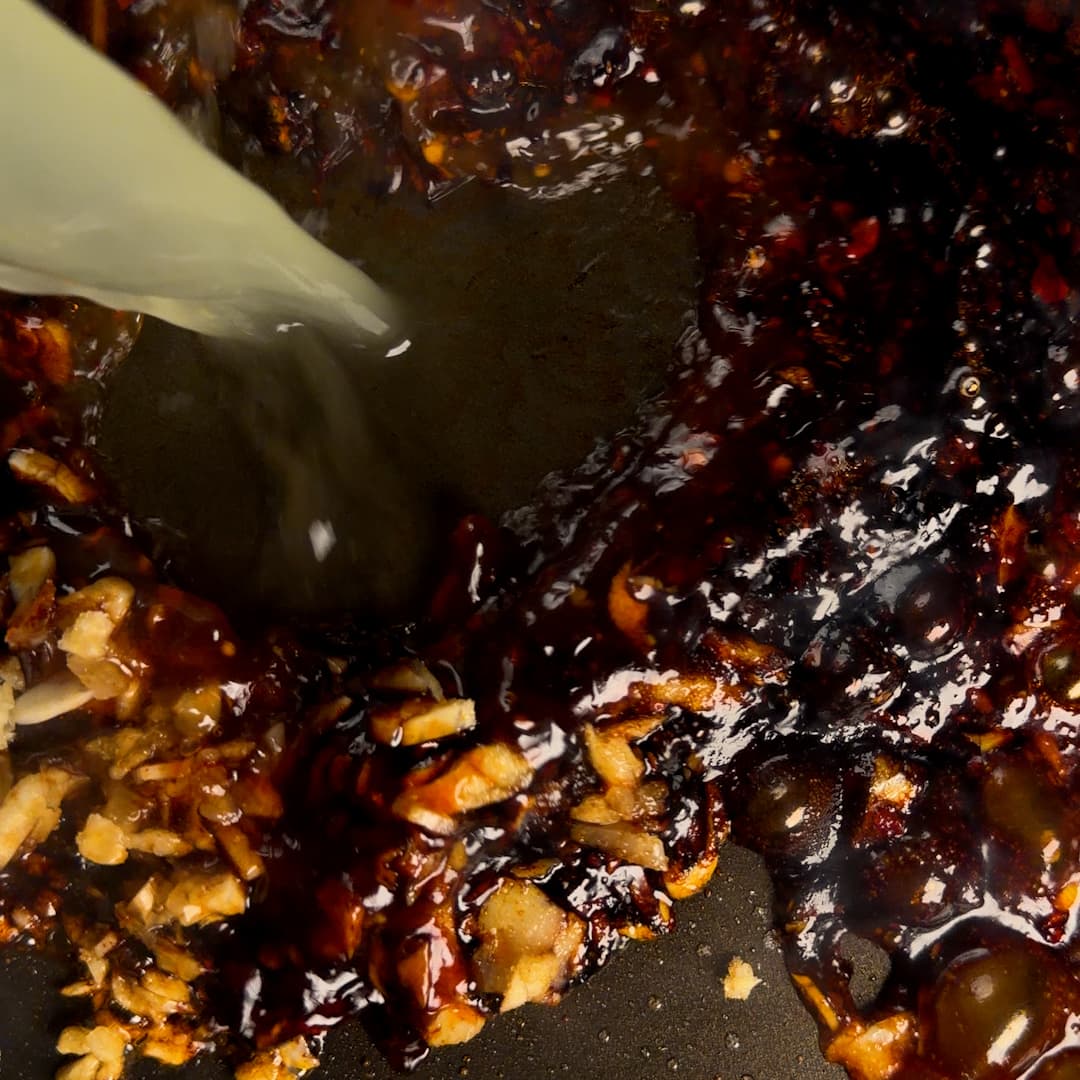
The sauce builds directly in the bacon fat. Garlic, chili crisp, soy sauce, oyster sauce, dark soy for color and depth, sesame oil, and sugar. Dark soy is the less-understood one in the lineup. It's thicker, sweeter, less salty than light soy, and its main job is color. A tablespoon turns the sauce from pale brown to deep mahogany.
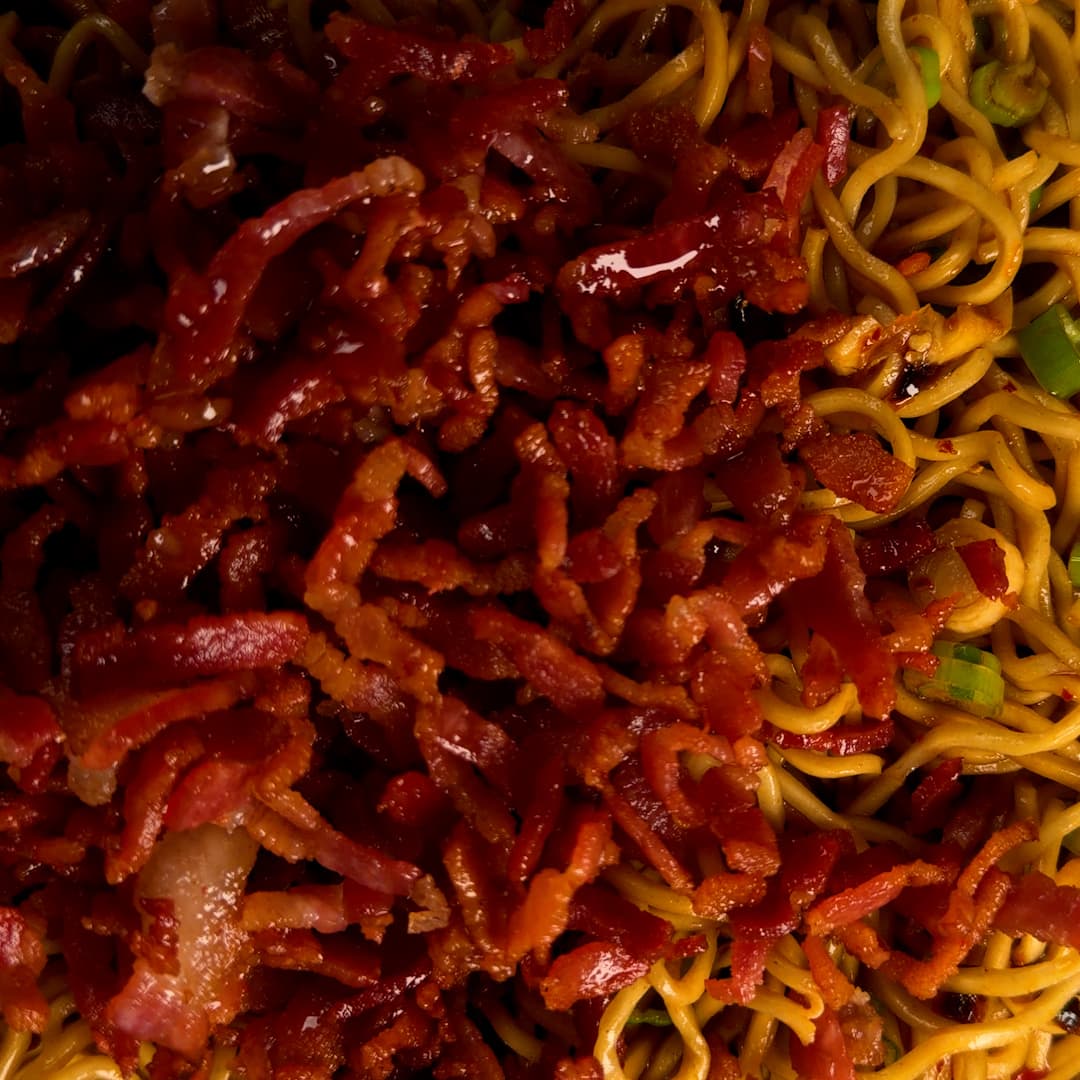
Chicken stock goes in and the sauce reduces for a minute or two until slightly thickened. Lo mein noodles drop in, toss continuously until coated and glossy. Bacon back on top at the end so it stays crispy. Scallions, sesame, extra chili crisp. Twenty minutes total, most of it rendering, almost none of it active work.
(For dried egg noodles) Cook them first
Render the Bacon
Build the Sauce
Toss the Noodles
Plate and Finish
No reviews yet. Be the first!
Twenty years cooking Korean, Chinese, and Japanese food, simplified for weeknight kitchens. Cooking professionally out of Seattle.