Recipe
Honey Garlic Shrimp Glass Noodles

Jumbo shrimp lacquered in a sticky honey garlic soy glaze, served over silky glass noodles that soak up every drop of sauce.
★5.0(1 review)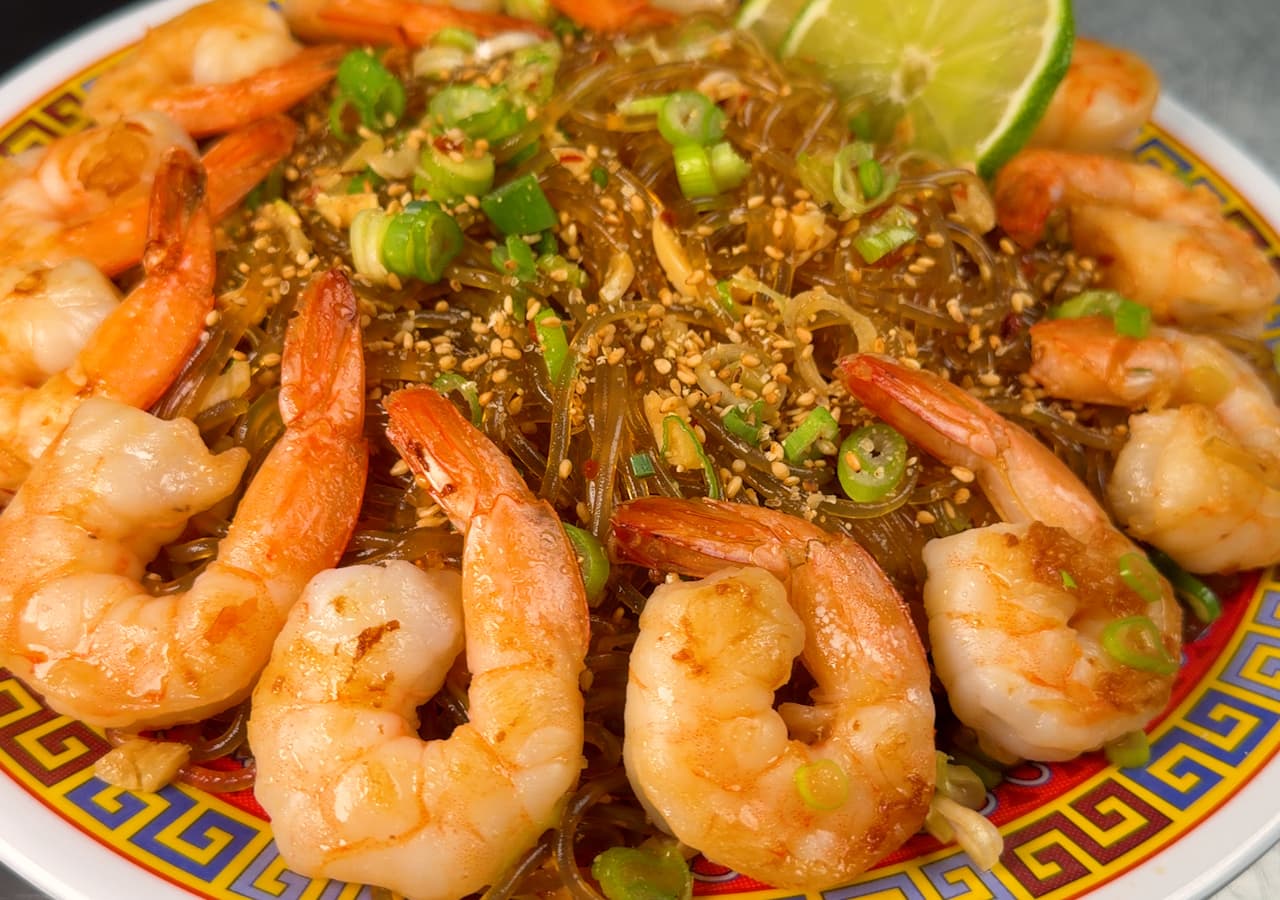
▶ Watch
Jumbo shrimp lacquered in a sticky honey garlic soy glaze, served over silky glass noodles that soak up every drop of sauce.
★5.0(1 review)▶ Watch
Some product links are Amazon affiliate links. As an Amazon Associate I earn from qualifying purchases at no extra cost to you.
Korean glass noodles, made from mung bean or sweet potato starch, are the most sauce-hungry noodle available in a Western grocery store. Dry, they look like stiff translucent threads. Cooked, they turn silky and jewel-like, and they absorb sauce so aggressively that a thin glaze will coat them in seconds and a heavy sauce will almost disappear into them.
That's exactly why they belong under a sticky honey garlic shrimp. Most noodles would pool the sauce at the bottom of the bowl. Glass noodles drink it into the strands themselves, which means every bite is seasoned to the same level of intensity.
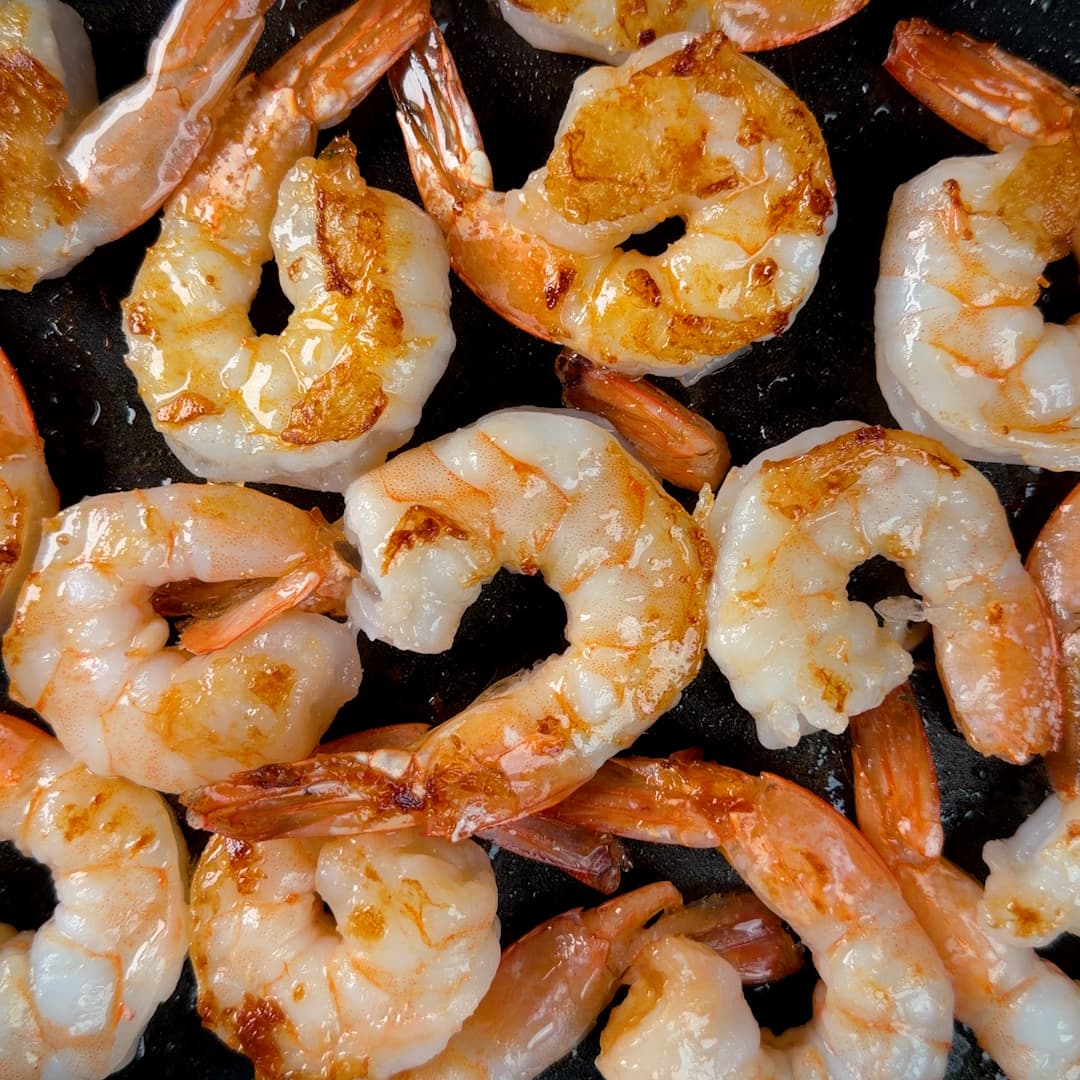
The shrimp goes first. Pat dry, season, sear in butter and oil over high heat, 60 seconds per side. Pull the moment the edges caramelize. Overcooked shrimp is the dish-killer here because the residual heat in the sauce will finish them when they go back.
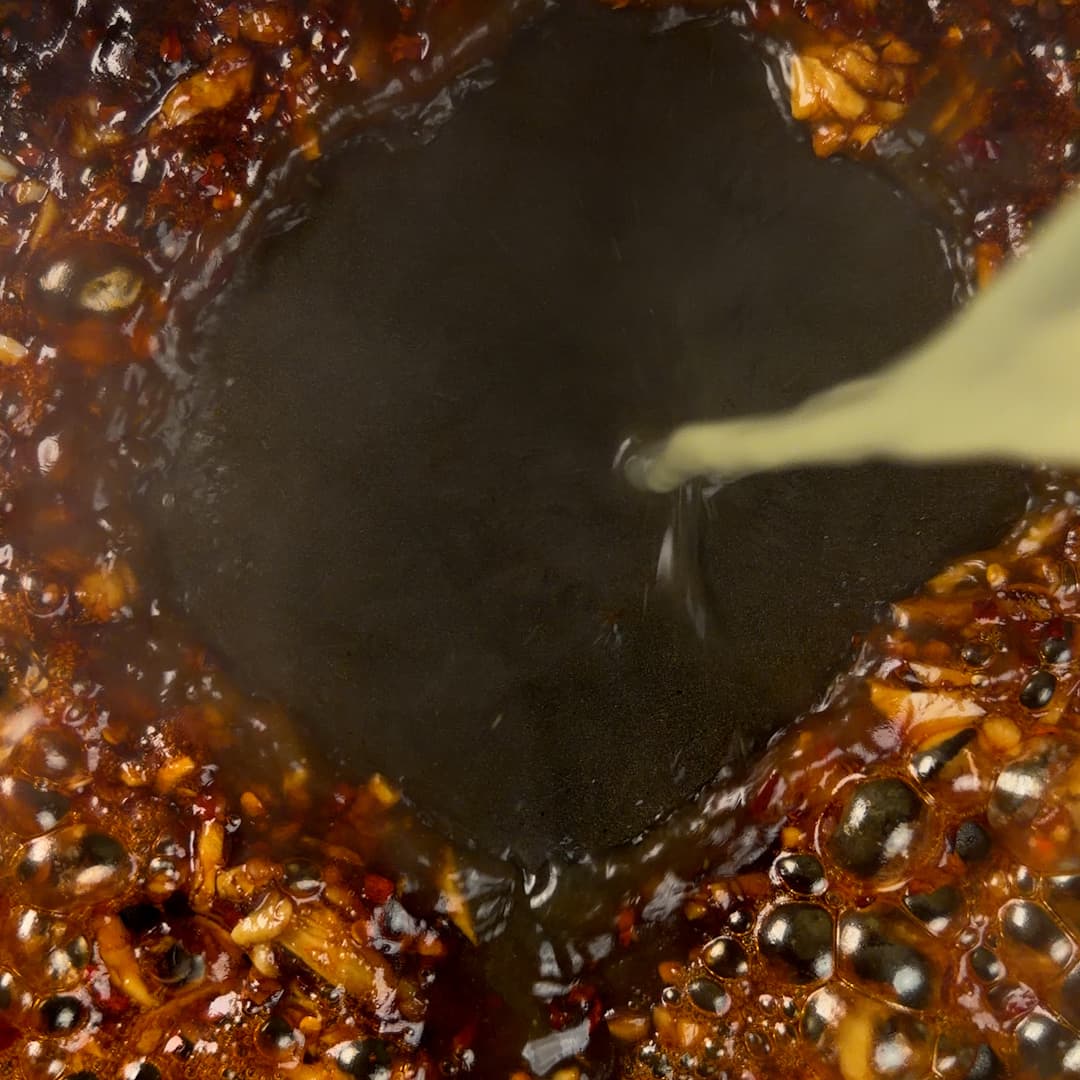
The sauce builds in the same pan. Garlic for 20 seconds. Honey for sweet-sticky body. Soy for the salt spine. Oyster sauce for the restaurant-dark umami gloss. Rice vinegar to cut through the sweetness. Sesame oil for finish. Chili flakes for heat. Chicken stock to bring it to a sauce.
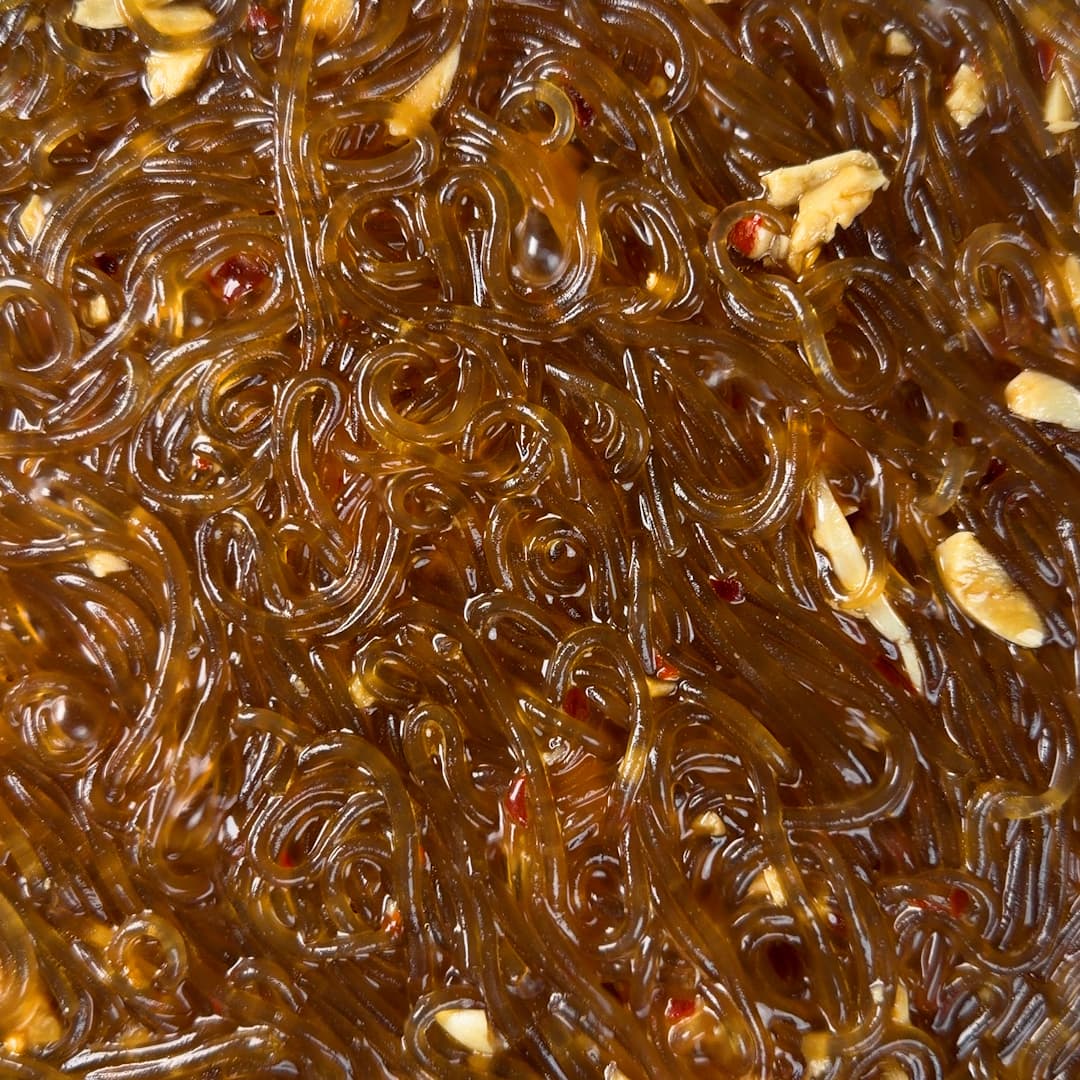
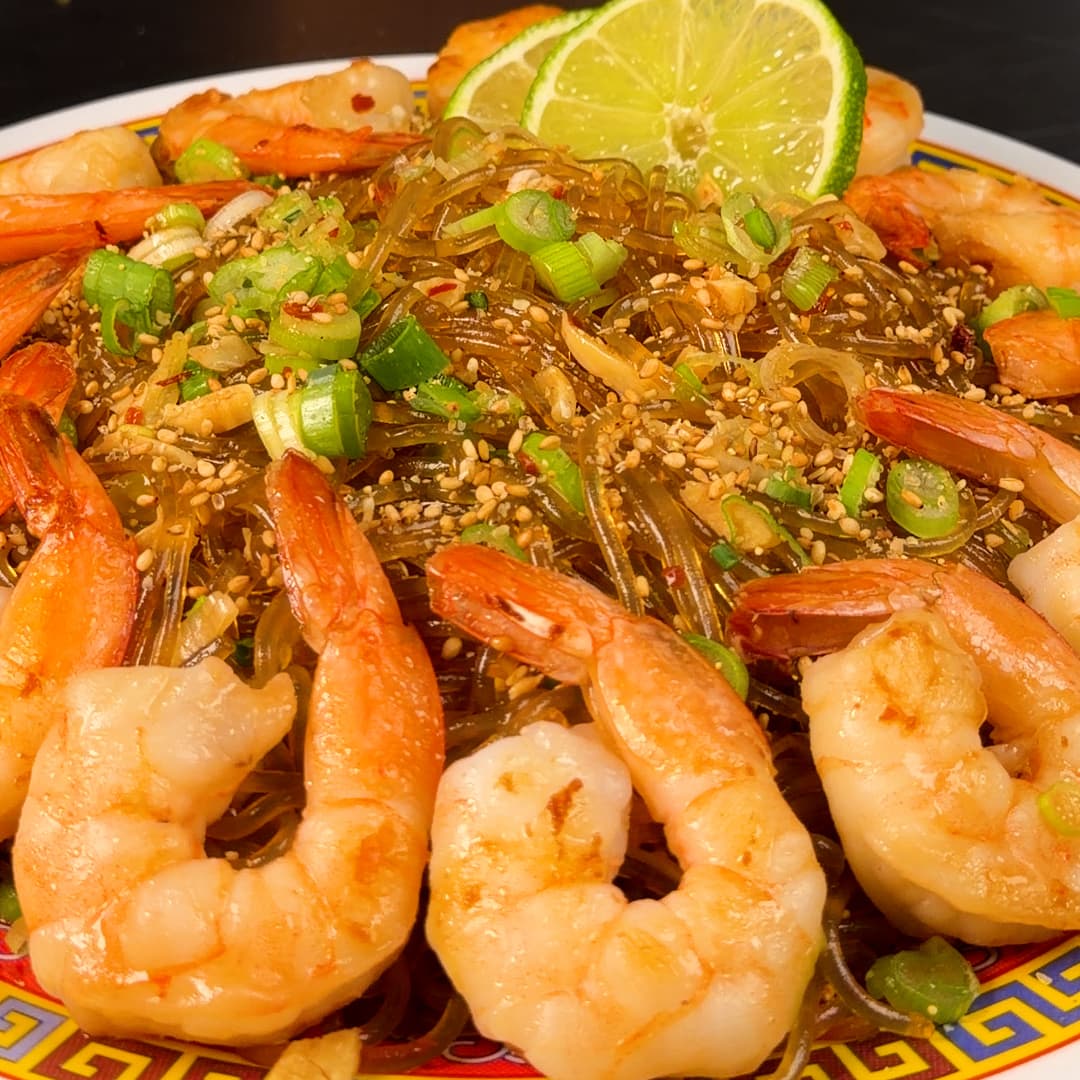
Glass noodles go in directly. They cook in 1 to 2 minutes, turning from opaque white to dark translucent as they absorb the sauce. They should look jewel-like and glossy. If the pan dries out too fast, splash in more water by the tablespoon. When the noodles are tender and the sauce clings, shrimp back on top, scallions, sesame, fresh red chili, lime wedge on the side. A squeeze of lime at the table balances the honey.
Sear the Shrimp
Build the Sauce
Cook the Noodles
Finish and Plate
It tastes so good and is very easy to make. I'm glad I found this recipe. Thank you Chef Fatty!
Twenty years cooking Korean, Chinese, and Japanese food, simplified for weeknight kitchens. Cooking professionally out of Seattle.