Recipe
Korean Chili Chicken Noodles

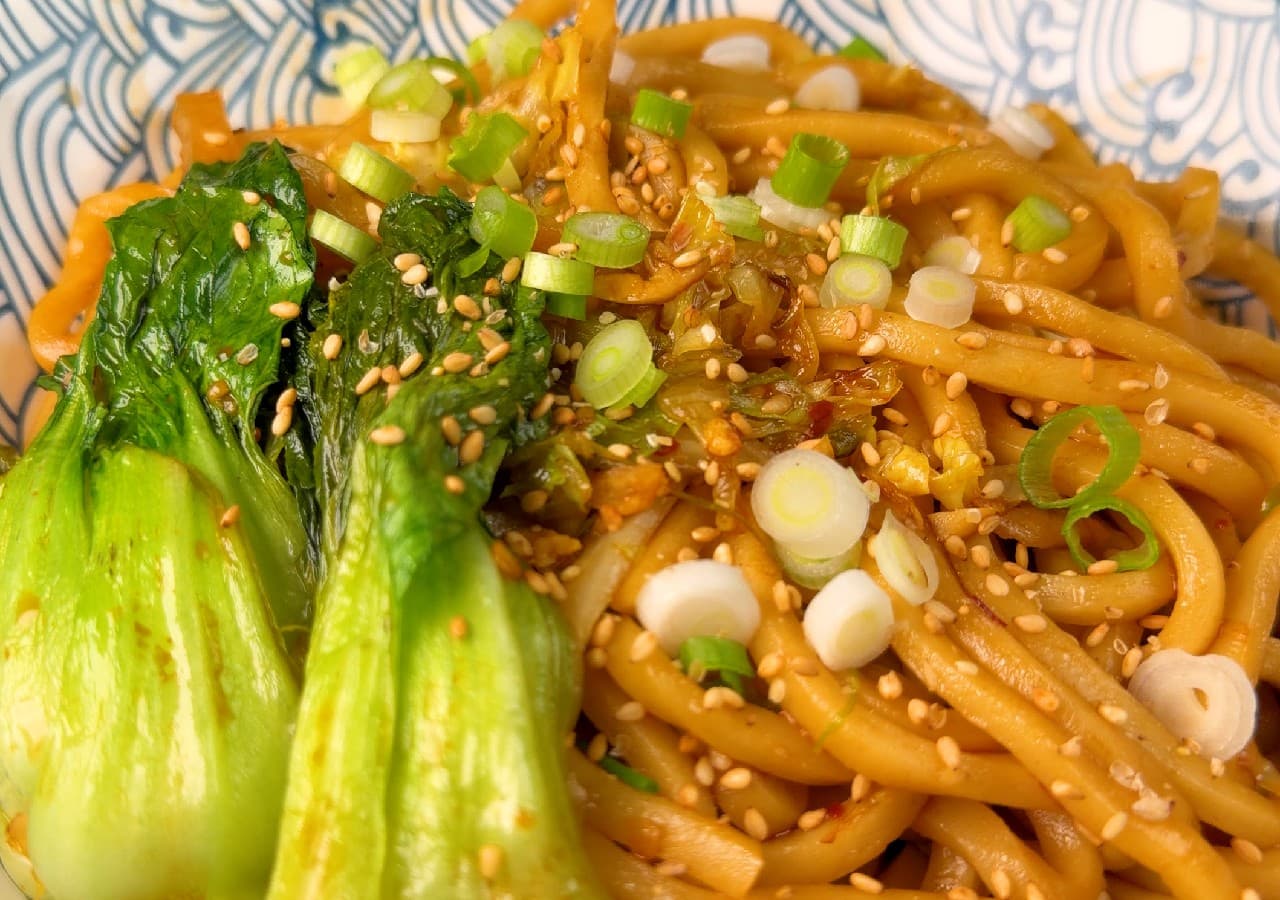
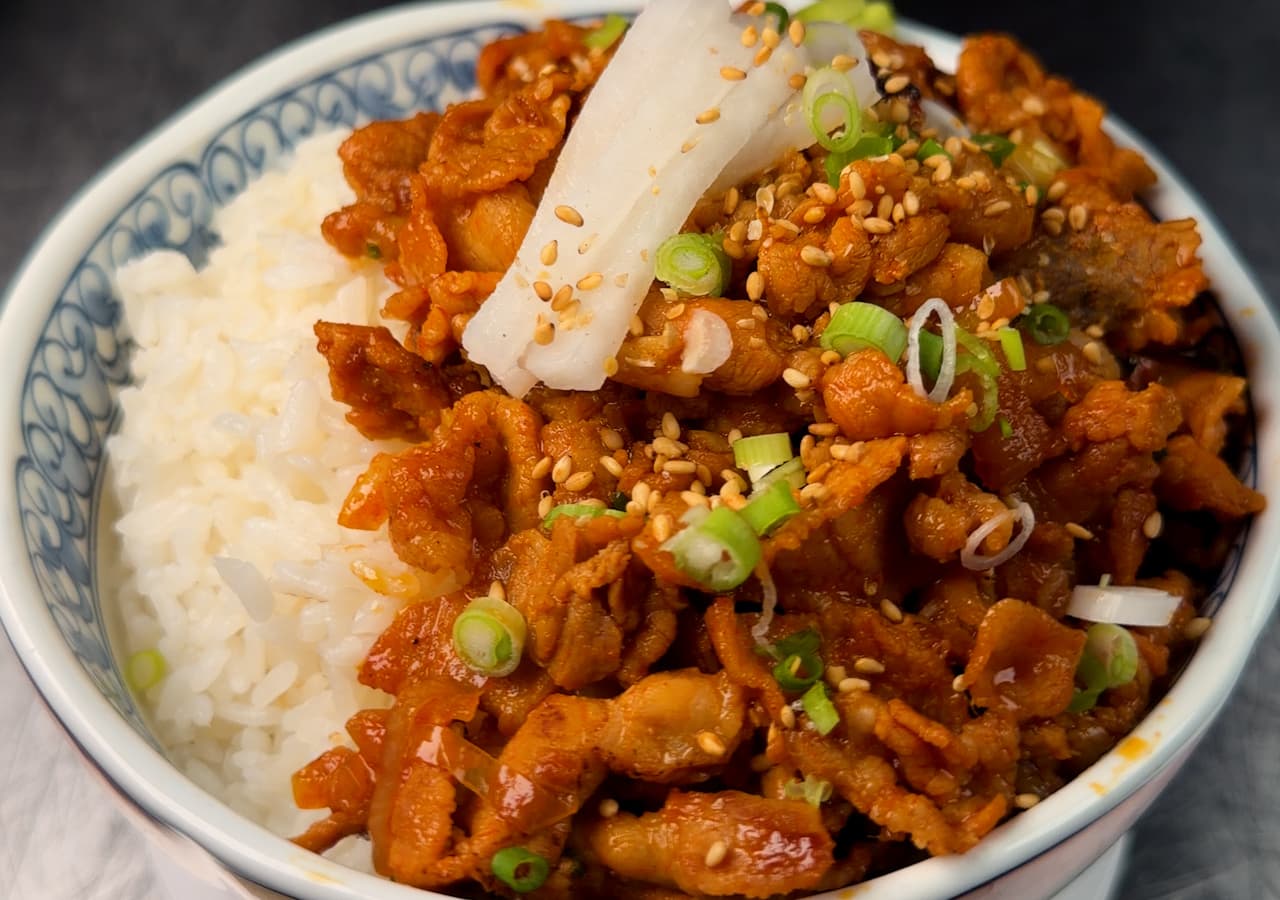
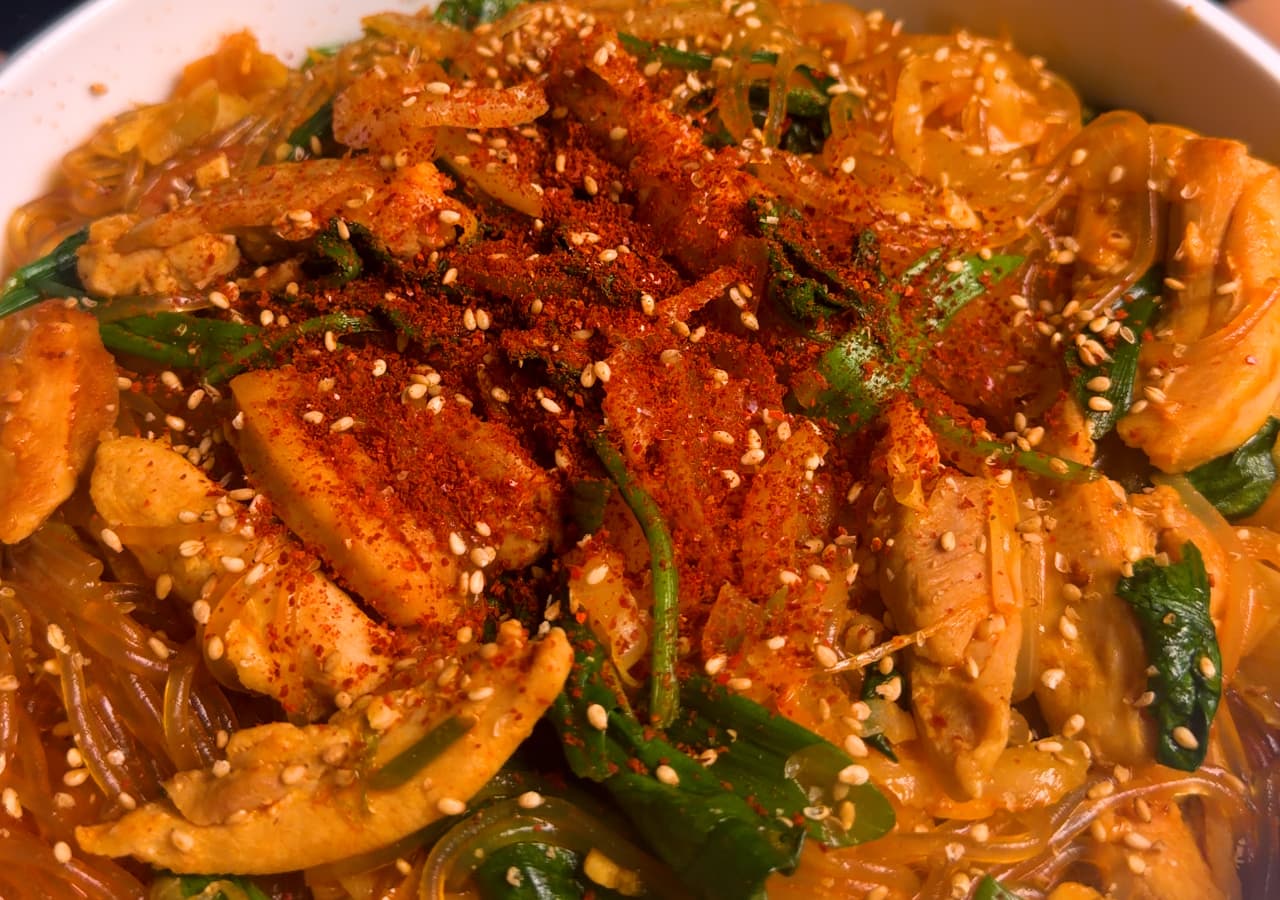
Spicy-sweet Korean chili chicken tossed with glass noodles, cabbage, and spinach, finished with sesame oil and scallions.
▶ Watch
Spicy-sweet Korean chili chicken tossed with glass noodles, cabbage, and spinach, finished with sesame oil and scallions.
▶ Watch
Some product links are Amazon affiliate links. As an Amazon Associate I earn from qualifying purchases at no extra cost to you.
Korean cooking uses two distinct chili ingredients, and understanding the difference is key to cooking Korean food well at home. Gochujang is a fermented red chili paste, sweet and umami-dense, designed to be cooked into sauces and stews. Gochugaru is a dried red chili flake, coarser than Western chili flakes, with a fruity, smoky flavor that's better as a finishing spice than as a cooking ingredient.
This dish uses both. Gochujang builds the sauce: fermented, sweet, rounded heat that integrates into soy, brown sugar, vinegar, and garlic to form a glossy red glaze that coats the chicken. Gochugaru finishes the dish: scattered on top at the end for bursts of fresh, bright chili flavor that would cook out if it went in earlier.
Brown sugar is the balancing act. Gochujang is intense; unbalanced by sweetness, it overwhelms everything else. Two tablespoons of brown sugar rounds out the heat without making the dish taste dessert-sweet. It also helps the sauce lacquer onto the chicken as it reduces.
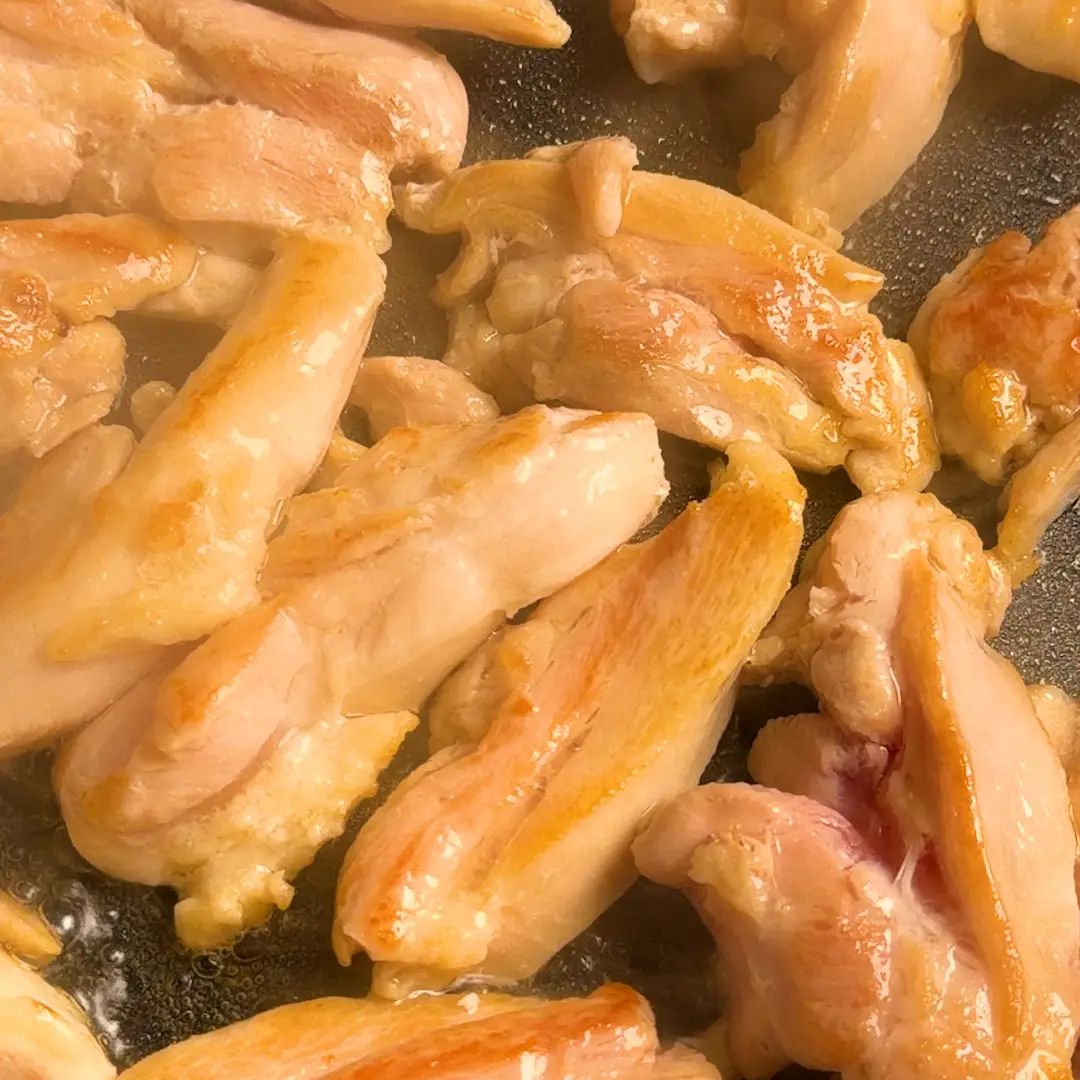
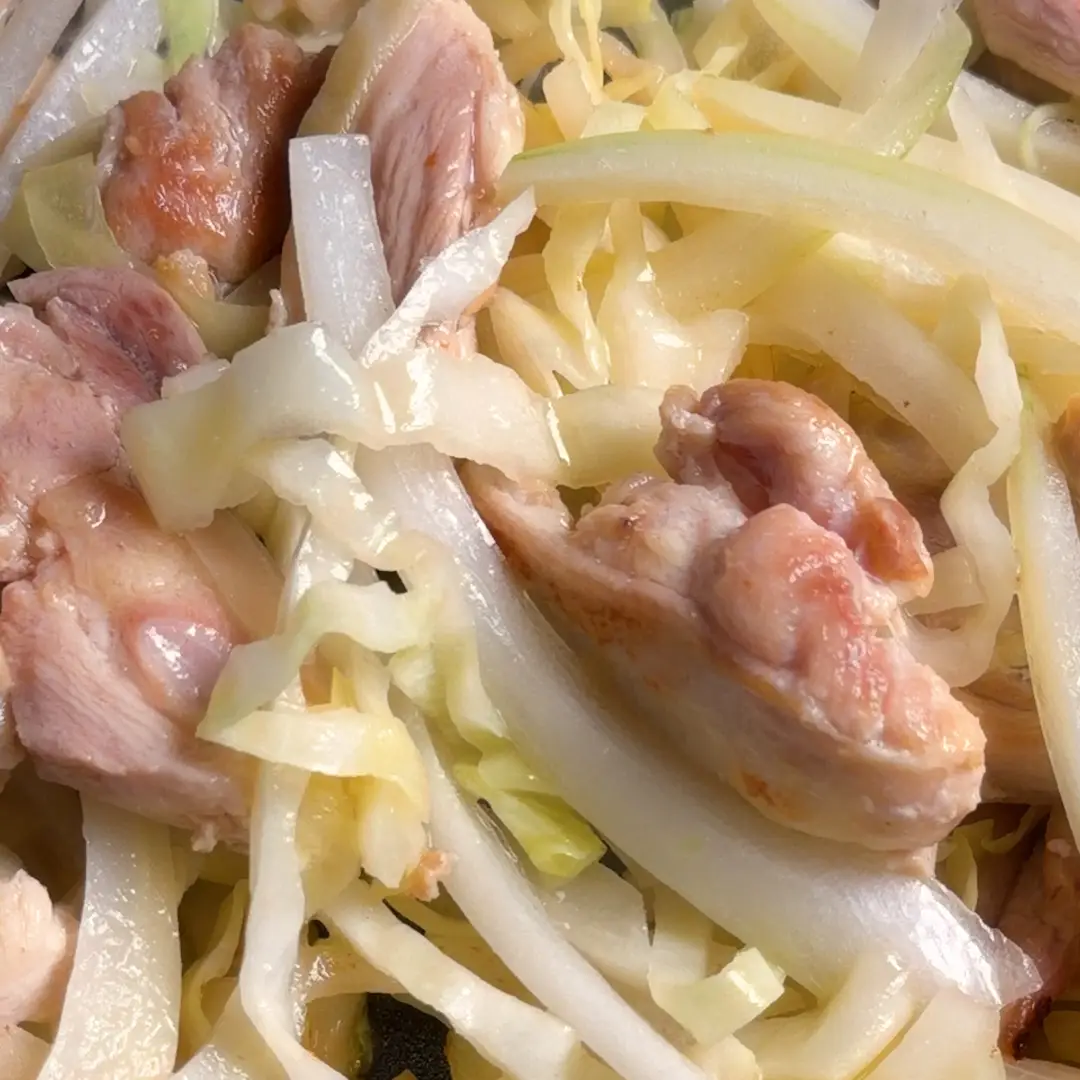
Sliced chicken thighs go in a hot pan first, browning until caramelized at the edges. Then onion and scallion whites, softening and picking up the chicken fat. Cabbage follows for a quick 1 to 2 minutes, staying slightly crisp.
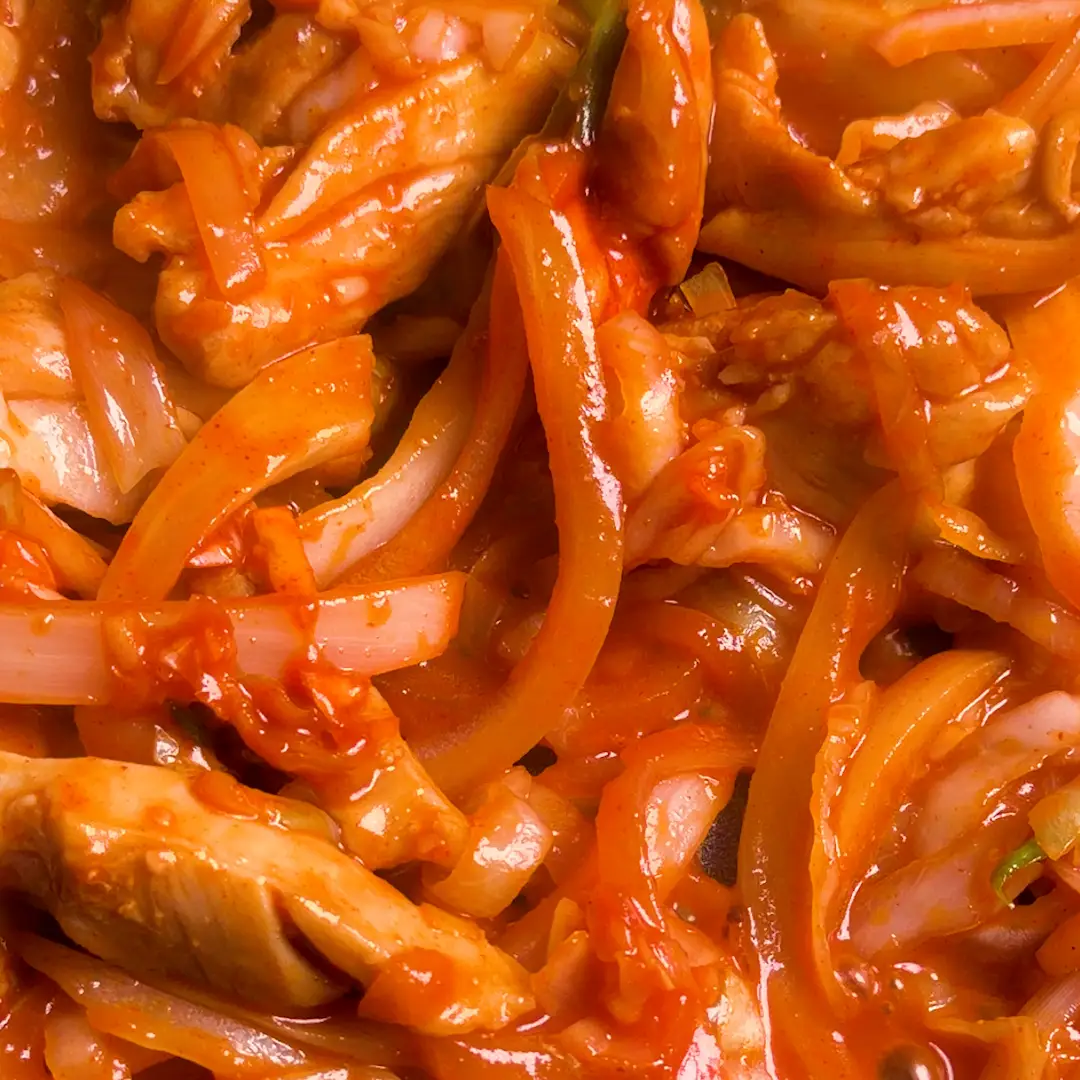
The sauce goes in: gochujang, soy, brown sugar, rice vinegar, grated garlic. Everything bubbles and reduces into a glossy coating. The soaked glass noodles go in next and absorb the sauce as they finish cooking. Water comes in as needed to keep the sauce from tightening too far.
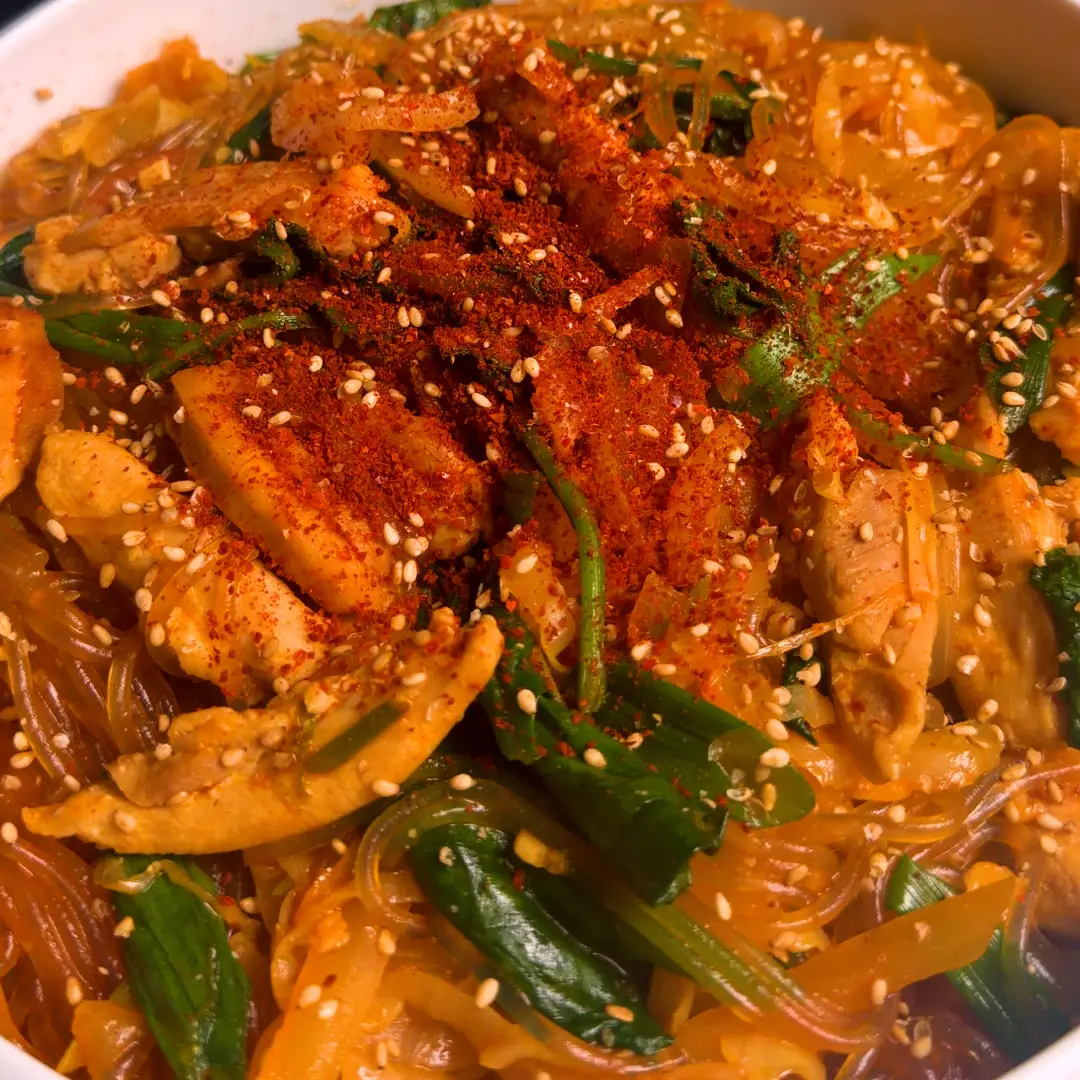
Baby spinach wilts in from residual heat, off the direct flame. Sesame oil goes in off heat too, preserving its aroma. Scallion greens and gochugaru scattered on top as the finishing spice. It's a one-pan Korean weeknight dinner that doesn't skimp on the signature flavors.
Prepare the Noodles
Sear the Chicken
Build the Vegetable Base
Add the Sauce
Add the Noodles
Finish and Serve
No reviews yet. Be the first!
Twenty years cooking Korean, Chinese, and Japanese food, simplified for weeknight kitchens. Cooking professionally out of Seattle.