Recipe
Korean Garlic Sesame Spinach

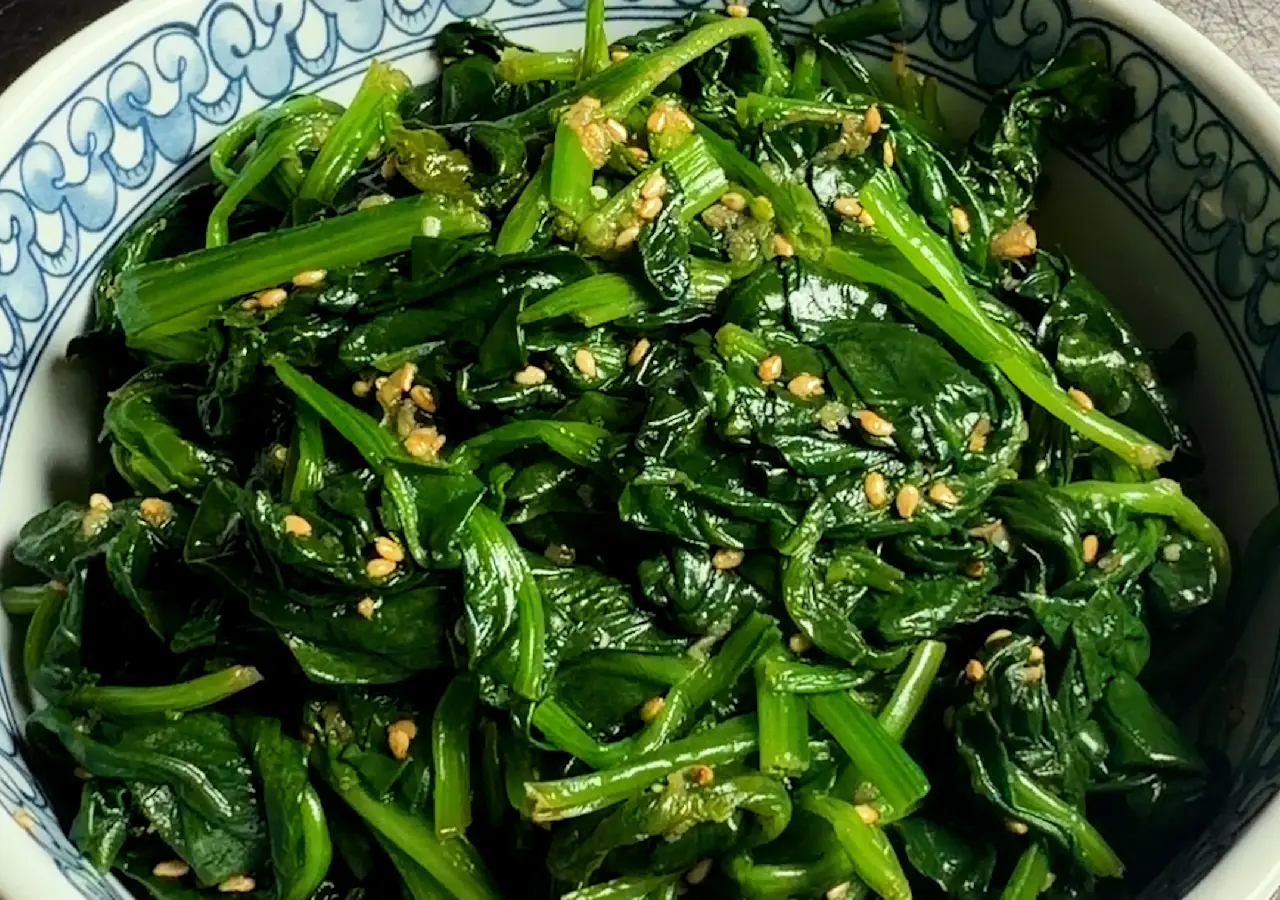
Nutty, savory Korean spinach seasoned simply with sesame oil, garlic, and soy. Clean, balanced, and deeply satisfying.
★5.0(1 review)Nutty, savory Korean spinach seasoned simply with sesame oil, garlic, and soy. Clean, balanced, and deeply satisfying.
★5.0(1 review)▶ Watch
Some product links are Amazon affiliate links. As an Amazon Associate I earn from qualifying purchases at no extra cost to you.
Sigeumchi namul, Korean garlic sesame spinach, is one of the foundational banchan of Korean cooking. Banchan are the small side dishes that get arrayed around a Korean meal, each a different flavor and texture note, each eaten a bite at a time with a forkful of rice. A proper Korean table can have four, six, or ten banchan going at once, and this spinach dish is almost always one of them.
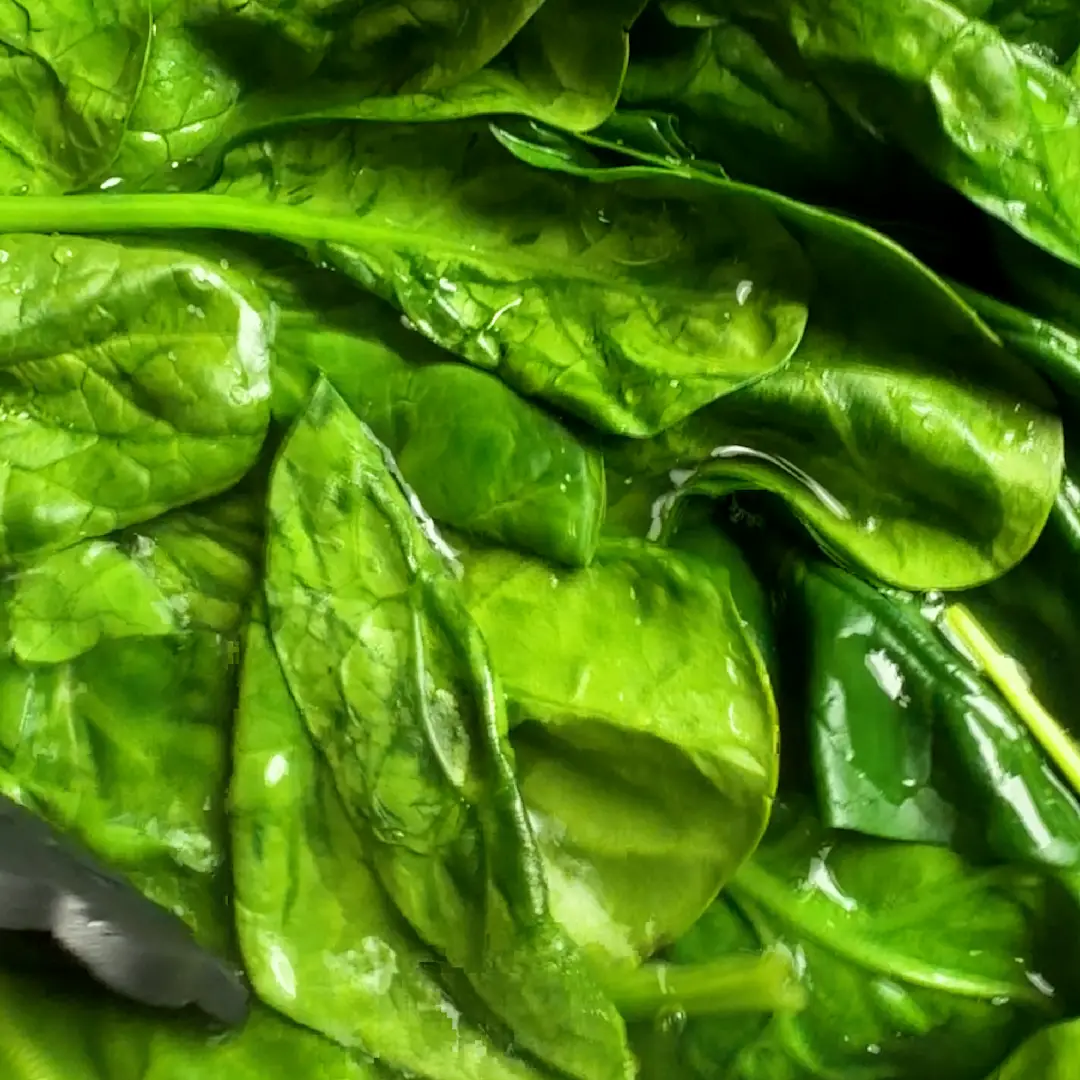
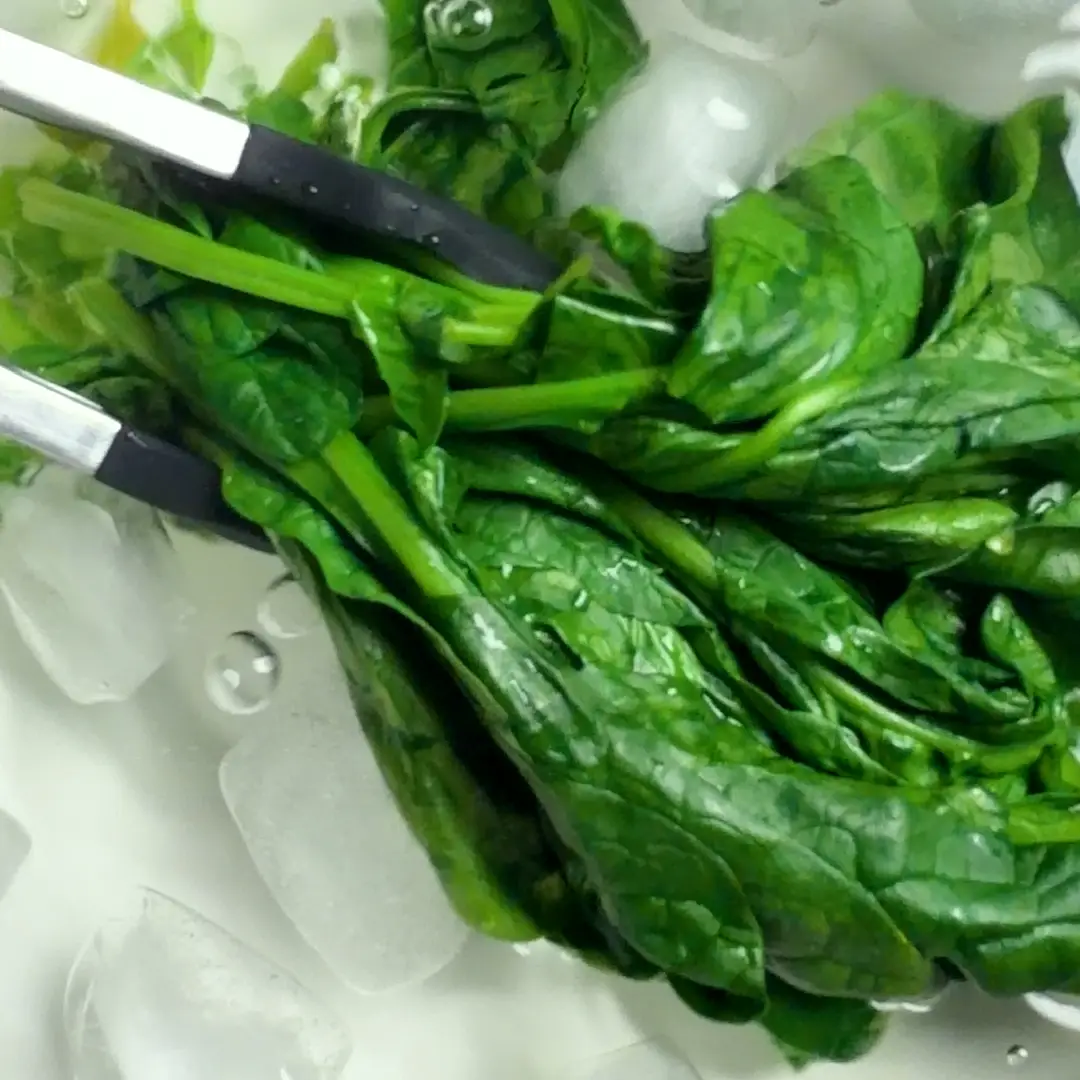
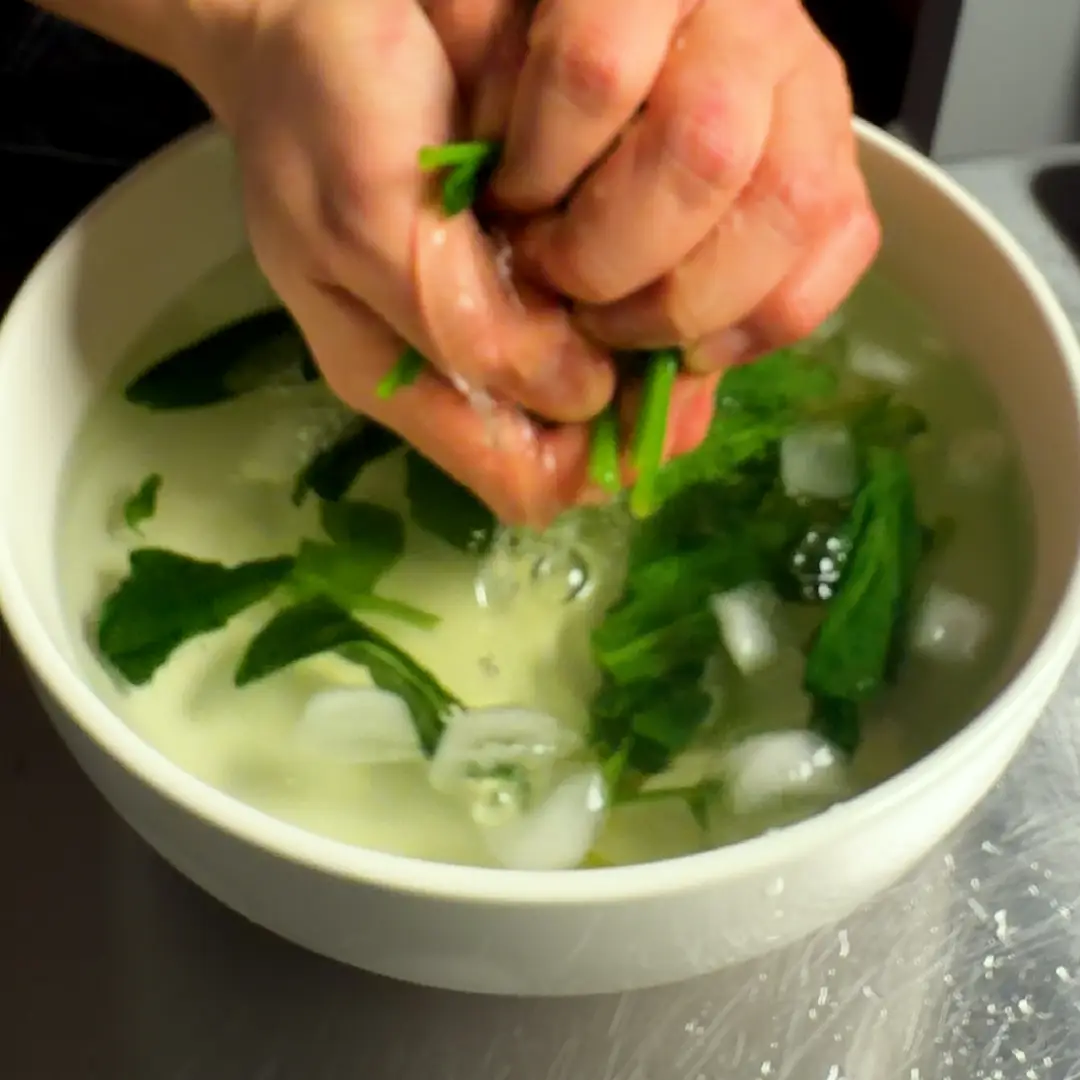
The preparation is a three-step choreography that all banchan spinach shares. Blanching in boiling water for 30 to 45 seconds wilts the leaves just past raw without overcooking them. Immediate transfer to cold water halts the cooking and locks in the bright green color. Squeezing in handfuls removes as much water as possible, because residual moisture dilutes the seasoning and turns the dish watery.
The squeeze is the part most home cooks skip or underdo. Korean cooks squeeze spinach aggressively, almost violently, until the wilted leaves turn into a compact ball with no water dripping out. The resulting texture is dense, concentrated, and ready to absorb seasoning.
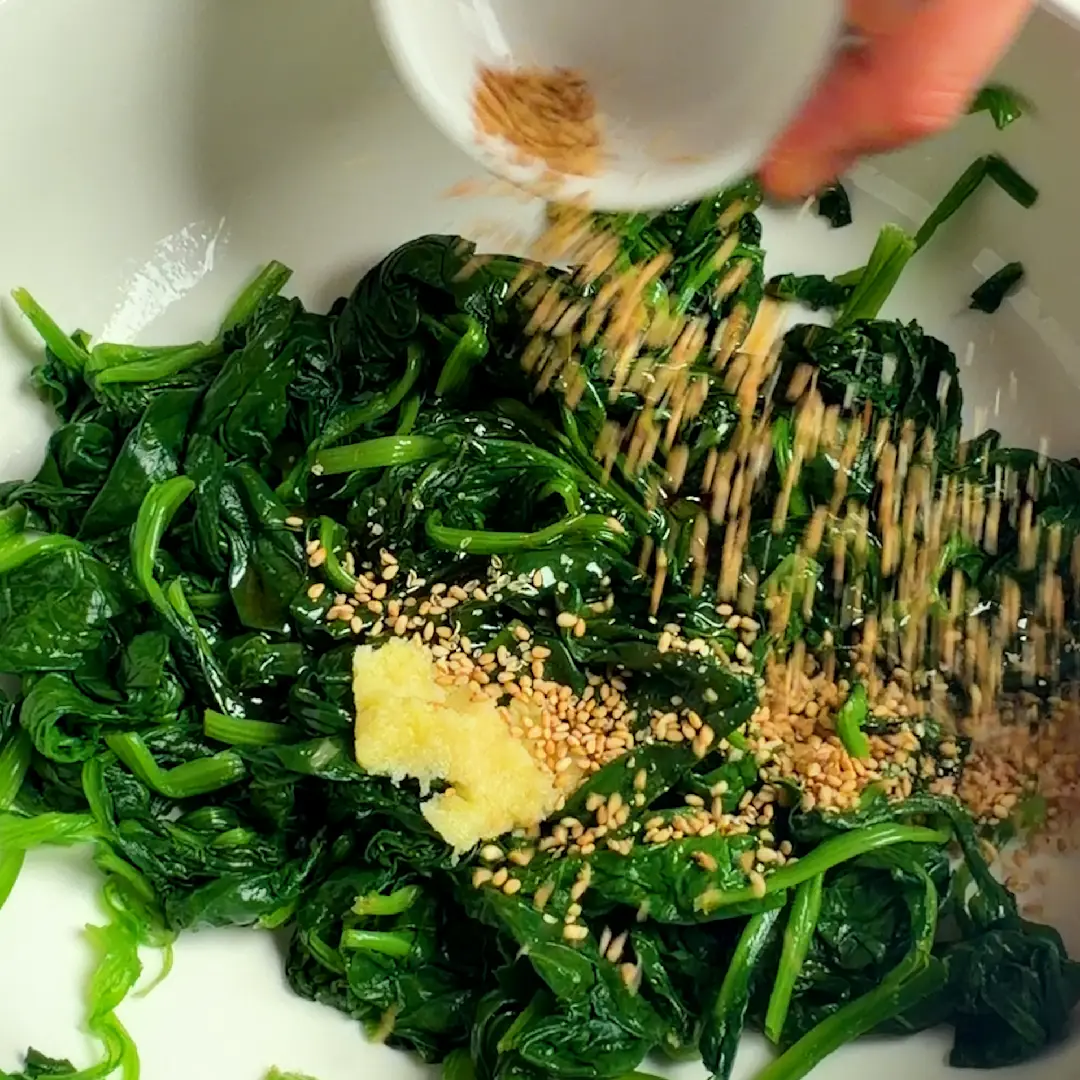
The seasoning itself is minimal. Finely grated garlic, a tablespoon of sesame oil, two teaspoons of light soy sauce, and a tablespoon of toasted sesame seeds. That's it. Because the squeezed spinach is concentrated, it absorbs these flavors completely. If you didn't squeeze enough, the dish will taste weak and dilute.
Taste after seasoning. It should taste slightly over-seasoned right out of the bowl. Banchan is typically served at room temperature, and the flavor mellows as it rests. An under-seasoned version right out of the kitchen becomes bland by the time it's on the table. Sigeumchi is best made an hour before serving so the flavors have time to settle.
Blanch the Spinach
Season
Lovee, thanks
Twenty years cooking Korean, Chinese, and Japanese food, simplified for weeknight kitchens. Cooking professionally out of Seattle.