Does it work on other meats?
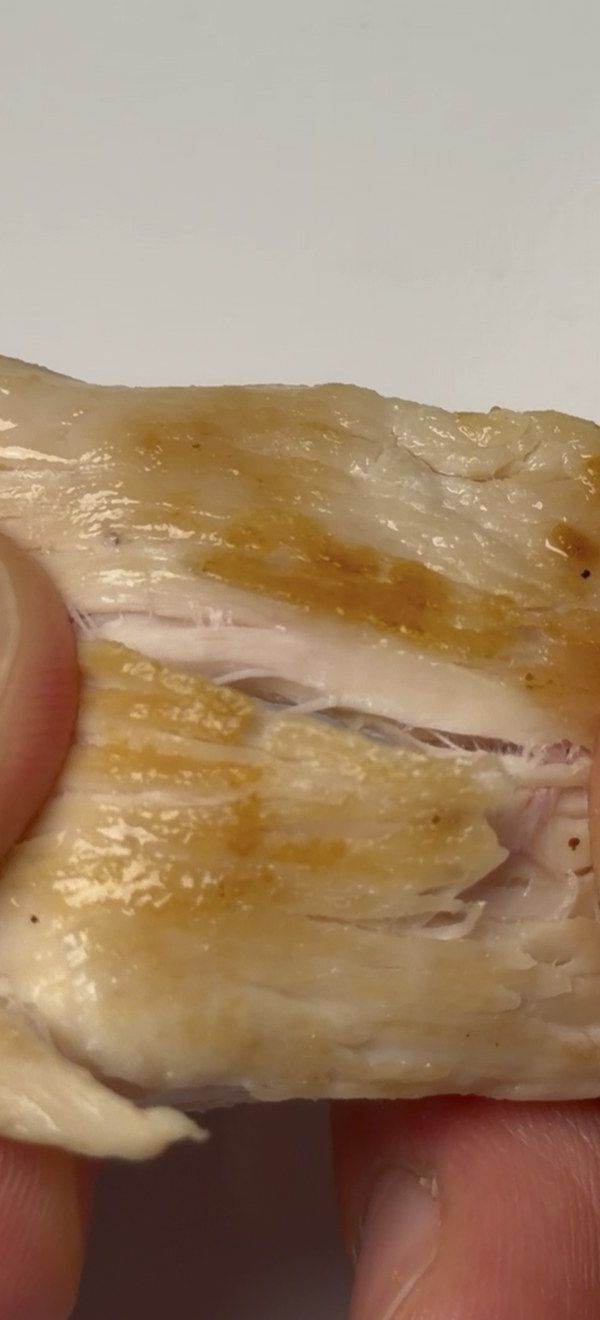
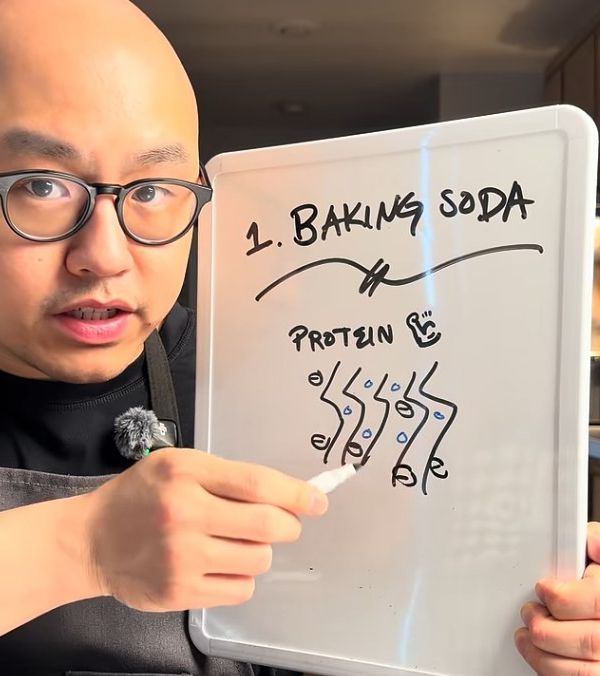
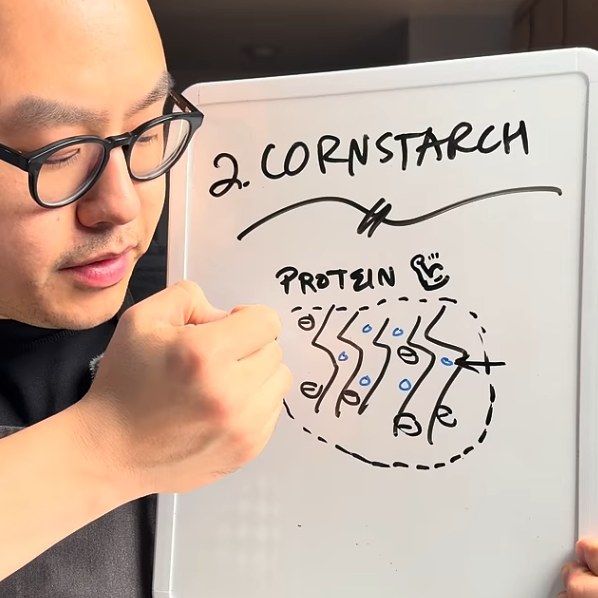
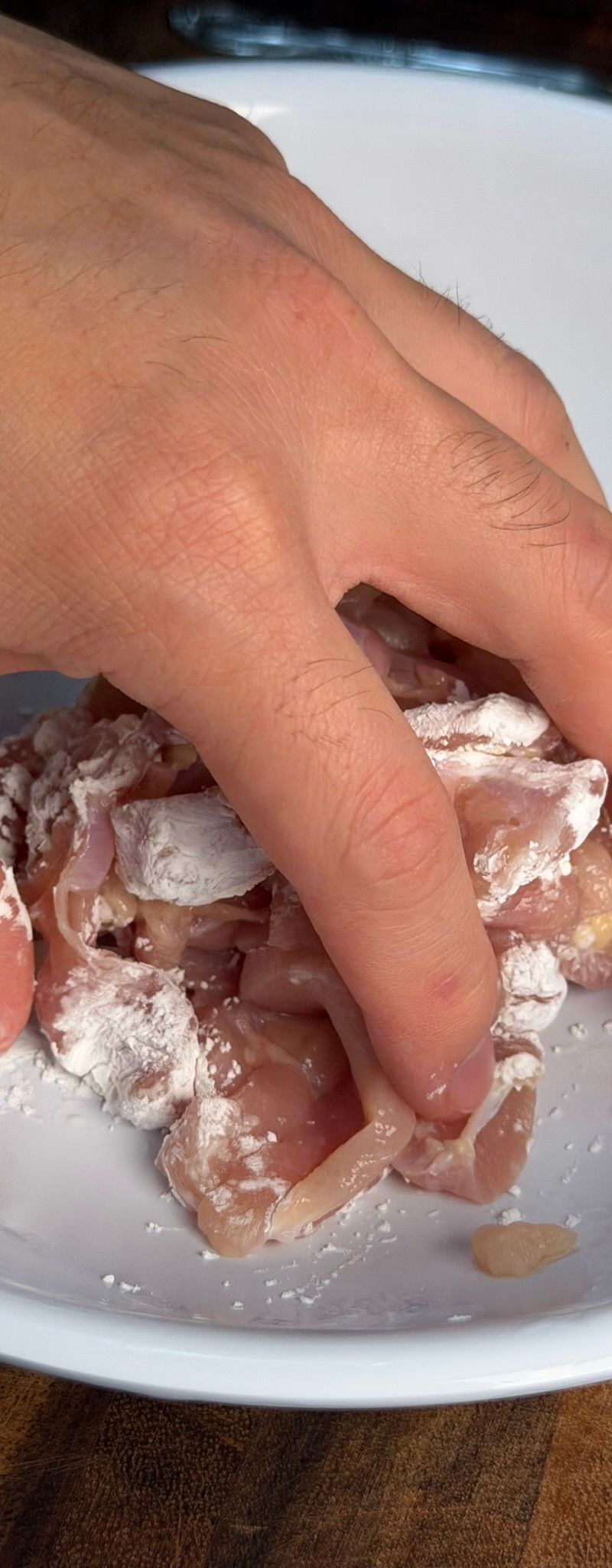
Yes, and the same logic applies across the board. The baking soda disrupts protein contraction. The cornstarch traps surface moisture. The only thing that changes between proteins is the amount and the rest time.
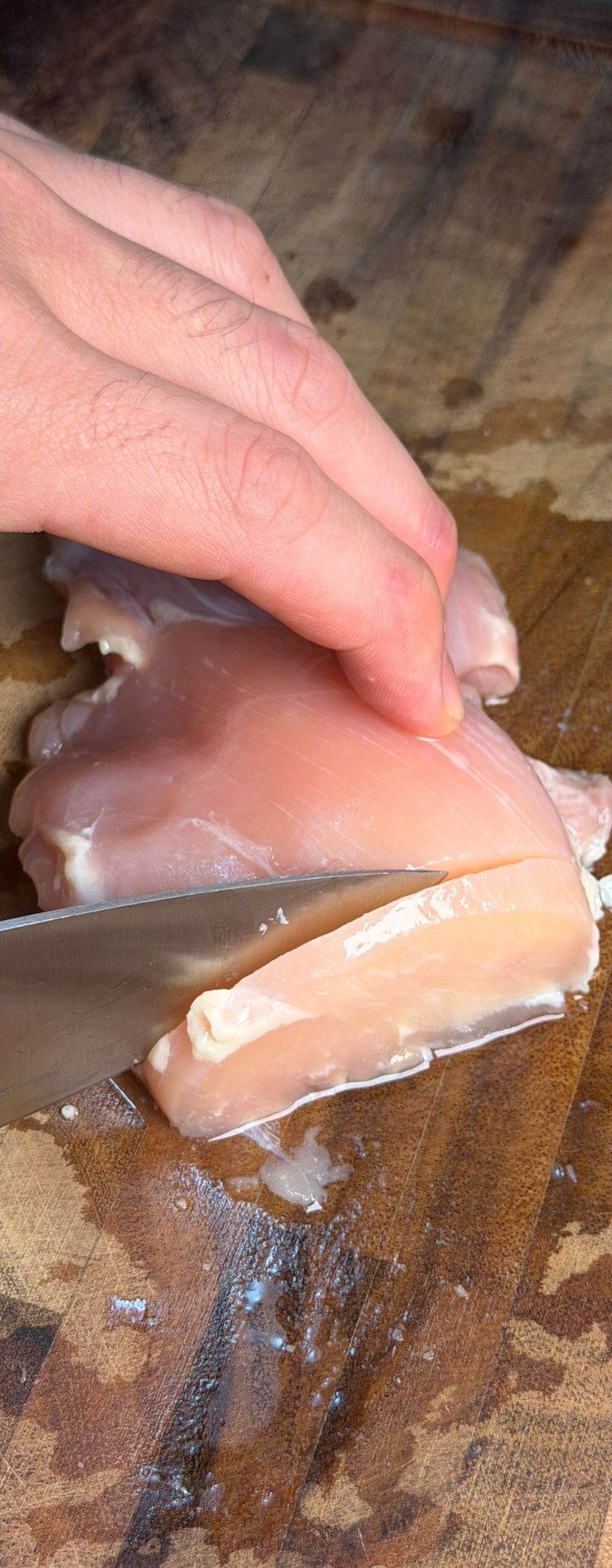
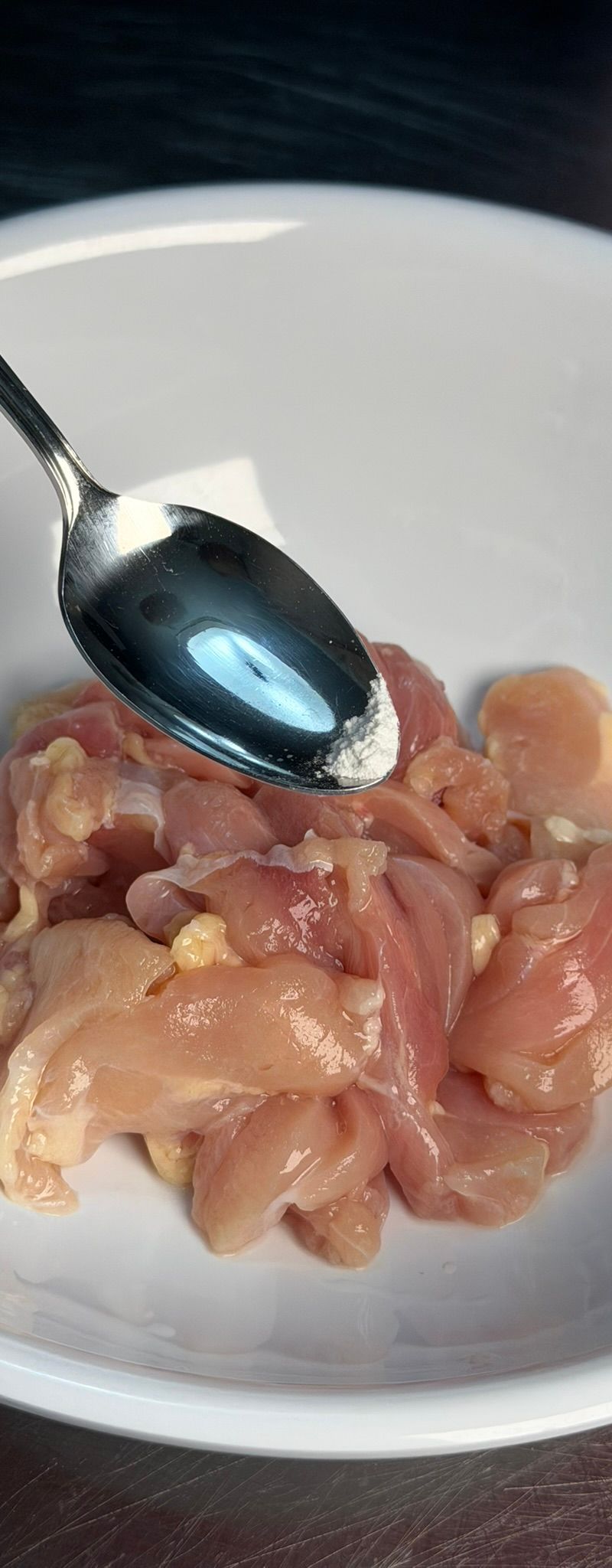
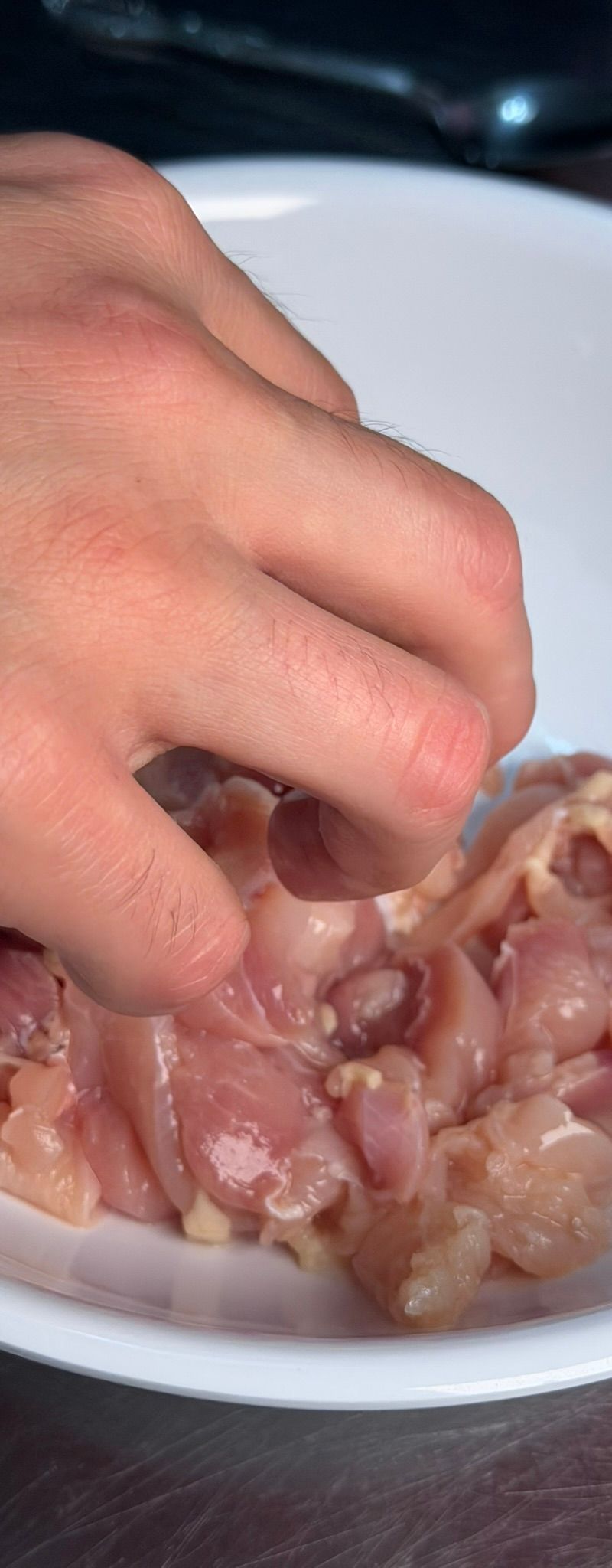
Beef (sliced): Same ratio as chicken. ¼ tsp (1.25 ml) baking soda per 1 lb (450 g), sliced thin against the grain, 20 minutes. Works especially well for dishes like beef and broccoli or Mongolian beef where the meat is in thin strips and hits very high heat. If anything, the effect is even more dramatic on beef because beef proteins are denser and contract harder than chicken.
Ground beef and ground pork: This one surprises people. Baking soda goes directly into the ground meat. No rinse needed. Mix ¼ tsp (1.25 ml) per 1 lb (450 g) into the raw meat, rest 15 minutes, then cook as normal. The result is ground meat that stays tender and loose rather than seizing into tight crumbles. Skip the cornstarch for ground meat, it does not work the same way without a surface to coat.
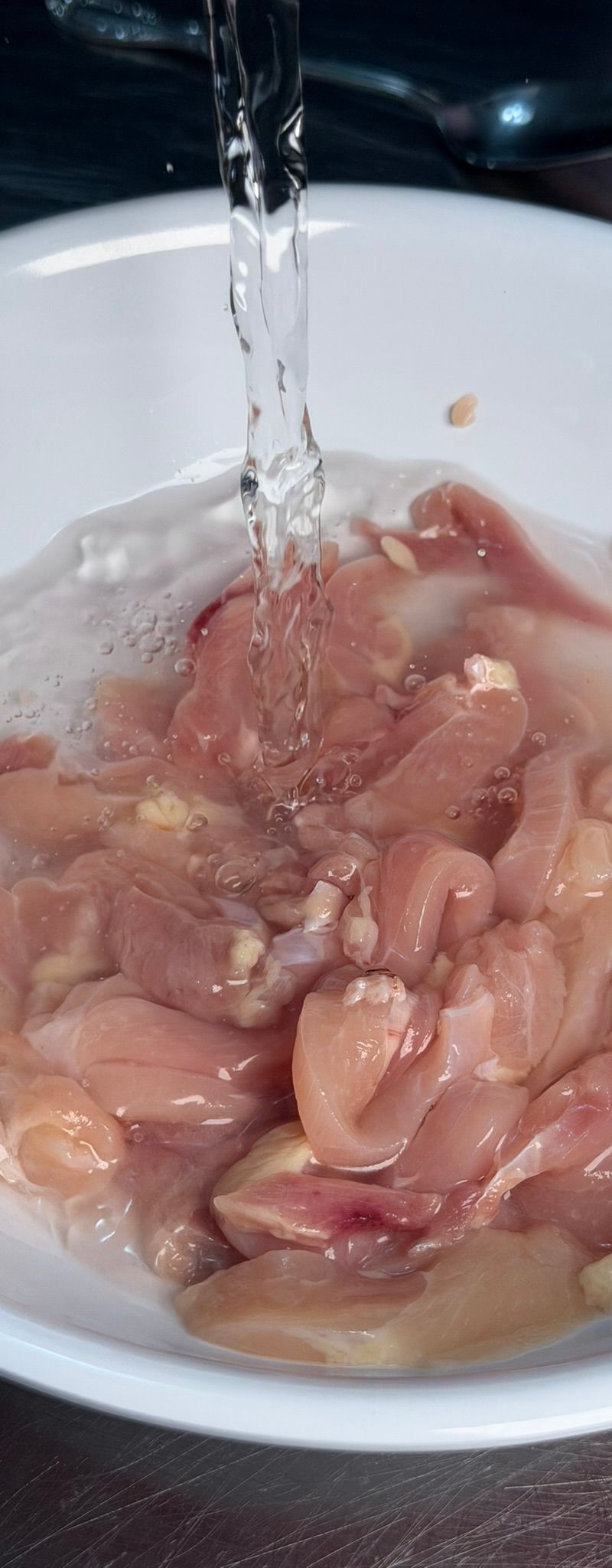
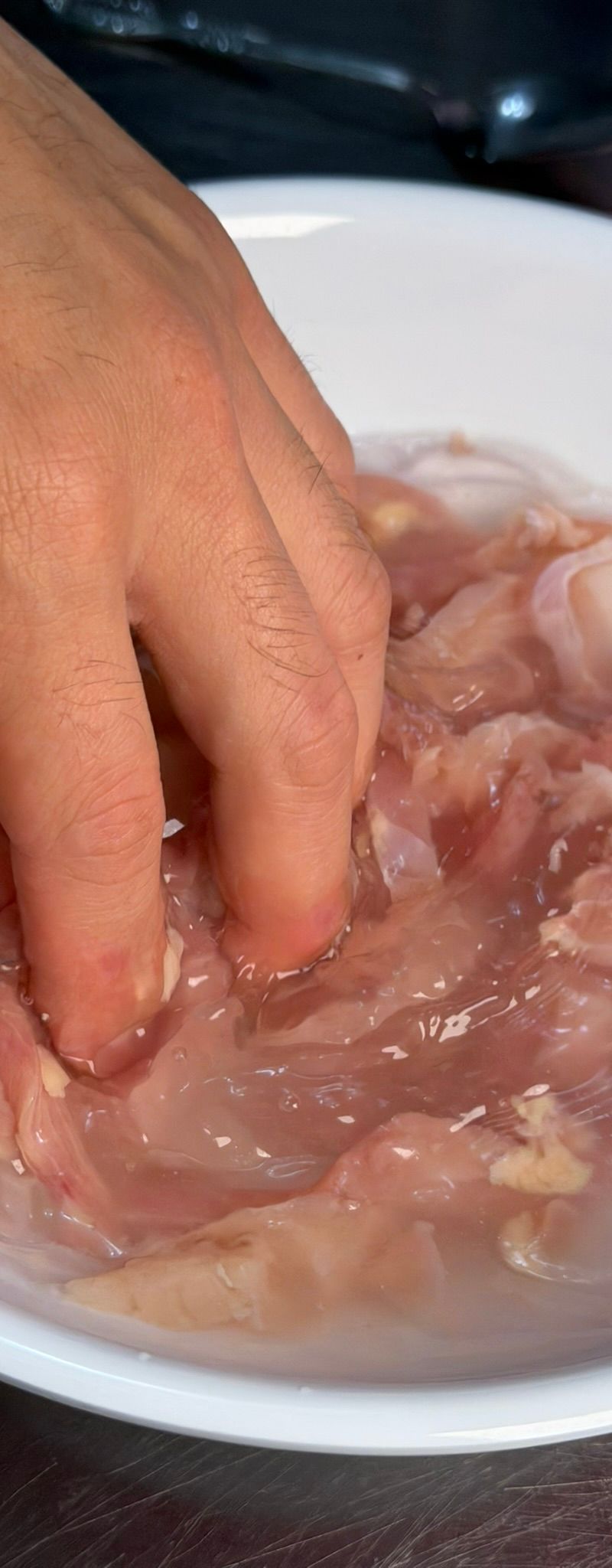
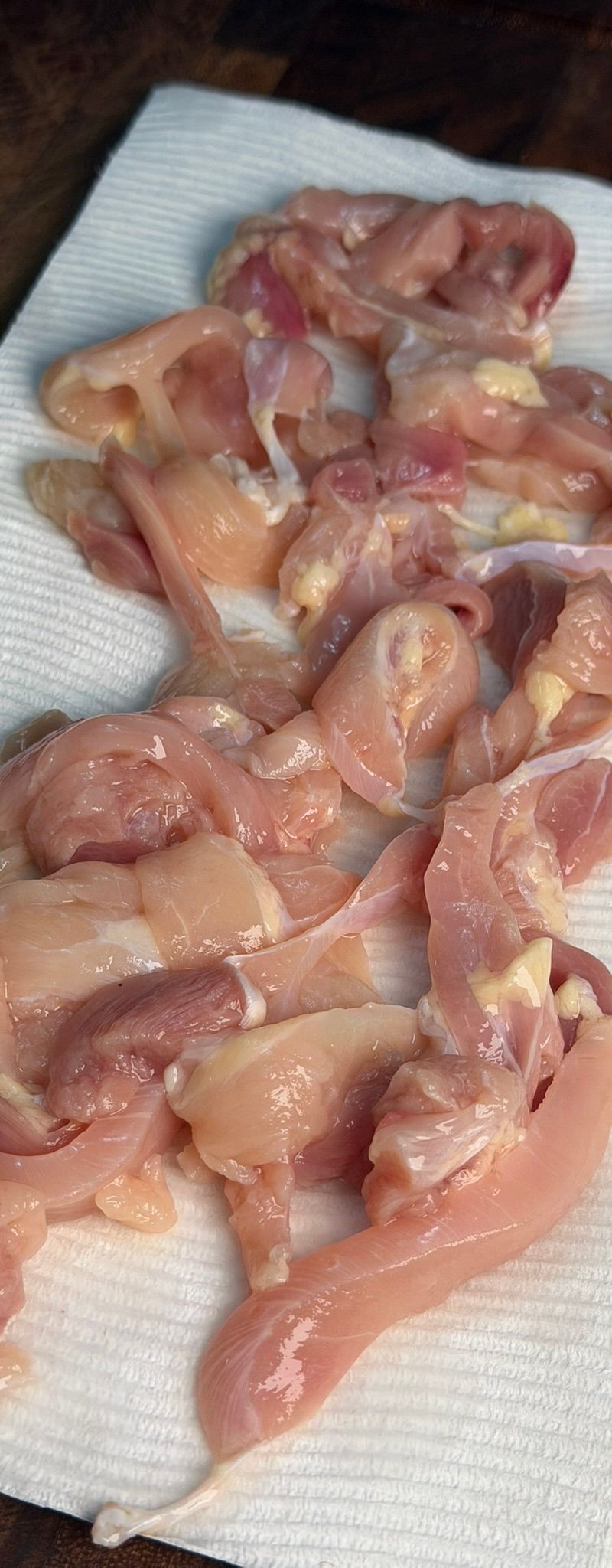
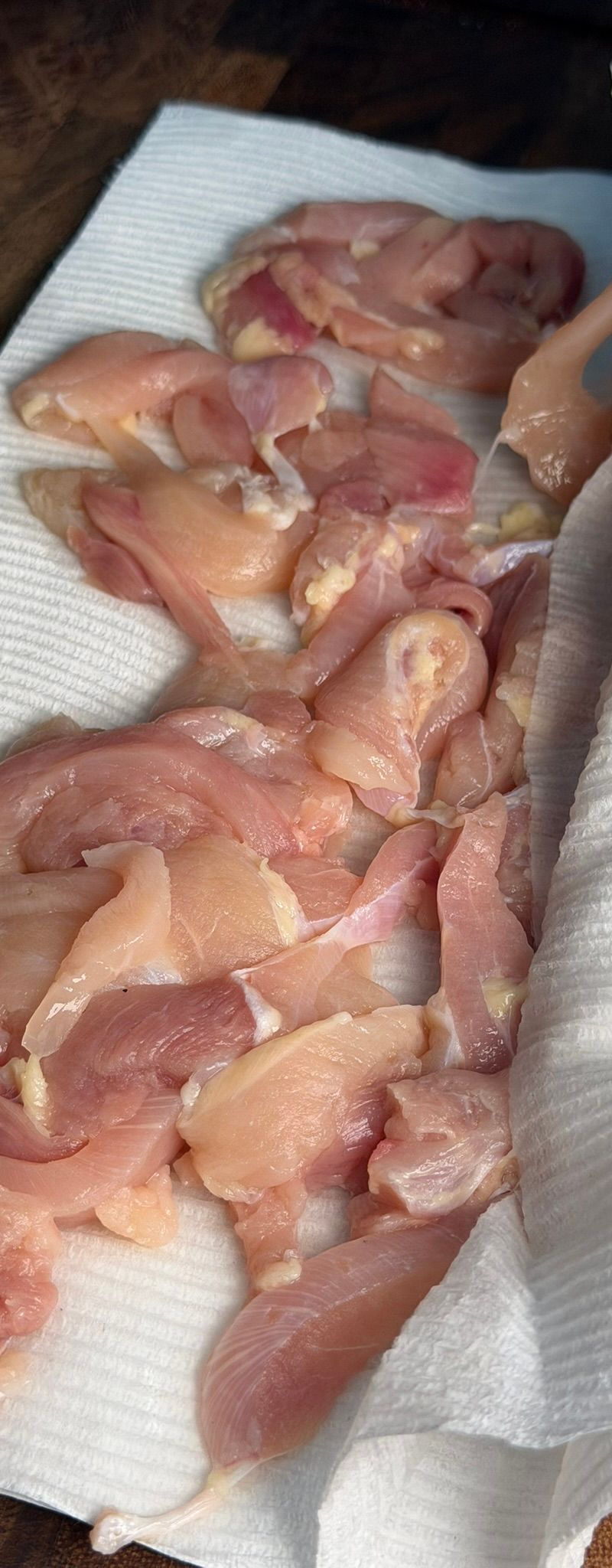
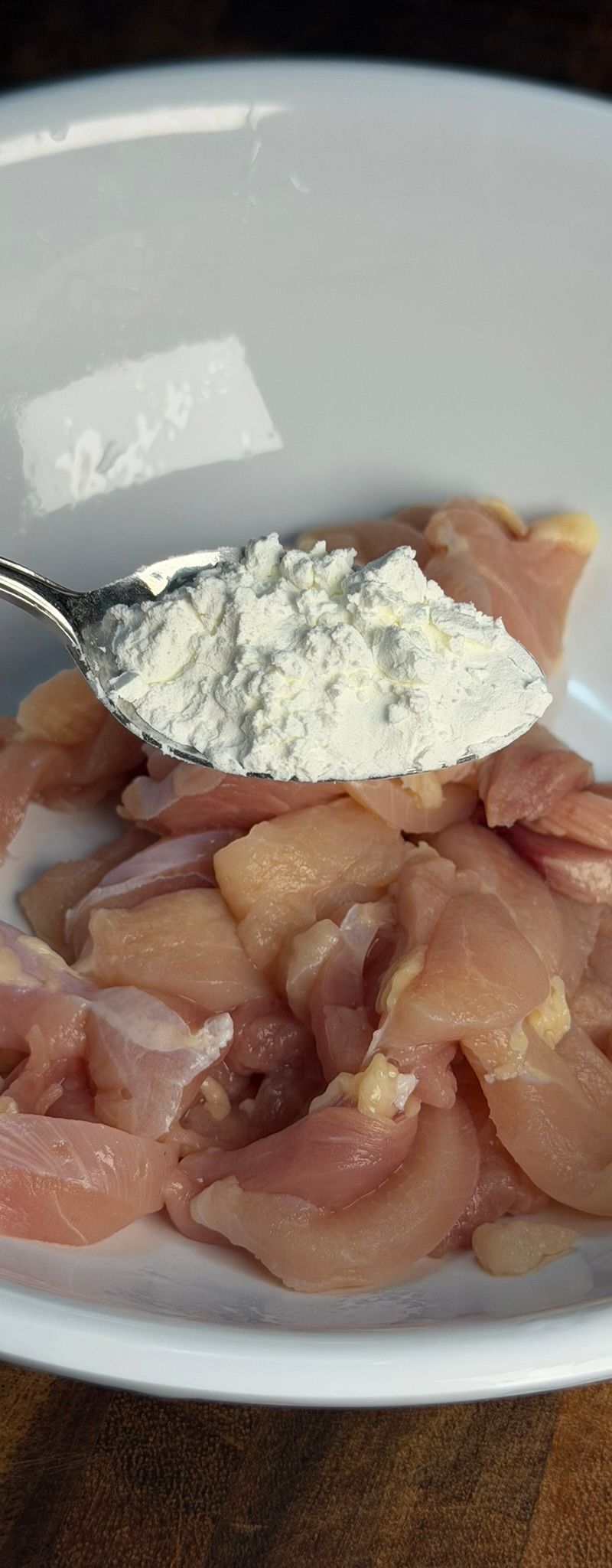
Pork (sliced): Identical to chicken. ¼ tsp (1.25 ml) baking soda per 1 lb (450 g), 20 minutes, rinse, dry, cornstarch. Pork tenderloin sliced thin responds especially well. Good for dishes like yu xiang pork or any fast stir-fry where the pork needs to stay tender at high heat.
Shrimp: Same technique, smaller dose. Use ⅛ tsp (0.6 ml) per 1 lb (450 g) of shrimp and only rest for 10 to 15 minutes. Shrimp protein is more delicate and overcooks fast, so less baking soda and a shorter window keeps the texture clean. The cornstarch step is the same. The result is shrimp that stays plump and snappy instead of rubbery and tight.