Garlic Crispy Pork Scallion Oil Noodles

Ground pork crisped with blistered scallions and garlic, tossed with wide rice noodles in a black vinegar soy sauce.
Scallion oil and black vinegar is one of those flavor combinations that once you know it, you see it everywhere. Chinese cold noodles. Shanghai scallion pancakes. Dipping sauces at every dumpling shop you've ever walked into. The combination works because they're doing opposite jobs. The scallion oil is deep, fragrant, and savory, the black vinegar is sharp, tangy, and rounded. One coats, the other cuts. Together they balance each other perfectly, and everything they touch tastes bigger.
This dish is built on that profile. Scallions sliced thin, dropped into hot neutral oil until they sizzle, darken, and crisp at the edges. What you're left with is oil that's been completely transformed, carrying the toasted perfume of the scallion into everything it touches afterward. Then black vinegar goes into the sauce alongside soy and a pinch of sugar, and the whole pan of noodles comes to life.
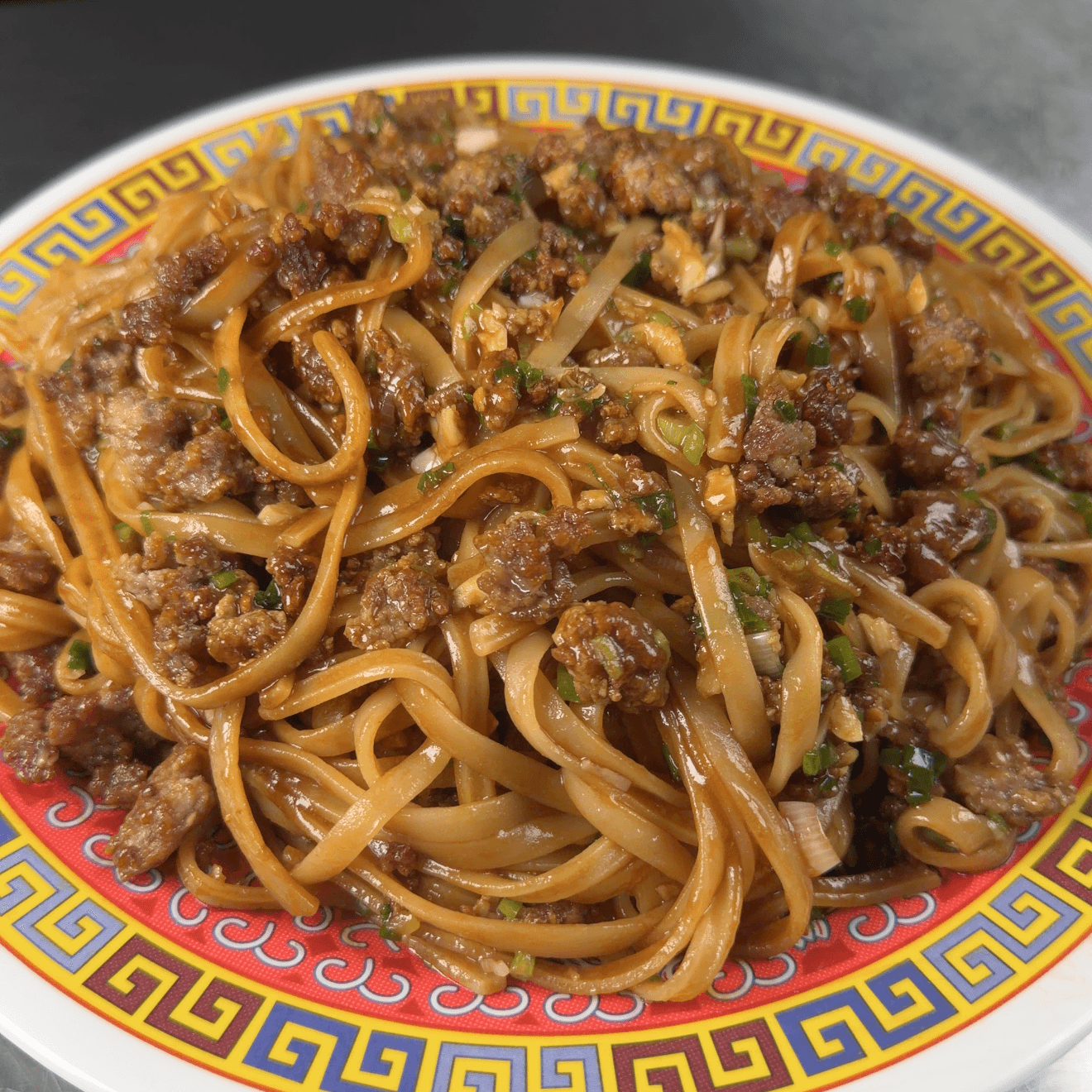
The pork is what pulls this out of side-dish territory into real dinner. Ground pork pressed flat into a hot pan, left alone until the bottom caramelizes, then broken up into crispy shards that scatter through the noodles.
Every strand of noodle picks up the scallion's depth and the vinegar's sharpness. The pork brings the crunch. The combination is what keeps you eating.
Keep the scallion oil trick in your pocket. Once you learn it, you'll use it on fried eggs, steamed fish, dumplings, cold noodles, everything. This dish is just the introduction.
- 01
Prepare the noodles
Soak rice noodles in hot tap water for 10 minutes while you cook everything else.- Don't boil wide rice noodles. The hot tap soak softens them just enough for them to finish cooking in the sauce.
- Heads up on hot tap water: in US homes, hot tap water often comes from a tank that may not be food-safe. If you're not sure, boil cold tap water and let it cool for a minute before using.
- 02
Render the pork and build the scallion garlic sauce
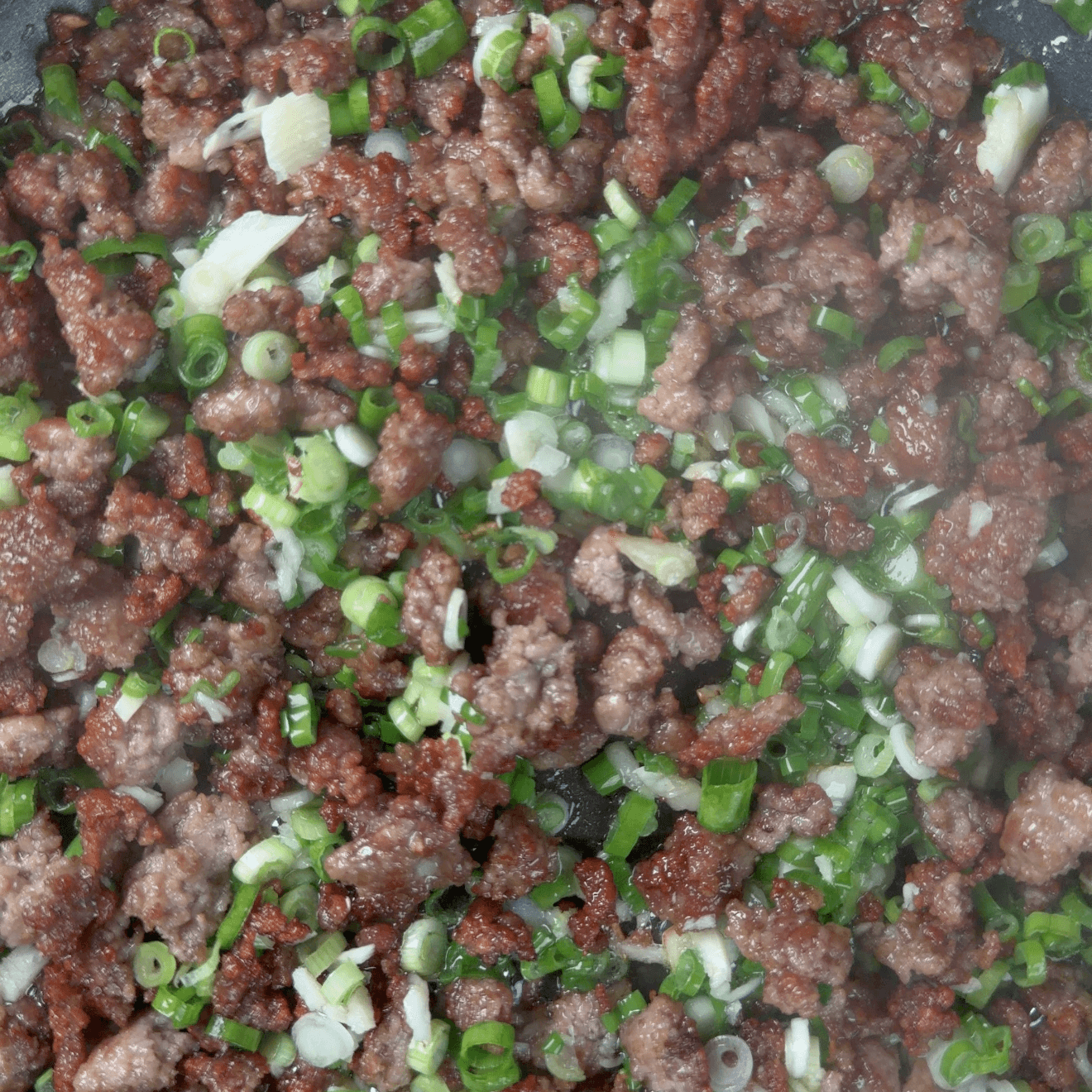
Heat oil in the skillet over medium-high. Add pork in a single layer. Don't break it up yet. Let it sit 2 to 3 minutes until the bottom caramelizes and darkens. Break apart and continue cooking until most pieces have crispy caramelized edges, 3 to 4 more minutes. Add scallion segments and sliced garlic directly into the pork and its rendered fat. Stir and let the scallions and garlic blister and caramelize in the pork fat, 3 to 4 minutes, until the scallions look jammy and the garlic turns deep golden. Add light soy, dark soy, black vinegar, and sugar. Stir and let sizzle 30 seconds.- Give the pork time to get crispy. Don't ball it up, don't stir constantly, but also don't completely ignore it. The goal is crispy caramelized edges on most of the pieces.
- If using lean pork (or the fat content isn't listed), add an extra 1 tbsp oil before the pork hits the pan. Without enough fat, the scallions and garlic won't have enough to cook in.
- The scallions should look jammy and almost collapsing. That's the sign the pork fat has taken on their flavor.
- Go slow and steady on the scallion-garlic step. Scorched scallions turn the pan bitter. If it's starting to darken too fast, pull the heat back.
- 03
Cook the noodles in the sauce
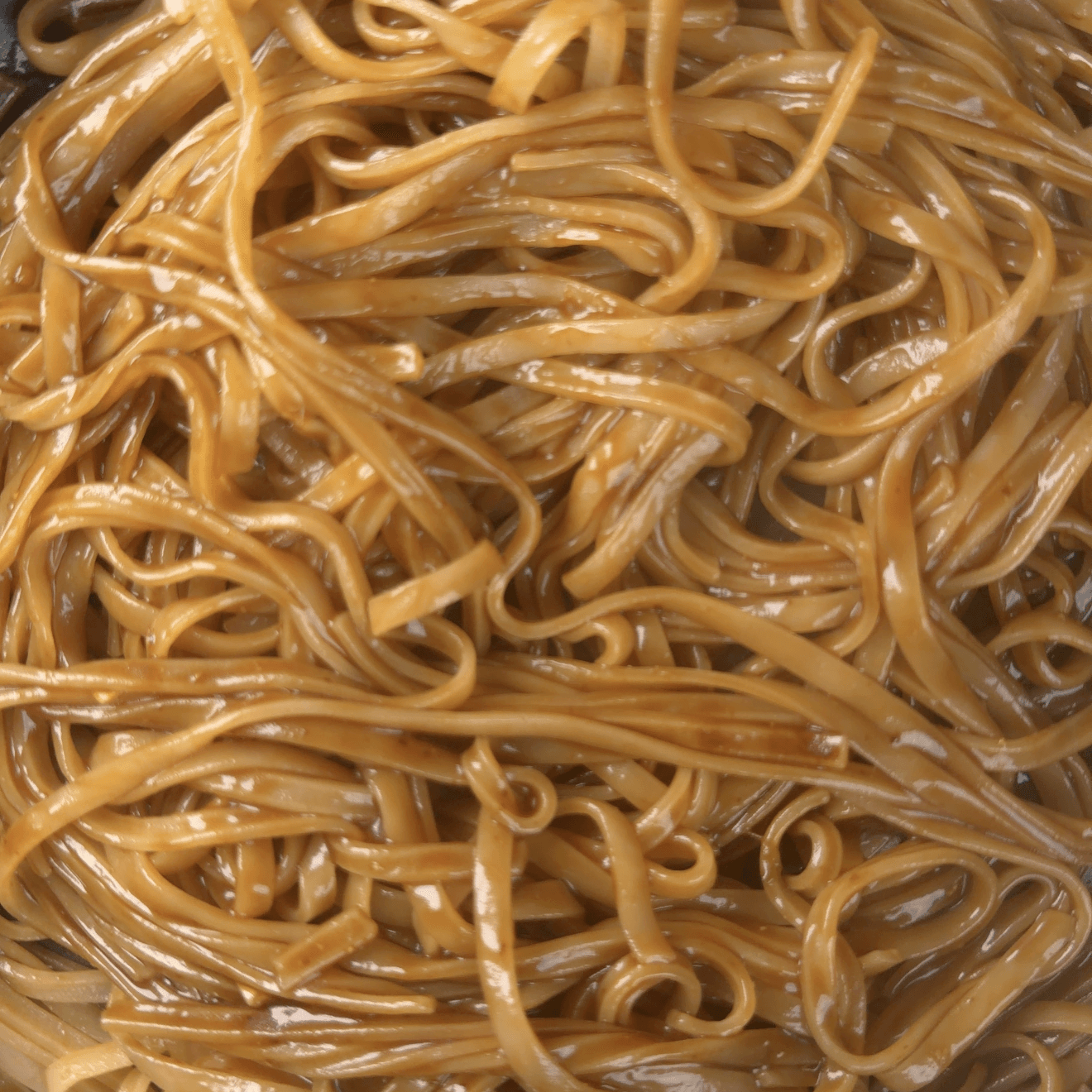
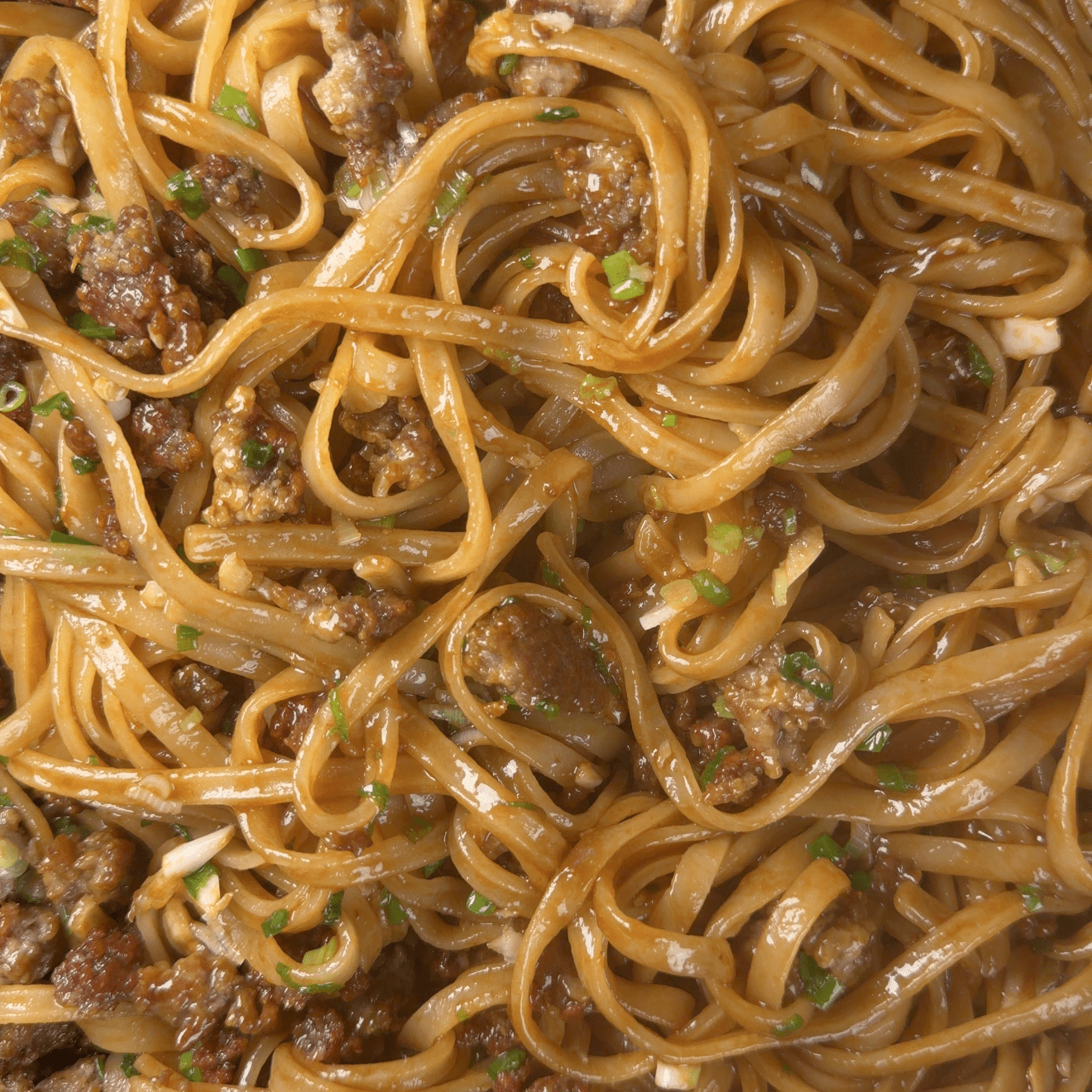
Drain soaked noodles and add directly to the pan. Pour in 1/2 cup stock to start. Toss continuously, adding more stock a splash at a time as the noodles absorb it, 3 to 4 minutes total. Cook until the noodles are glossy, tender, and the sauce clings to every strand.- The dark soy should give everything a deep golden-brown color. If the noodles look pale, add a little more dark soy.
- Add the stock gradually. If you dump it all at once, the noodles won't absorb it cleanly and the sauce stays watery.
- 04
Finish and plate
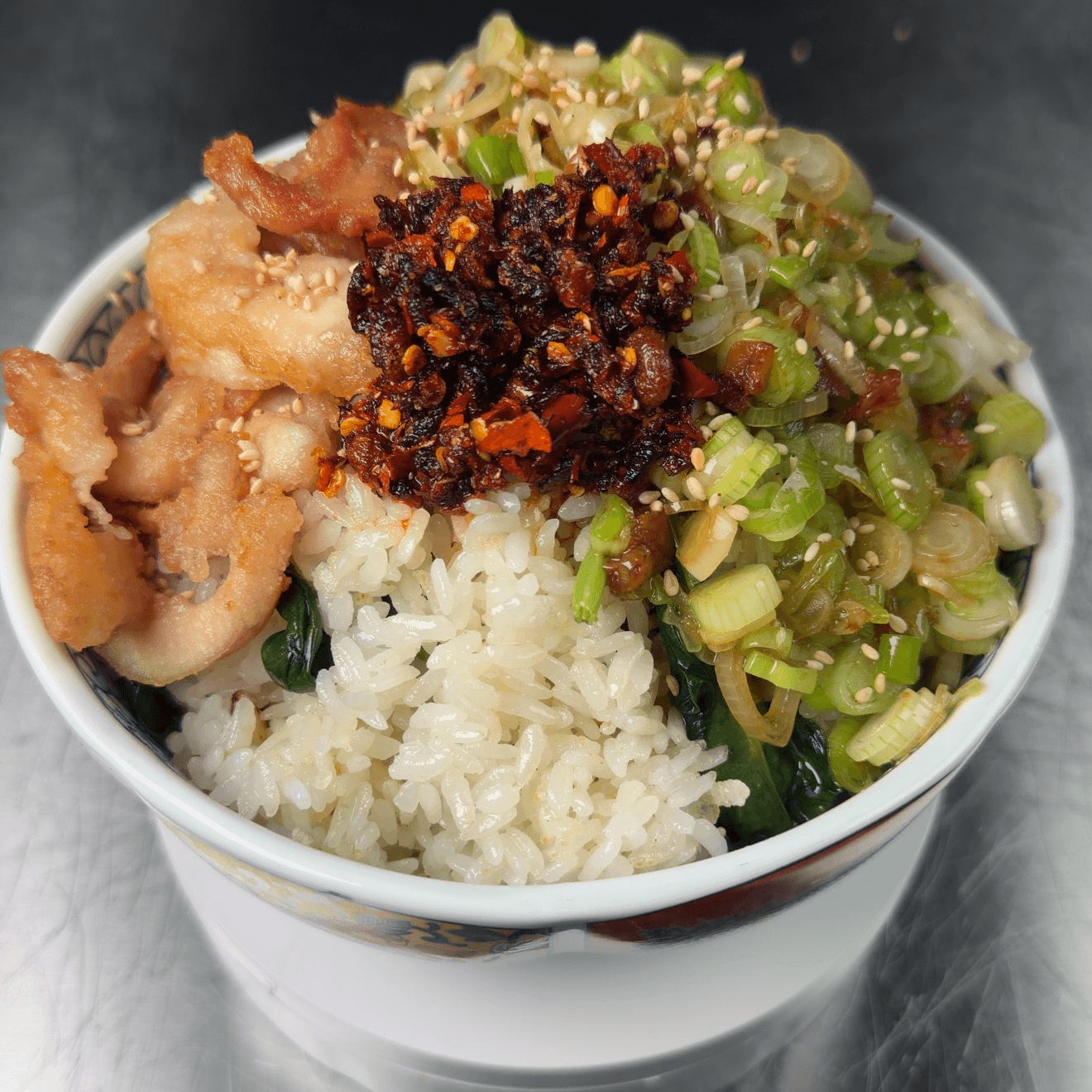
Pile noodles high in a wide bowl. Finish with sliced scallion greens, sesame seeds, and a chili oil drizzle.- The black vinegar's sharpness cuts through the rich scallion oil and pork. Every bite should have both sides of that flavor balance.
- The noodles at the bottom of the pan will have picked up the most caramelization and sauce. Spoon those over the top when plating.