Japchae is a Korean party dish, served at birthdays, holidays, and potlucks throughout the country. It looks like a stir-fry but cooks more like a composition: each component (beef, noodles, vegetables, mushrooms) is cooked separately and then combined at the end. This approach lets each ingredient keep its own texture and flavor instead of turning into a homogenous stir-fry mass.
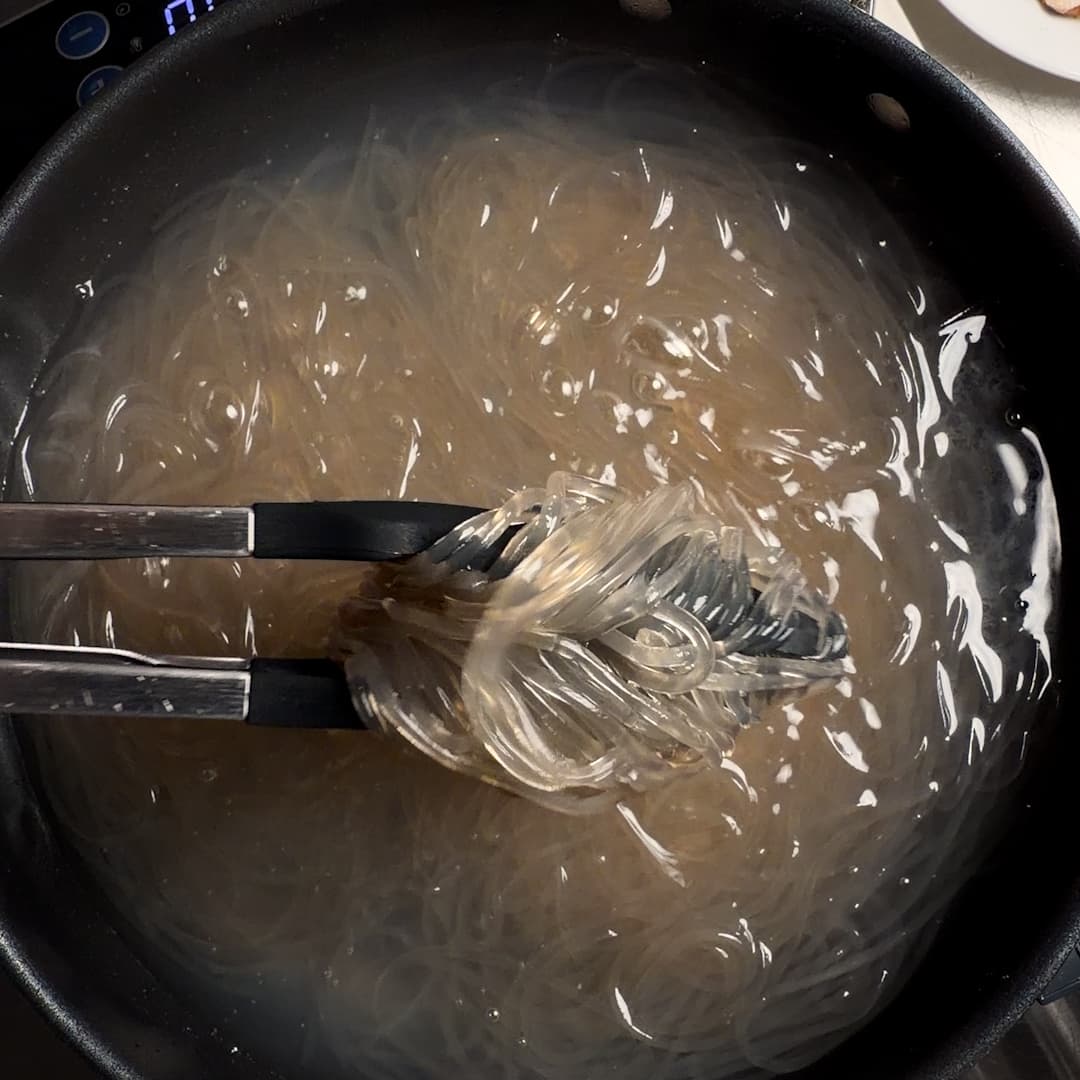
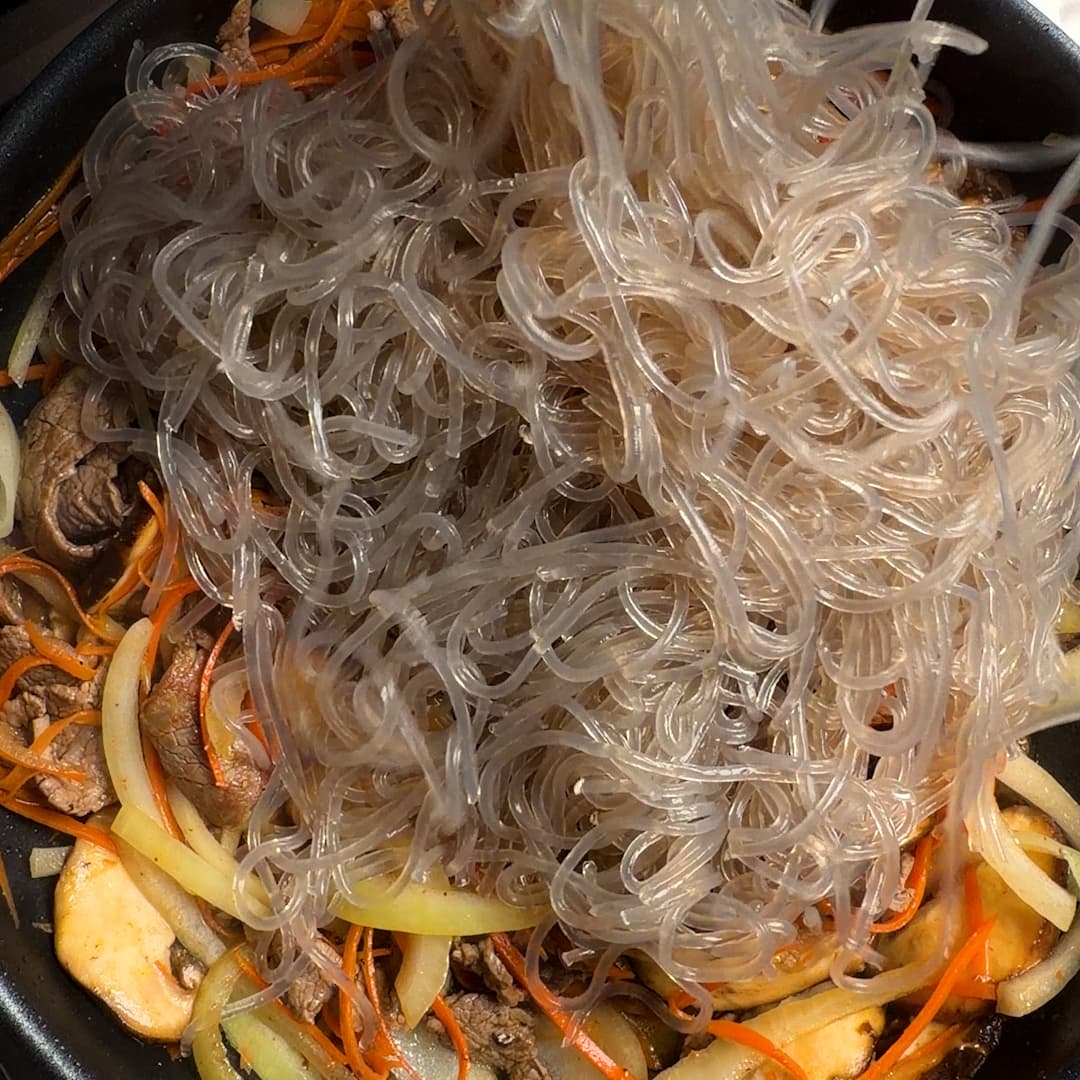
The noodle is what makes japchae distinctive. Dangmyeon, Korean sweet potato starch noodles, are translucent, springy, and chewy in a way wheat noodles never are. They slurp long and hold sauce without getting soggy. Dried noodles take 6 to 8 minutes to cook tender. Don't overcook them. Gummy japchae noodles are the most common failure mode.
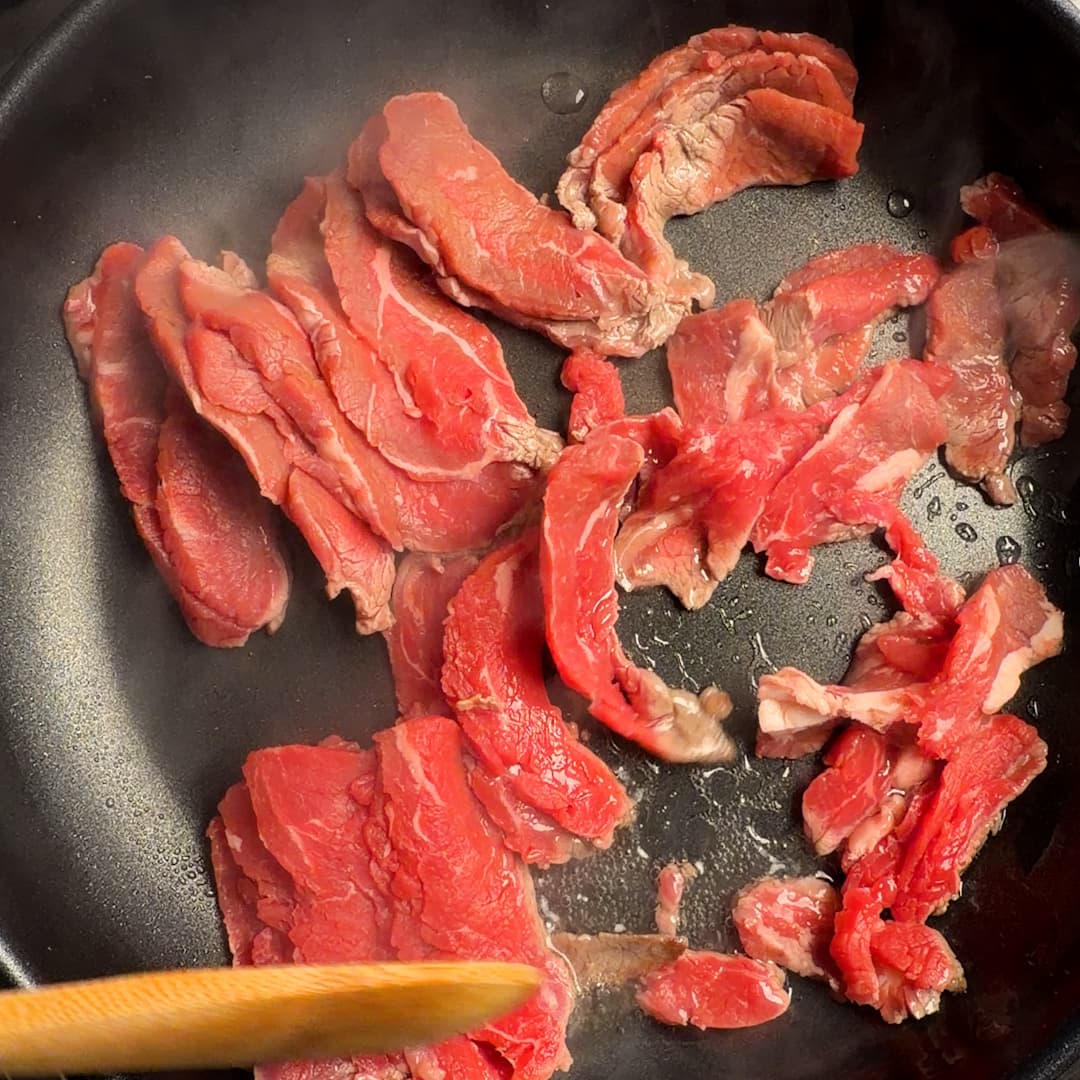
The beef goes next. Thin-sliced sirloin or ribeye, tossed briefly with garlic and a splash of oil until just cooked, not overdone. Remove and set aside. The pan now has beef fat and garlic to work with.
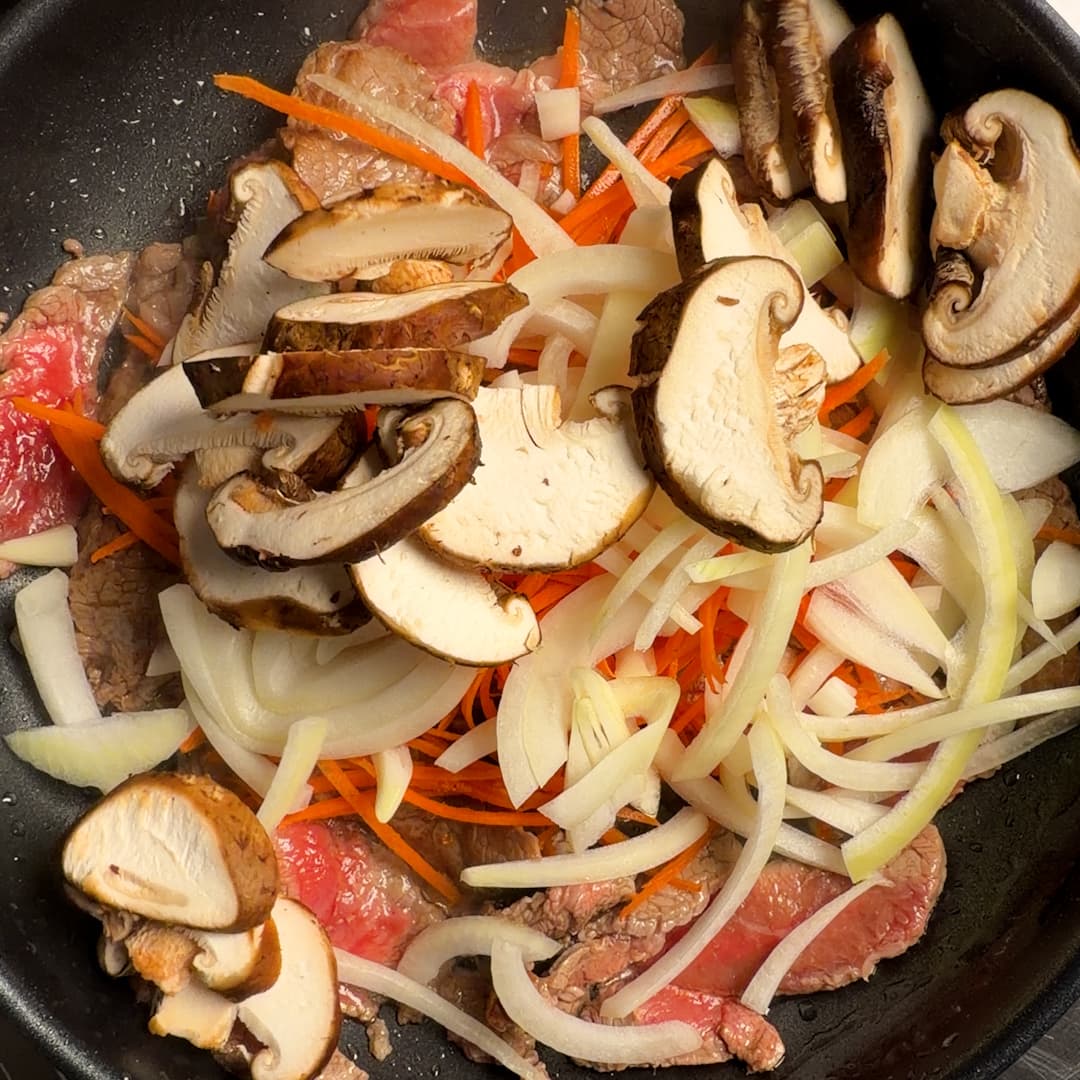
Vegetables cook in that pan in a sequence based on moisture and density. Onion first, then carrots, then shiitake mushrooms. Each one for 1 to 2 minutes, just to soften the edges without turning limp. The shiitakes are particularly important. They add the umami bass line that the soy sauce builds on.
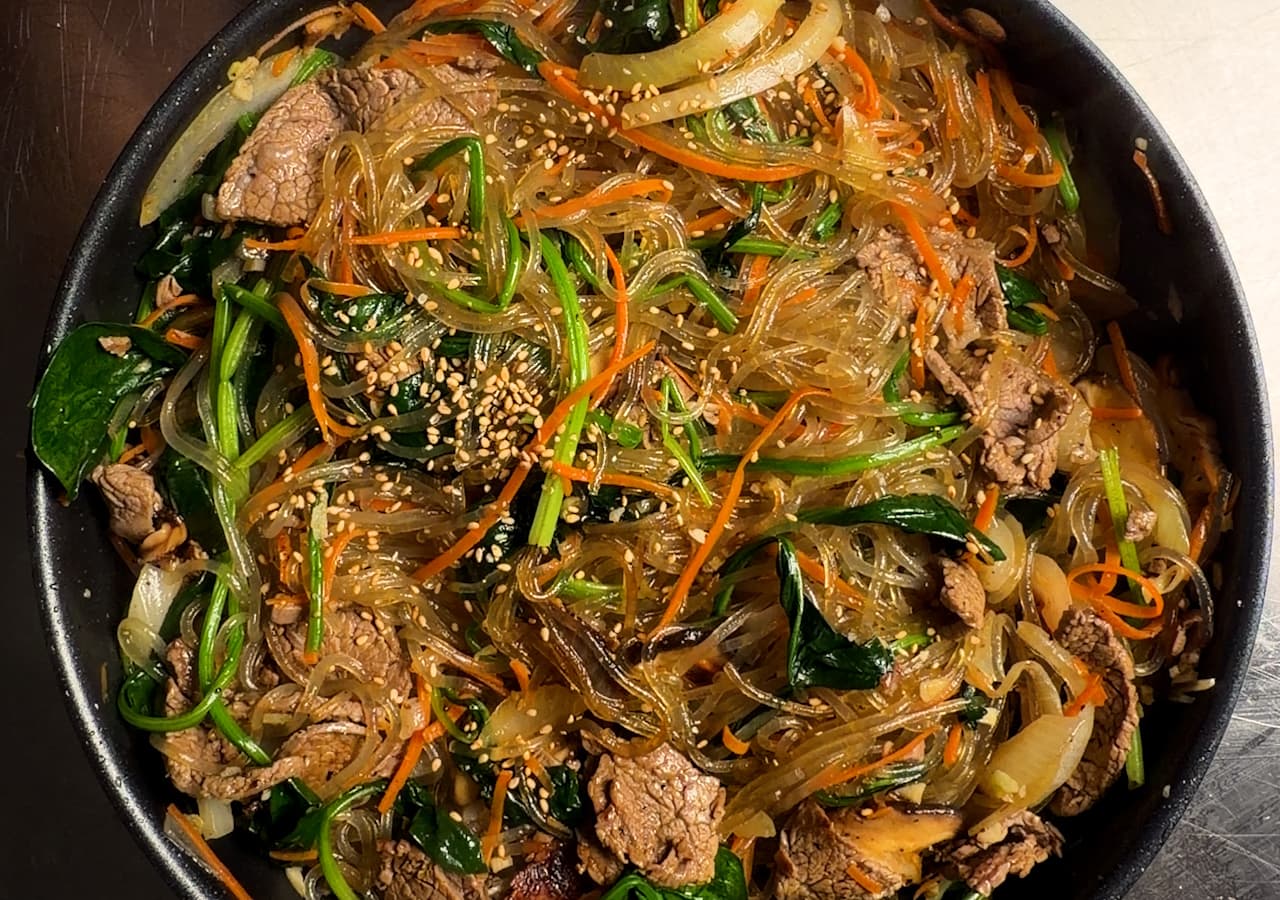
Everything combines at the end. Cooked noodles, cooked beef, cooked vegetables, soy sauce, sugar, sesame oil, black pepper. Toss gently until everything is evenly coated and glossy. The sugar is important. Korean japchae is sweeter than most stir-fries, and the sweetness balances the saltiness of the soy sauce into something uniquely Korean.
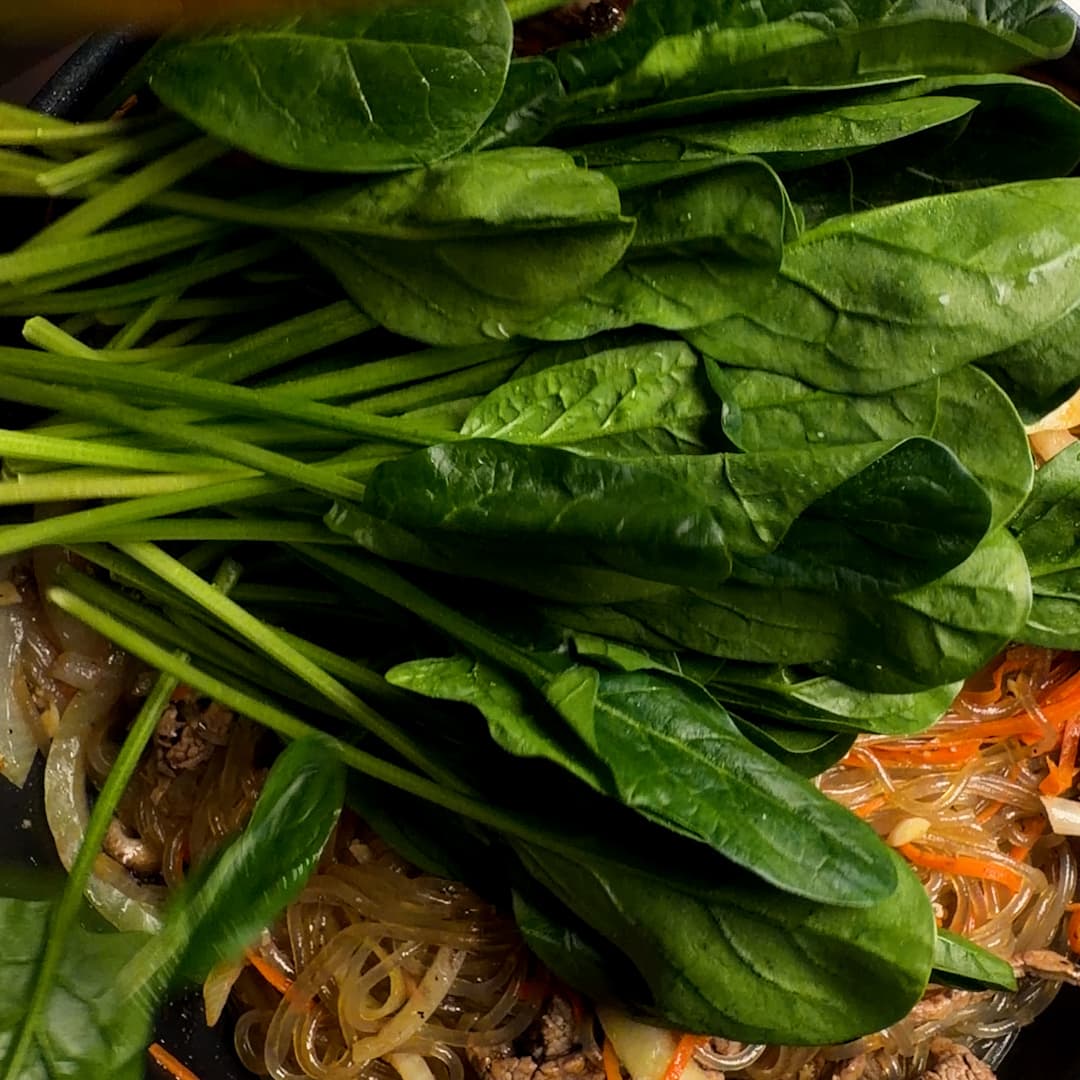
Baby spinach wilts in from residual heat, tossed at the very end. Toasted sesame seeds on top, serve warm or room temperature. It's the dish people fight over at family parties.