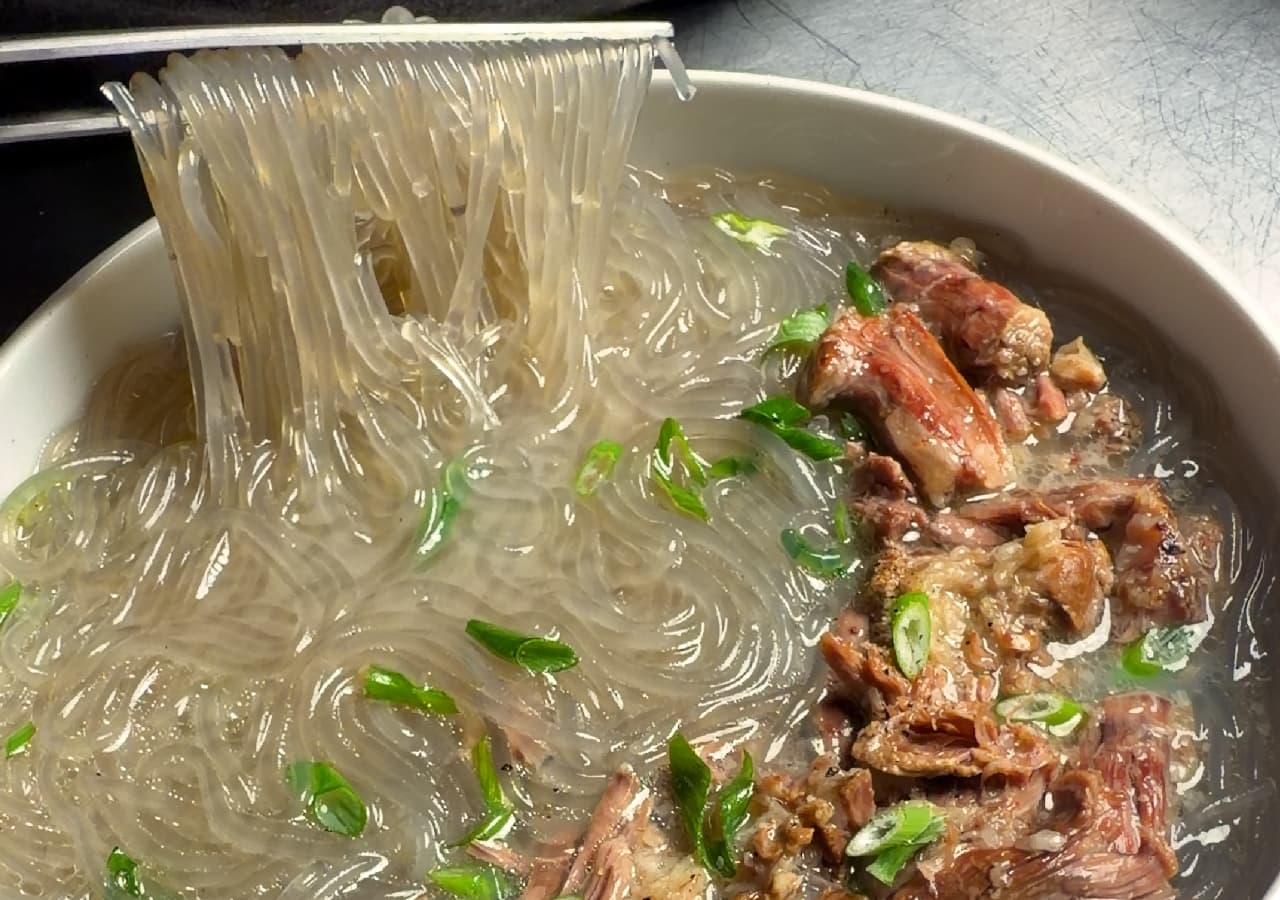
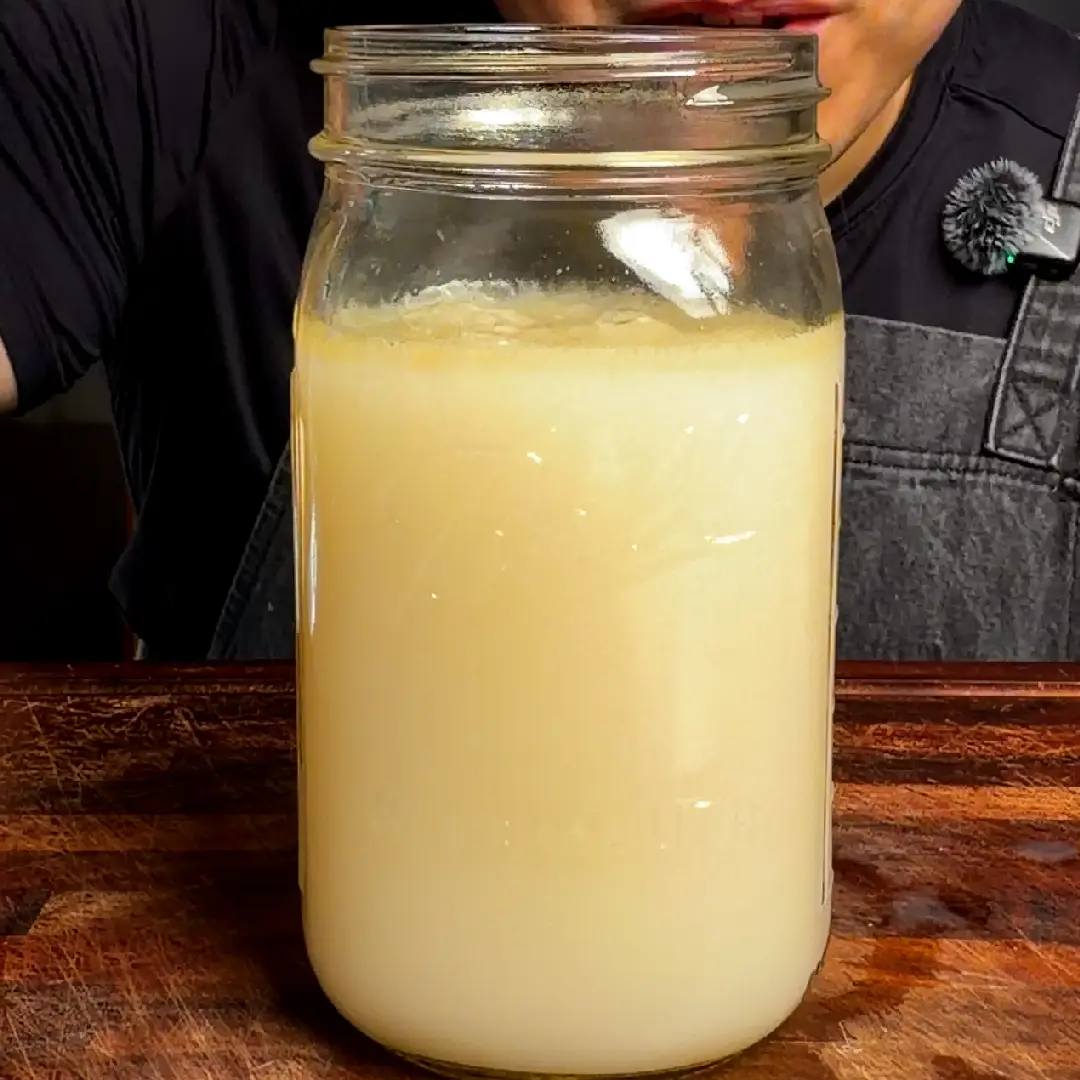
Seolleongtang is one of the most iconic Korean soups, a milky white bone broth made from slow-simmering beef bones until their collagen and marrow emulsify into the water and turn the broth from clear to opaque. This recipe is a simplified version using oxtail, which has enough marrow and connective tissue to create that signature milky effect without requiring a giant stockpot of mixed bones.
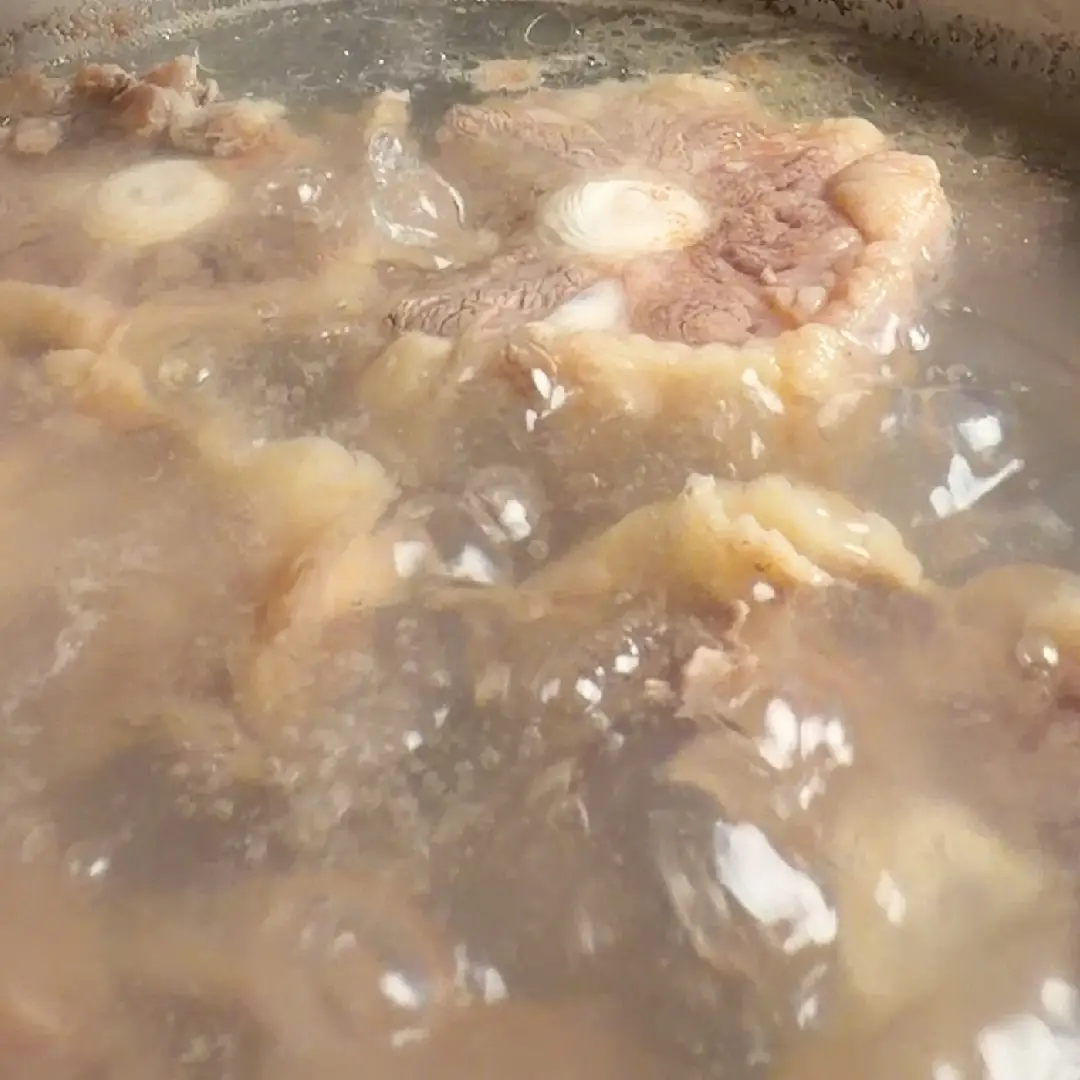
The double-boil technique is mandatory. Fresh oxtail comes with blood and impurities clinging to the bone, and if you simmer it straight into a broth without cleaning, the final liquid turns grey and tastes murky. The fix is to boil the oxtail hard in plain water for 10 minutes, drain everything, rinse the bones under cold running water, and wash the pot clean. What remains is clean oxtail ready to make clean broth.
The second boil is the broth itself. Clean oxtail in a clean pot with 12 cups of fresh water. Rolling boil, then a steady simmer for 2 and a half to 3 hours uncovered. During this time, the collagen in the joints and connective tissue dissolves into the water, and the marrow from inside the bones emulsifies into tiny fat droplets that give the broth its milky appearance. You'll know it's working when the liquid turns from clear to pale opaque.
Salt goes in only at the table, not during cooking. Korean bone broths are traditionally served unsalted so each diner can season their bowl to taste. This keeps the broth flexible for adding kimchi, pickles, or gochugaru on the side.
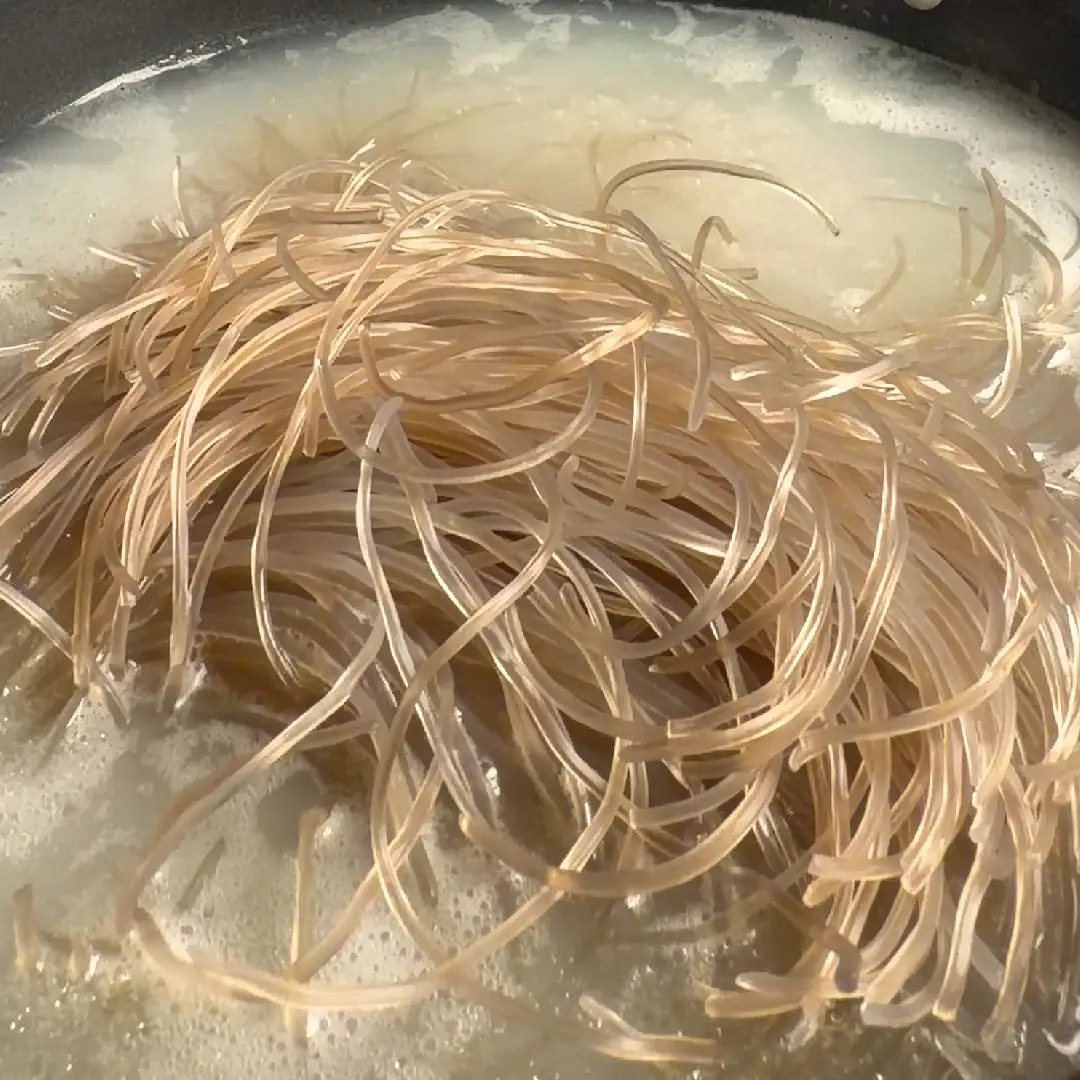
Glass noodles cook separately in water, then land in the hot broth at serving. Scallions on top, pepper, a dash of salt. A bowl of hot seolleongtang is Korea's version of chicken soup, and it feels exactly that comforting.