A parasite that lives on lettuce cannot be washed off, and heat is the only thing that reliably kills it. Here is the honest science, plus three genuinely good ways to cook iceberg.
Charles Kim·Chef Fatty
July 21, 2026
Here is a thing almost nobody tells you at the salad bar. There is a parasite that shows up on lettuce from time to time, and you cannot wash it off. Not with cold water, not with a produce spray, not with a vinegar soak. It shrugs all of that off. The one thing that reliably kills it is heat.
Which sounds like the setup for a scary headline. It is not. It is the setup for a fun cooking fact, because cooked lettuce is secretly delicious, and once you know the trick you get three genuinely good dishes out of the deal. Let me walk you through the science, keep it honest, and then feed you.
The whole thing on a whiteboard. Heat to 158F kills it. Washing and acid do not.
First, do not panic
The parasite is called cyclospora, and the illness it causes (cyclosporiasis) is real but uncommon. It is also strongly seasonal in the US, mostly showing up from around May through August, with the peak in late spring and summer. If you are reading this in January, this is basically trivia.
It is not contagious. You cannot catch it from a sick friend, and you cannot catch it from a food handler's hands. The parasite needs days out in the environment to mature before it can infect anyone, so a freshly passed one is not infectious. This is not a norovirus situation where one sick line cook takes out a whole restaurant.
When it does make people sick, it is usually tied to a specific contaminated lot of produce (often imported), not to lettuce as a category. It is self-limited and treatable. A doctor can clear it up with a course of antibiotics. So the goal here is not fear. The goal is that you understand how it actually works.
The reason it is on your radar at all is the news. There was a 2026 outbreak tied to shredded iceberg lettuce that ran to over 1,600 cases across several states. Over the longer US history, the classic culprits are imported fresh produce broadly: raspberries, basil, snow peas, mesclun lettuce, and cilantro. Leafy greens and bagged salad have joined that list. That is the news peg. Now here is why it behaves the way it does.
What cyclospora actually is, and why your usual tricks fail
Cyclospora cayetanensis is a single-celled parasite. It travels in a form called an oocyst, and that oocyst is built like a tiny armored seed. The wall is tough, waxy, and what scientists call acid-fast, which is a fancy way of saying acid does not faze it. That one structural fact explains almost everything annoying about it.
Because the wall resists water and chemistry, rinsing does not get it off. The FDA is blunt about this: washing is not likely to remove cyclospora from produce. Chlorine rinses and standard produce sanitizers do not reliably kill it either. It just holds on.
You should still wash your produce. Washing lowers your risk from plenty of other things (dirt, pesticide residue, other bugs), so keep doing it. Just do not tell yourself that a rinse has handled the cyclospora question, because it has not.
The same goes for acid. Vinegar, lemon juice, a raw quick pickle. That waxy acid-fast wall means the parasite is not reliably killed by a sour bath. A raw pickle tastes like it should be "processed" and safe, but chemically it is doing nothing to this particular organism. And freezing is not a dependable home control, so do not count on your freezer as a kill step either.
Why heat is the one that works
Heat is the exception. In lab studies the parasite is inactivated at 70C (158F) and at boiling. Cooler is not good enough: holding it at 50C (122F) for a full hour did not do the job. So there is a real line here, and the line is temperature.
The practical rule, straight from CDC guidance on preventing cyclosporiasis, is to cook produce to an internal temperature of at least 158F (70C). The recipes below aim for 160F or hotter, which sits safely above that bar. Hit that number in the center of the food and the parasite is done.
Cook it through, not just on the outside. This is the part people get wrong. Heat has to actually reach the interior of the food. A charred grilled lettuce wedge is the cautionary tale: the outside looks blackened and cooked, but the dense center can stay cold and raw, which means it never got to a killing temperature. Do not be fooled by a good sear. The middle is what counts.
Iceberg in the hot pickle brine. The heat, not the vinegar, is the kill step.
Quick FAQ
Do I need to cook all my lettuce now? No. For most people, most of the time, a raw salad is completely fine. The realistic playbook is simple: buy from reputable sources, pay attention to recalls, and during an active outbreak avoid the specific product that is named. Cooking lettuce is a fun option and a sure kill, not a daily requirement.
Does washing it help? It helps with a lot of things, but not this one. Cyclospora resists rinsing, chlorine, and produce washes. Keep washing your produce for general reasons. Just do not treat it as your cyclospora defense.
Will vinegar or lemon make it safe? No. Acid does not reliably kill it because of that acid-fast wall. In the pickle recipe below, the vinegar is for flavor and keeping. The heat is what makes it safe.
Is it contagious? No. You cannot catch it from another person or from someone's hands. It needs time in the environment to become infectious, so person-to-person spread is not how this works.
How would I even know I had it? The tell is watery diarrhea that drags on for weeks, usually starting about a week after exposure, often with fatigue and loss of appetite. If that is you, see a doctor. It is easily treated once someone knows to look for it.
Now the fun part: three ways to cook iceberg
Here is the reframe. Cooked lettuce is not a punishment. It goes sweet, silky, and savory in ways raw lettuce never does. These three recipes all clear the 158F bar, so they are safe by design, and they are worth making even if you never think about parasites again.
Iceberg Pickle (one-pot)
A quick fridge pickle where the boil, not the vinegar, is what makes it safe.
The finished pickle, iceberg with carrots and tomato.
Optional: 1 cup cherry tomatoes, 1/2 cup sliced carrots, 2 cloves crushed garlic
Bring the brine to a boil.
Drop in the lettuce and any other veg you want, and make sure everything is submerged. Check the temperature: if it is below 160F, turn the heat back on and bring it back to 160F (a few seconds of gentle simmer), then turn off. This heat step is what kills the parasite, not the vinegar, so do not skip the temp check. (Note: cherry tomatoes will soften in the hot brine.)
Let it come to room temperature, then move it to a jar and keep it in the fridge.
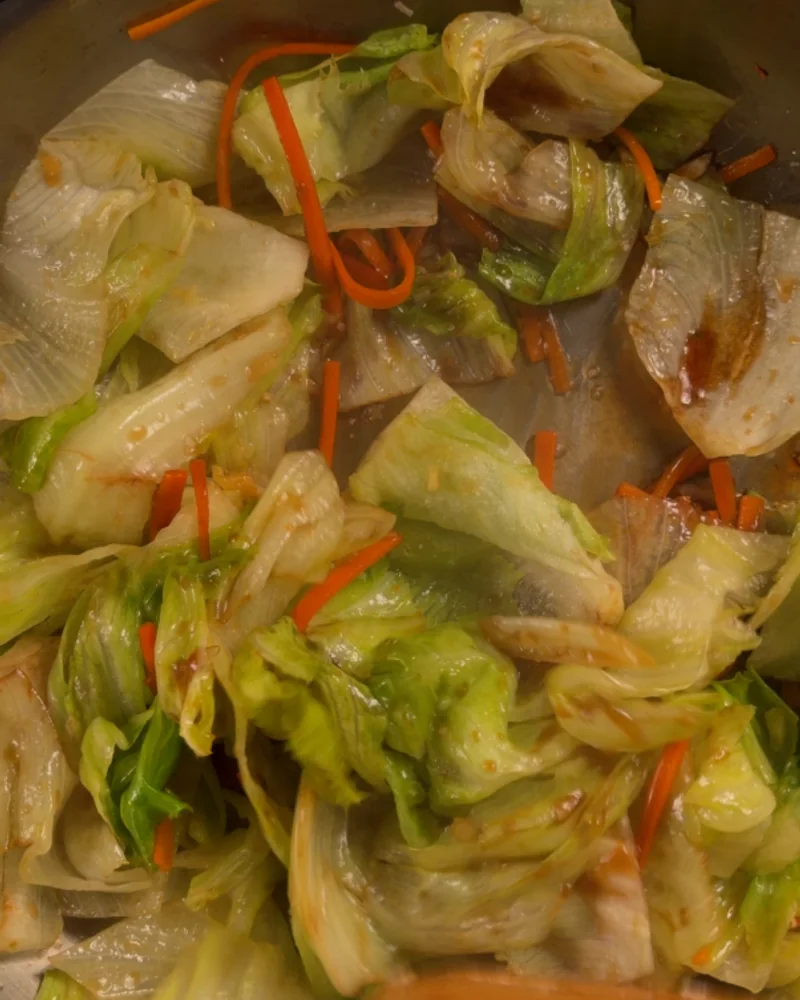
Garlic Oyster-Sauce Stir-Fried Iceberg
The fast one, about 10 minutes, crisp-tender and sweet.
Garlic oyster-sauce iceberg, crisp-tender and glossy.
1 head iceberg cut into large pieces and spun or patted bone dry
2 to 3 cloves garlic, minced
1.5 tbsp neutral high-heat oil
1 tbsp oyster sauce
1 tsp soy sauce
1/2 tsp sugar
Pinch of salt
Optional splash of Shaoxing wine
Dry the leaves thoroughly. Wet lettuce steams instead of searing and floods the pan.
Heat the pan on high until it is smoking hot (about 450F). Add oil and garlic, stir about 10 seconds until fragrant.
Add all the lettuce at once. Toss hard for 60 to 90 seconds until it wilts and deepens in color, heat on max so no clumps sit still.
Add the oyster sauce, soy, sugar, and wine if using. Toss 20 to 30 seconds while the released water flashes off.
Plate right away, leave any pooled liquid in the pan.
That smoking-hot pan and the full wilt are doing double duty here: they make the dish taste right, and they carry the leaves well past the safe temperature.
French Braised Iceberg (Laitue Braisee)
The fancy surprise, about 40 minutes, silky and glazed.
French braised iceberg with peas and bacon.
1 head iceberg cut into 4 to 6 wedges through the core so they hold together
1 tbsp butter, plus a knob to finish
1 small carrot, finely diced
1 shallot or 1/4 onion, diced
1/4 cup dry white wine or dry vermouth
1 to 1.5 cups chicken or vegetable stock
Salt and pepper
Optional thyme, a handful of peas, or a little bacon
Blanch the wedges in boiling salted water 3 minutes, drain and gently press out the water.
Melt the butter in a wide pan, soften the carrot and shallot a few minutes. (If using bacon, render it first, then use it here.)
Nestle in the wedges, pour in the wine, add stock to almost cover. Add thyme and any peas or bacon.
Cover and simmer gently 10 to 15 minutes (or braise in a 325F oven) until the lettuce is tender and any bacon is fully cooked.
Lift out the lettuce, reduce the liquid to a syrupy glaze, swirl in the finishing butter, and spoon it over.
The blanch plus the covered simmer here are the opposite of the grilled-wedge trap. The heat soaks all the way into the core, so the middle actually gets cooked instead of just looking cooked.
Cooked lettuce (pickled, stir-fried, or braised) is one of the more underrated things you can put on a plate. Learn the trick because it is smart. Keep doing it because it tastes good.
Weekly articles
Enjoy the science? There's more every week.
New food science article every week. Sign up free to get notified, or go ad-free with membership.
Hi Chef Fatty! Thank you for the advice, I will surely add this options for processing lettuce to my arsenal. Also, I find valuable the health advice for cooks all around!!!!
Every Asian stir-fry sauce is the same four dials you turn up or down: salty and umami, aromatic, sweet, and acid, plus heat. Learn the chemistry behind each one, and how one base sauce becomes seven.