Fish Sauce: Why It Smells Terrible But Tastes Incredible
Fish sauce contains some of the most concentrated glutamates in the natural world alongside some of the most aggressively unpleasant volatile compounds in food. Here is why both come from the same bottle, and how heat and acid let you keep one and lose the other.
Charles Kim·Chef Fatty
April 30, 2026
Open a bottle of fish sauce. Take a sniff. Your brain processes something between rotting fish, a boat dock, and a locker room. Now put a teaspoon into a hot stir-fry or a Thai dressing and taste it. Clean. Deep. Savory. Nothing offensive at all.
The smell and the flavor come from the exact same fermentation process. What changes is what happens to the sauce before it reaches your tongue.
What you are actually smelling
Fish sauce is made by layering small fish, almost always anchovies, with salt at a ratio of roughly 3 parts fish to 1 part salt, then fermenting the mixture for 12 to 24 months. During that time bacteria and enzymes break down the fish proteins into two very different categories of molecules. The first is glutamates, which produce deep umami flavor. The second is volatile organic compounds, which produce the smell.
Here is exactly what is in the bottle and where else you have encountered each compound.
Trimethylamine (TMA). The single biggest contributor to the fishy smell. Boiling point: 2.87°C (37°F), which means it is technically a gas at room temperature, only held in solution by the liquid. The moment you apply heat, it converts to gas almost instantly. TMA is also produced by rotting fish, certain bacterial infections, and a rare metabolic disorder called trimethylaminuria, where the body cannot break down TMA and secretes it through sweat and breath.
Ammonia (NH3). Sharp, acrid, cleaning-product smell. Boiling point: minus 33°C (minus 28°F). It is already a gas at room temperature. In fish sauce it exists dissolved in liquid, and heat drives it out of solution almost immediately. You know this smell from household cleaners, urine, smelling salts, and fertilizer.
Hydrogen sulfide (H2S). The rotten egg compound. Boiling point: minus 60°C (minus 76°F), making it even more volatile than ammonia. Any heat at all releases it. Found in rotten eggs, volcanic vents, swamp gas, flatulence, and sewage treatment facilities.
Putrescine and cadaverine. Named after putrefaction and cadavers respectively. These are biogenic amines produced when bacteria break down the amino acids ornithine and lysine during fermentation. Boiling points above 158°C (316°F), which is why you need a genuinely hot pan, not just a warm one. Found in rotting meat, overripe fruit, decomposing flesh, and in small quantities in aged cheeses.
There are others: butyric acid (the primary compound in vomit, also responsible for aged parmesan's sharpness), dimethyl disulfide (sulfurous and garlic-like, found in cooked cabbage and alliums), indole and skatole (fecal at high concentrations, floral at trace amounts — both are used in perfumery). Each follows the same pattern: volatile at cooking temperatures, neutralized by acid.
If you want to understand exactly where these compounds come from, this documentary by Chad Kubanoff is the best explanation of the fish sauce production process available. It is worth 20 minutes of your time.
How fish sauce is made
Why it tastes so good
Fermentation converts fish protein into free glutamates at concentrations that almost nothing else in the natural world matches. Premium fish sauce contains more glutamates per milliliter than parmesan, anchovies, soy sauce, or miso. Glutamates trigger umami receptors on your tongue directly. No smell receptors involved. Pure flavor signal.
The volatile compounds are almost entirely responsible for the smell, not the taste. Your nose and your tongue are detecting different molecules from the same bottle. When you remove the volatile compounds through heat or acid, the glutamates stay completely intact. The flavor is untouched. Only the smell leaves.
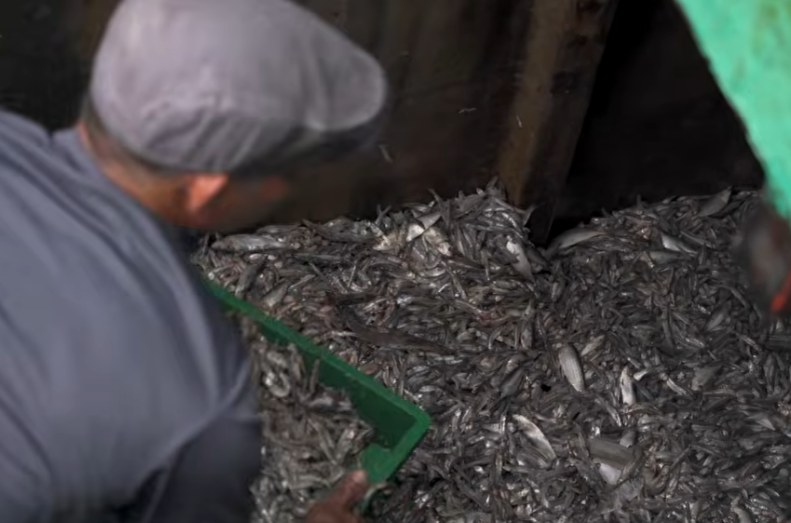
Fermentation barrels in Phu Quoc, Vietnam. The process runs 12 to 24 months. (Source: Chad Kubanoff)
The hot pan method
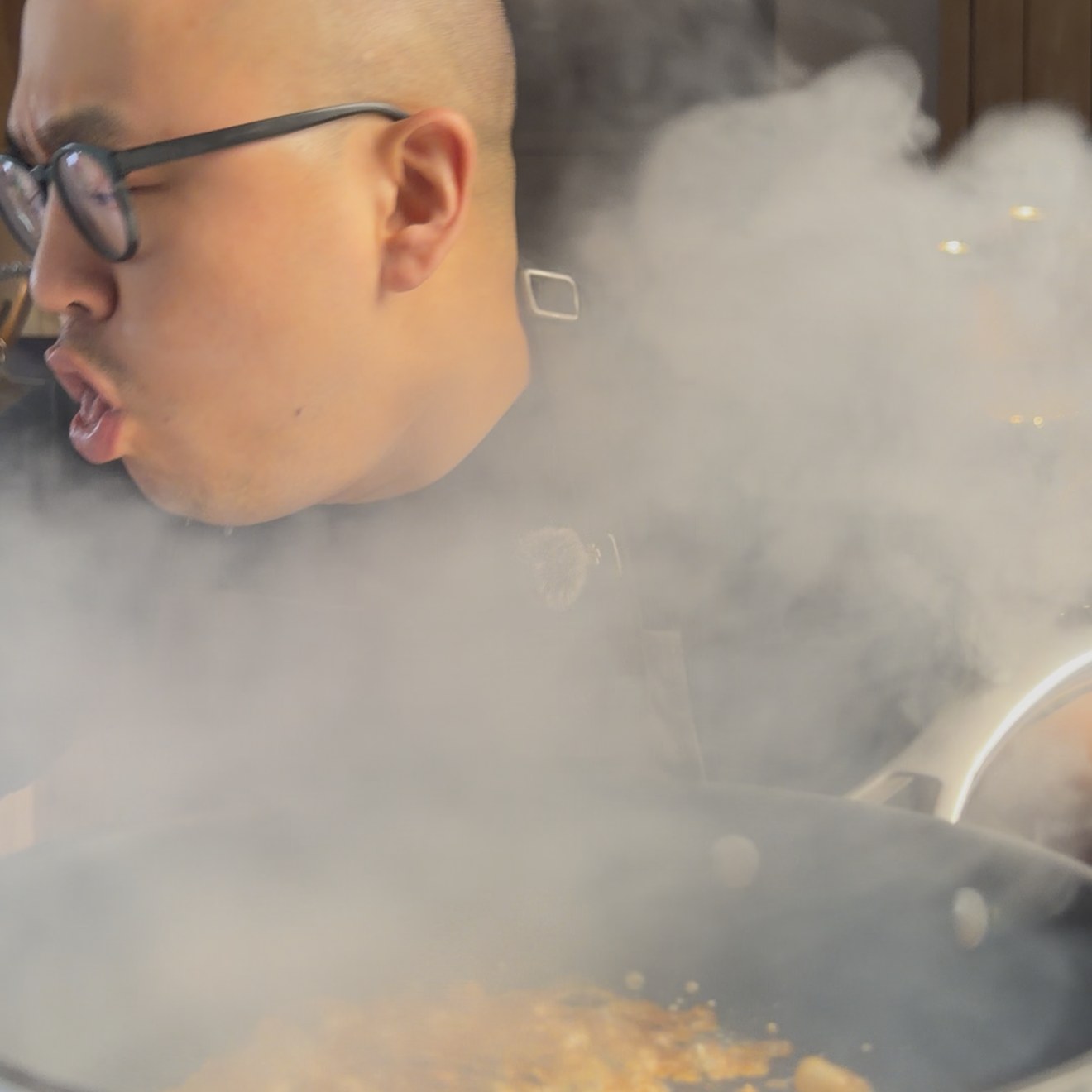
Every volatile compound in fish sauce has a boiling point low enough that cooking heat converts it to gas. When you add fish sauce to a very hot pan before anything else goes in, those compounds evaporate into the air. Your kitchen smells like a dock for about 30 seconds. Then it stops. What remains is concentrated glutamate with almost no volatile smell.
The steam is the volatile compounds leaving. That is what you want.
Here is exactly how to do it:
Step 1: Get your pan screaming hot. High heat, smoking oil. You need to hit around 375 to 400°F (190 to 205°C) at the pan surface. Cast iron, carbon steel, or stainless work best. Nonstick cannot handle this temperature and should not be used for this technique.
Step 2: Add fish sauce before any protein or liquid. Use about 1 tablespoon (15 ml) per pound (450 g) of protein as a starting point. The sauce should sizzle and spit immediately. If it does not, the pan is not hot enough.
Step 3: Let it cook off for 10 to 15 seconds. You will smell it and see the steam. Do not stir immediately. Let it make contact with the pan surface.
Step 4: Slide to the side if needed. If you are working in a wok and your protein is already in, push everything to one side and tip the wok so the empty side is over the flame. Add the fish sauce directly to that hot, empty surface and let it sizzle before pulling everything back together. This works as long as the sauce gets direct contact with very high heat, it does not have to be a completely empty pan.
Step 5: Add your protein and other ingredients immediately after. The fish sauce flavor is now fixed into the pan. Everything that cooks after absorbs it without the smell.
Temperature matters throughout. Putrescine and cadaverine have boiling points above 158°C (316°F). A medium-heat pan will not get there. The technique only works properly with genuine high heat.
The acid method
Acid does something different from heat. Where heat physically evaporates the volatile compounds, acid neutralizes them chemically. The volatile amines in fish sauce — trimethylamine, putrescine, cadaverine — are all basic molecules. When you combine fish sauce with an acid, the acid donates a proton to each amine. The amine becomes protonated, stops being volatile, and stops smelling. The glutamates are completely unaffected.
Any acid works. The ratio matters less than making sure acid is present.
Any acid works: lime juice, lemon juice, rice vinegar, white vinegar, apple cider vinegar. Here are the ratios that work in practice:
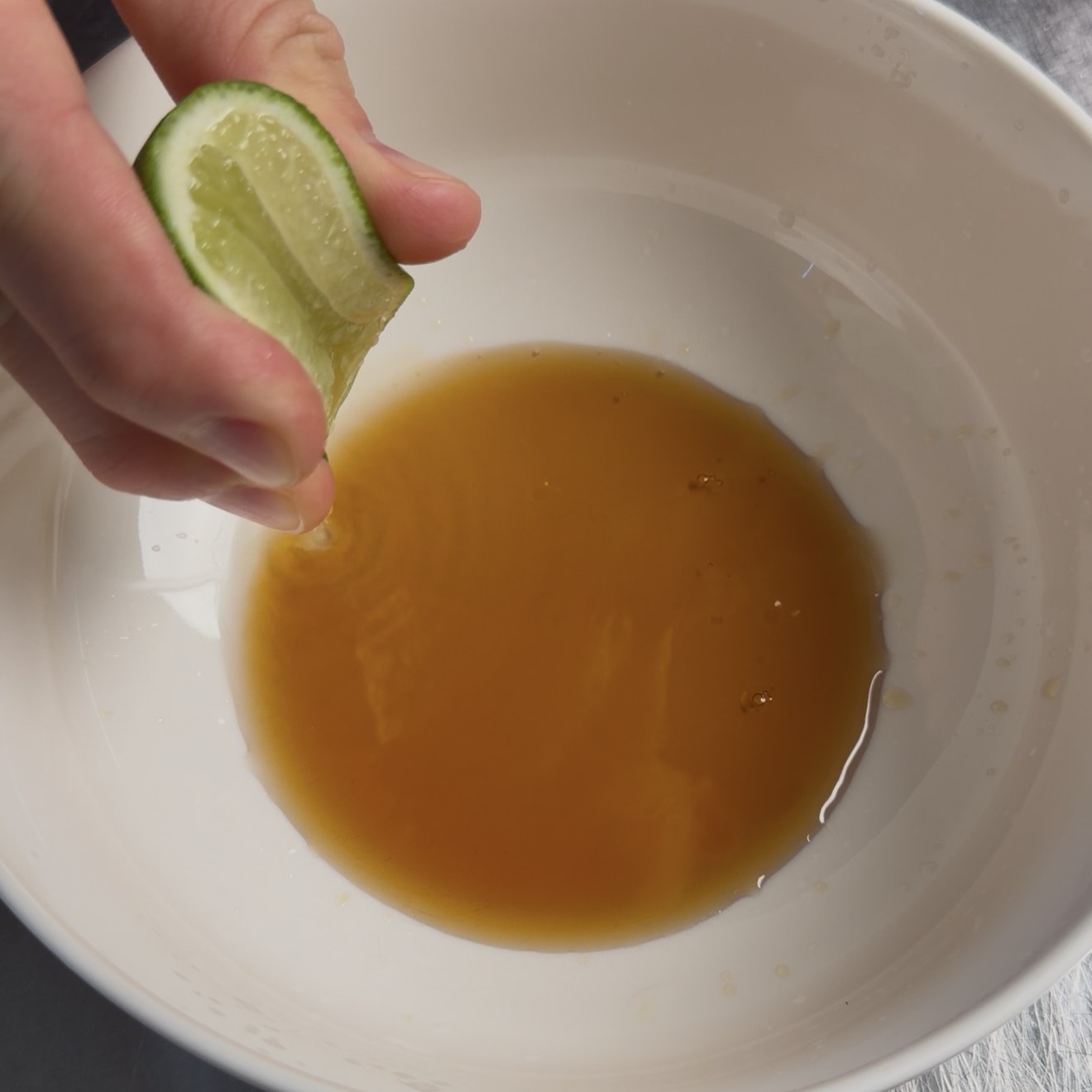
Nuoc cham (Vietnamese dipping sauce). This is the classic 1:1 acid ratio. Combine 2 tablespoons (30 ml) fish sauce, 2 tablespoons (30 ml) fresh lime juice, 1 tablespoon (12 g) sugar, and 3 tablespoons (45 ml) warm water. The lime volume matching the fish sauce volume is enough to neutralize almost all the volatile amines. What you get smells clean and tastes intensely savory and bright.
Thai dressing or dipping sauce. 1 tablespoon (15 ml) fish sauce to 1 tablespoon (15 ml) lime juice. Add fish sauce first, taste it raw, then add the lime and taste again. The difference is immediate and dramatic.
Stir-fry finish. 1 tablespoon (15 ml) fish sauce bloomed in a hot pan, finished with 1 teaspoon (5 ml) rice vinegar or a squeeze of half a lime (about 1.5 tablespoons / 22 ml juice) right before plating. The acid handles any remaining volatile compounds that survived the heat.
General rule. A 1:1 ratio of fish sauce to acid by volume produces the cleanest smell profile. A 2:1 ratio (twice as much fish sauce as acid) still makes a meaningful difference. Below a 3:1 ratio, the effect becomes noticeable. More acid is always fine for dipping sauces. For cooked applications, use your palate as the guide.
Using both together
Hot pan plus acid finish is the complete technique. Bloom the fish sauce in a screaming hot pan at the start of cooking. Finish with a squeeze of lime or a splash of rice vinegar right before serving. You get the full glutamate hit with almost none of the smell at any point during eating.
This is standard technique in serious stir-fry and noodle cooking. Fish sauce goes in early and hot. Acid goes in at the end. The dish does not taste fishy. It tastes like something you cannot quite identify, which is how umami works best.
Dishes to try this on
Fried rice. Add 1 tablespoon (15 ml) fish sauce directly to the hot wok after the rice goes in, slide to the side if needed, let it sizzle 10 seconds. Finish with a squeeze of lime right before serving. The rice absorbs the glutamate and the lime keeps it clean.
Chicken stir-fry. Velvet the chicken first (baking soda and cornstarch, see the velveting article). Bloom fish sauce in the hot pan before adding the chicken back. Finish with rice vinegar. This is the technique behind the clean, savory flavor you get from good Chinese-American stir-fry.
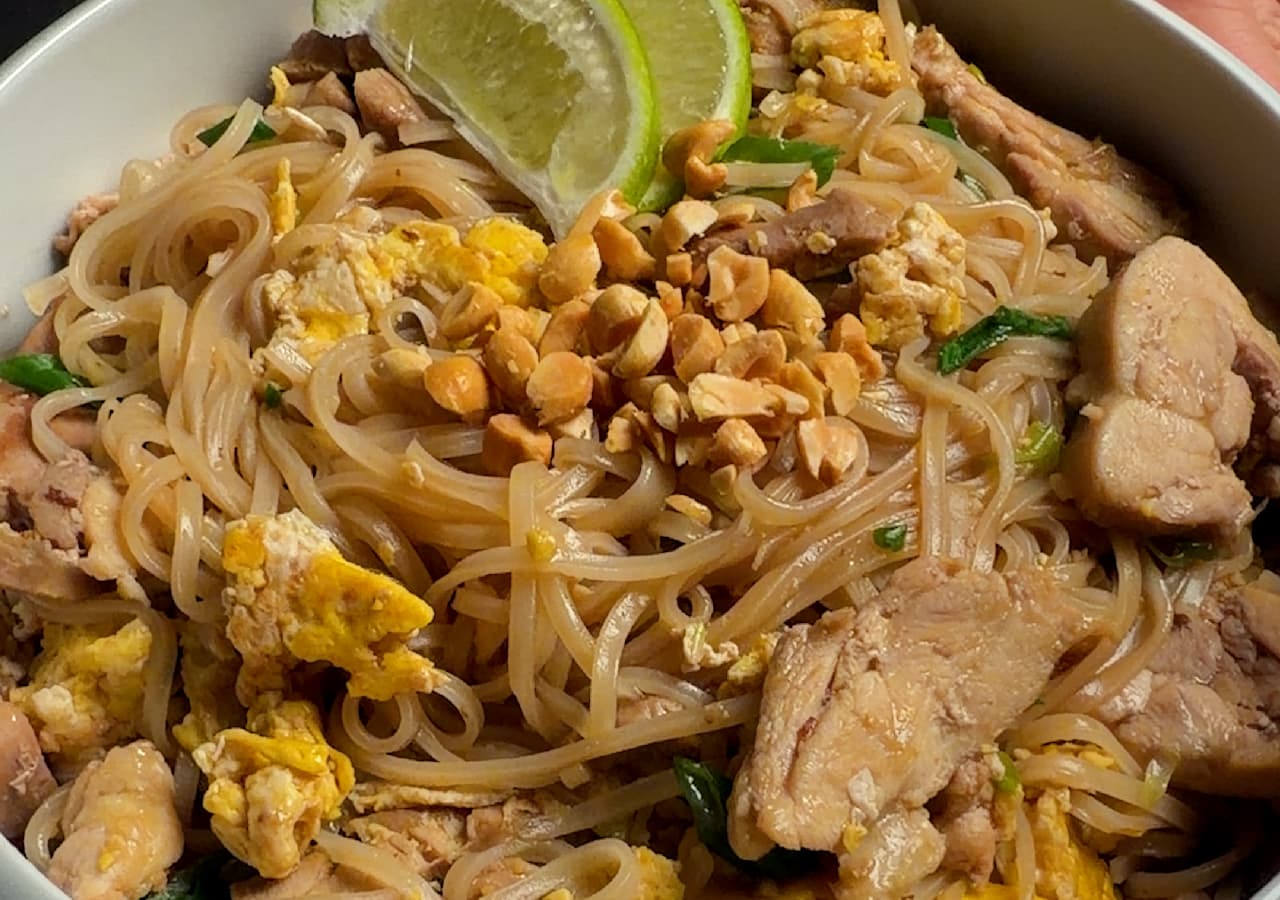
Noodle dishes. Pad Thai, pad see ew, and most Thai noodle dishes use this exact combination. Fish sauce in a hot wok early, acid from tamarind or lime at the end. The noodles absorb the umami, the acid keeps the dish bright.
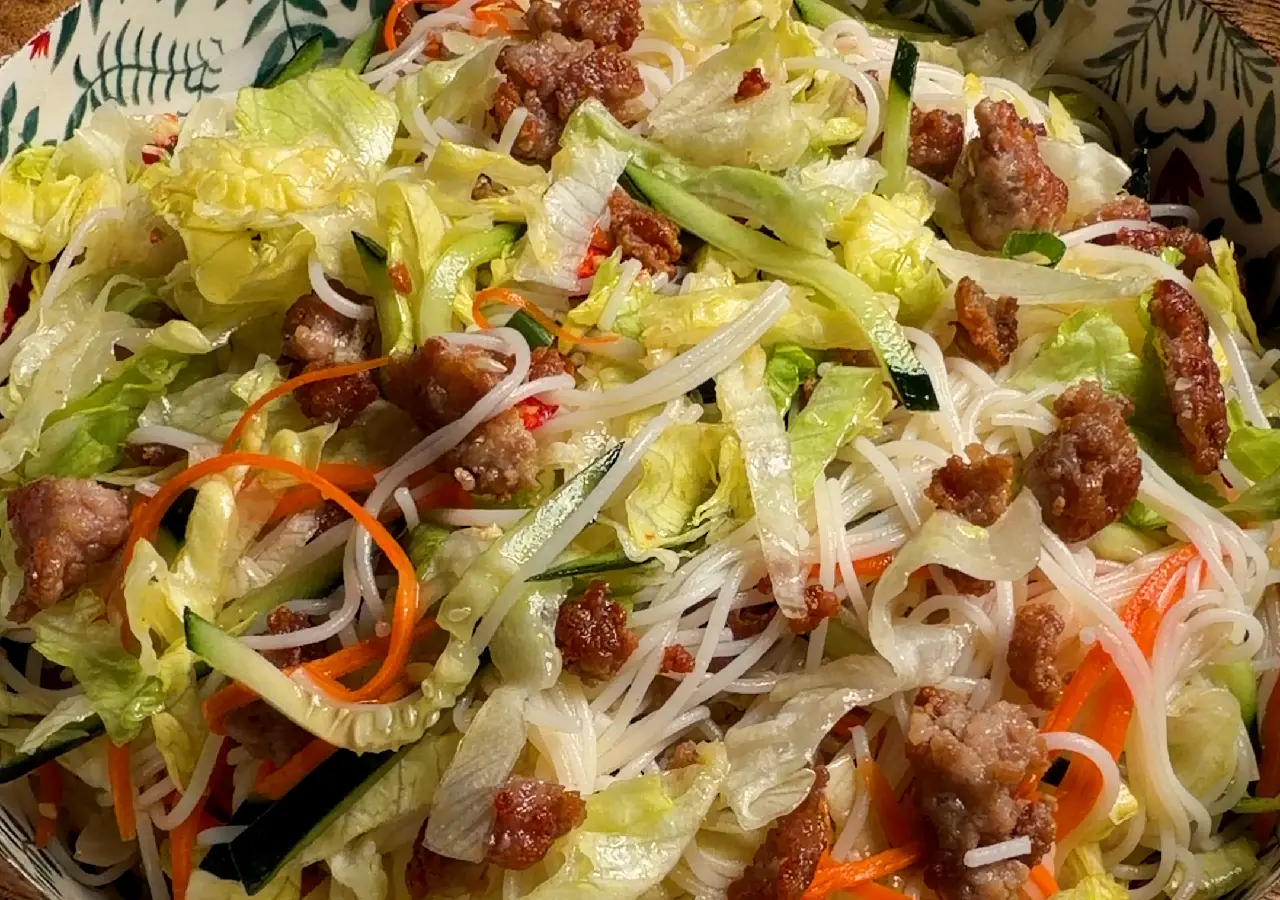
Dipping sauces. Nuoc cham (fish sauce plus lime) is the simplest and best demonstration of what acid alone does. Make it once and you will understand the technique immediately.
Braises and soups. Add fish sauce at the beginning of a braise so the heat does the work during the long cook. Finish with a small amount of acid in the bowl. Works in any braise where soy sauce or Worcestershire would otherwise go.
Dishes to try this on
Weekly articles
Enjoy the science? There's more every week.
New food science article every week. Sign up free to get notified, or go ad-free with membership.
The key number on any fish sauce label is protein content, measured in degrees N (nitrogen). Higher nitrogen means more glutamates, which means more umami. Most labels do not list it, so the ingredient list becomes the proxy. Look for anchovy and salt. That is it. Sugar softens intensity and dilutes umami. Water stretches yield. The shorter the ingredient list, the more you are paying for actual fermented fish.
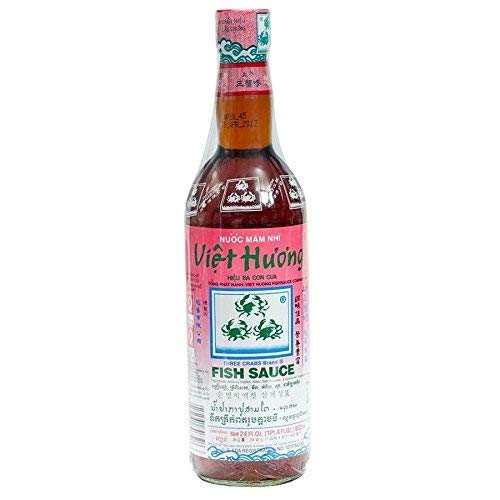
Three Crabs Brand Fish Sauce
This is what I use. The fish sauce in most Thai and Vietnamese restaurants across the US. Made from anchovy extract, salt, sugar, and water. The sugar mellows the intensity slightly, which makes it forgiving across every application: stir-fries, marinades, dipping sauces, braises, fried rice. Consistent batch to batch. Keep it in your pantry.
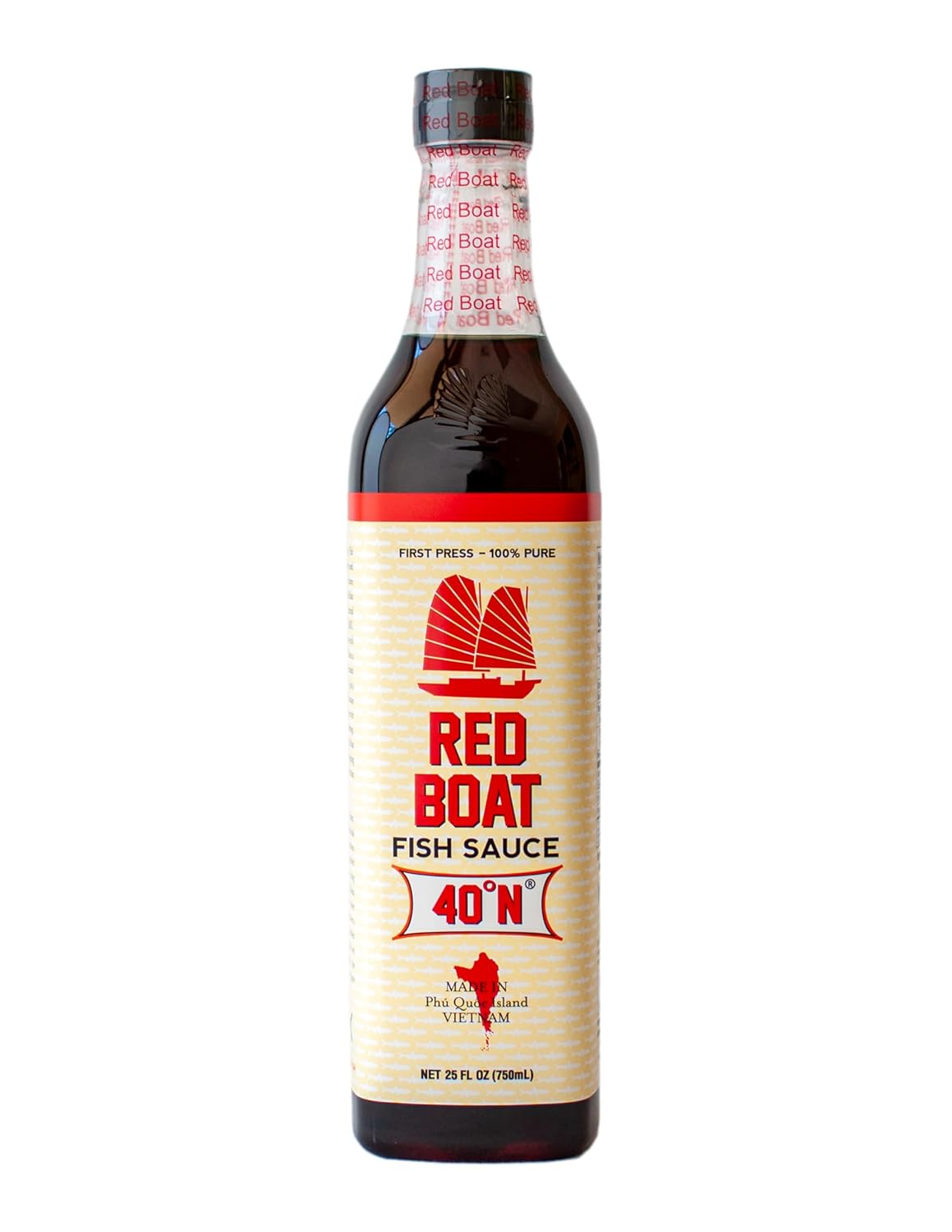
Two ingredients: black anchovies and sea salt. 40N nitrogen content is roughly double most commercial fish sauces, meaning far more glutamates per drop. No sugar, no water. Best in raw applications where fish sauce is the lead flavor. Nuoc cham, dipping sauces, vinaigrettes. A little goes a long way.
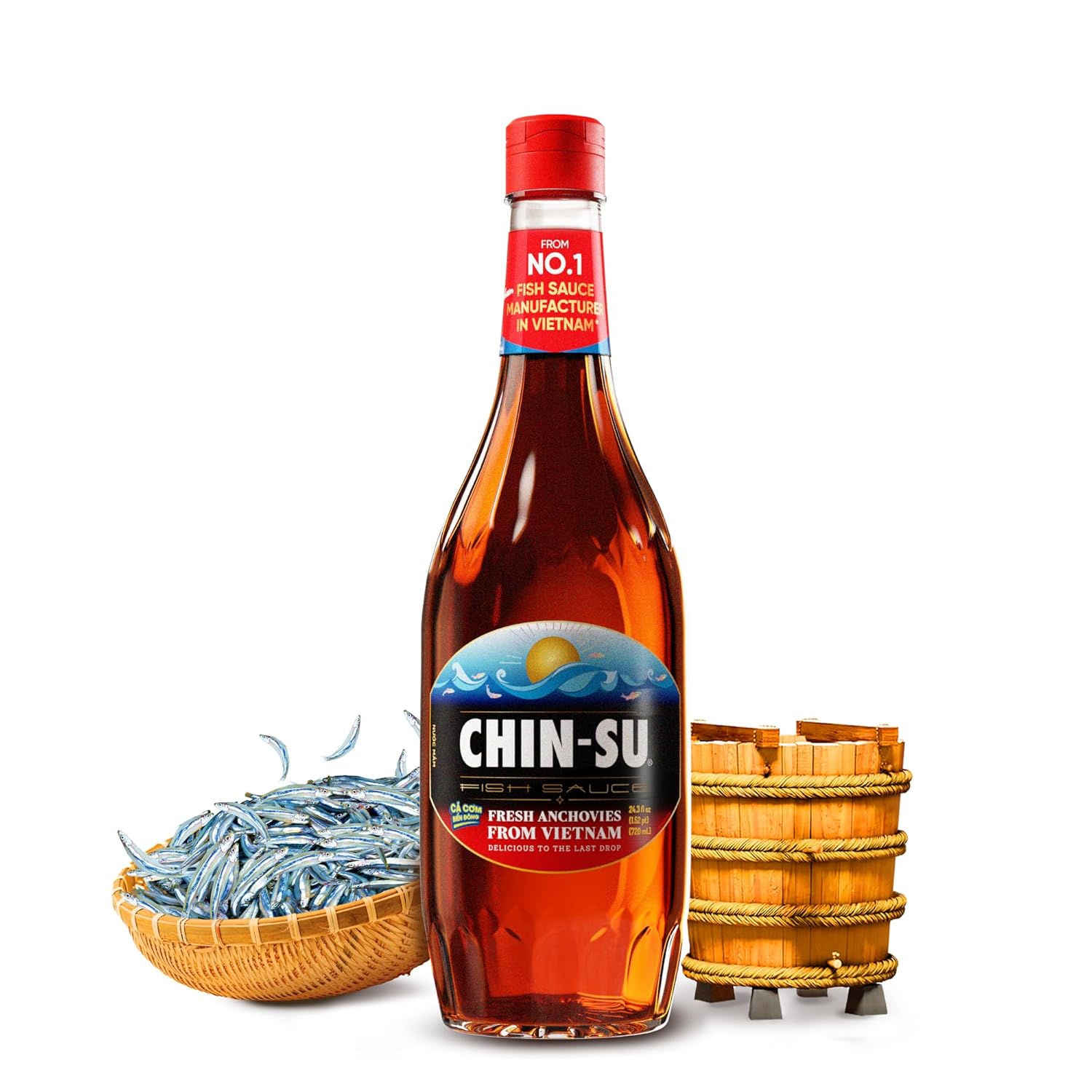
A Vietnamese staple with a clean, slightly sweeter profile than Three Crabs. Higher protein content than most budget brands. Good for dipping sauces and raw applications where you want a lighter, less pungent fish sauce flavor.
Dawn Power Wash is a genuinely good formula. Read the ingredient list and you can see exactly why it works, and that you can build the same thing at home for about a quarter of the price. Here is the science, the recipe, and a side by side test.