What chicken stock actually is
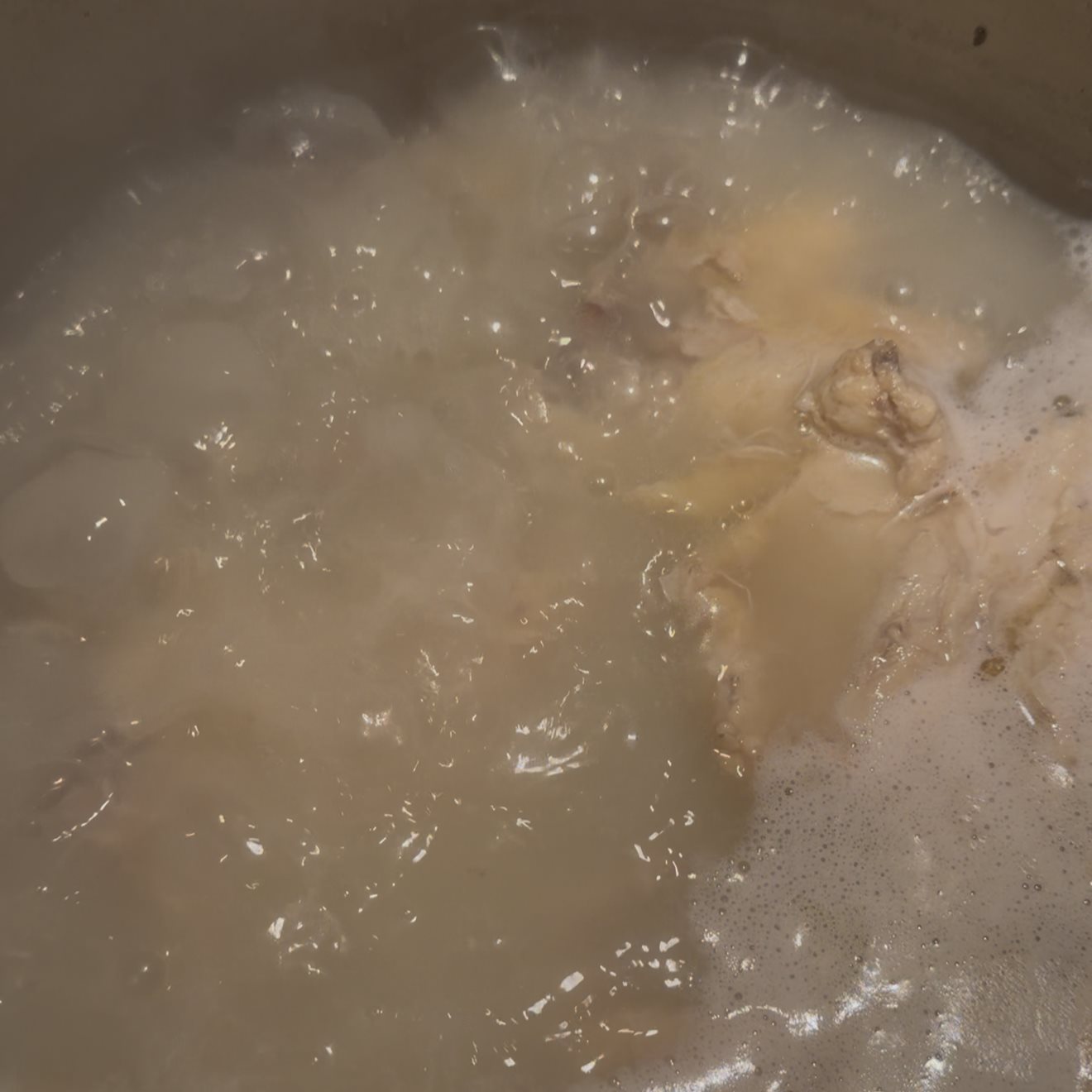
When you simmer chicken bones in water for a long time, the water pulls out several different things. Here is what they are, why they matter for cooking, and why they are good for you.

Gelatin. Bones and joints contain a protein called collagen. When you cook bones in water for hours, that collagen breaks down and dissolves into the water as gelatin. Gelatin is what makes real stock gel solid in the fridge. It gives stock its body and silky texture when hot, and it physically carries flavor through a dish in a way thin liquid cannot. For your body, gelatin supports joint health, helps repair the gut lining, and is one of the building blocks for healthy skin and connective tissue.
Amino acids. As the proteins in the bones and meat break down, they release amino acids into the water. Amino acids are what your body uses to repair muscle, support the immune system, and run basically every cellular process. Glycine, which is especially abundant in bone-derived stock, has been studied for reducing inflammation and improving sleep quality.
Minerals. Bones are dense with calcium, phosphorus, and magnesium. These leach slowly into the water during a long simmer. You cannot taste them, but your body uses them for bone health, nerve function, and muscle contraction.
Natural glutamates. Chicken contains glutamates, which are the compounds responsible for umami flavor. In real stock, they build up naturally over hours of cooking. They are the reason homemade stock tastes deep and savory without any added flavoring. In store-bought, they are often replaced with yeast extract or natural flavors to simulate the same effect without the cooking time.
Chicken fat. The fat that renders off the bones carries fat-soluble vitamins including A and D. It also holds flavor together. A stock without fat tastes flat and thin even if the other numbers are good. This is why you skim the surface after cooling but not aggressively during cooking. A little fat staying in is not a problem.