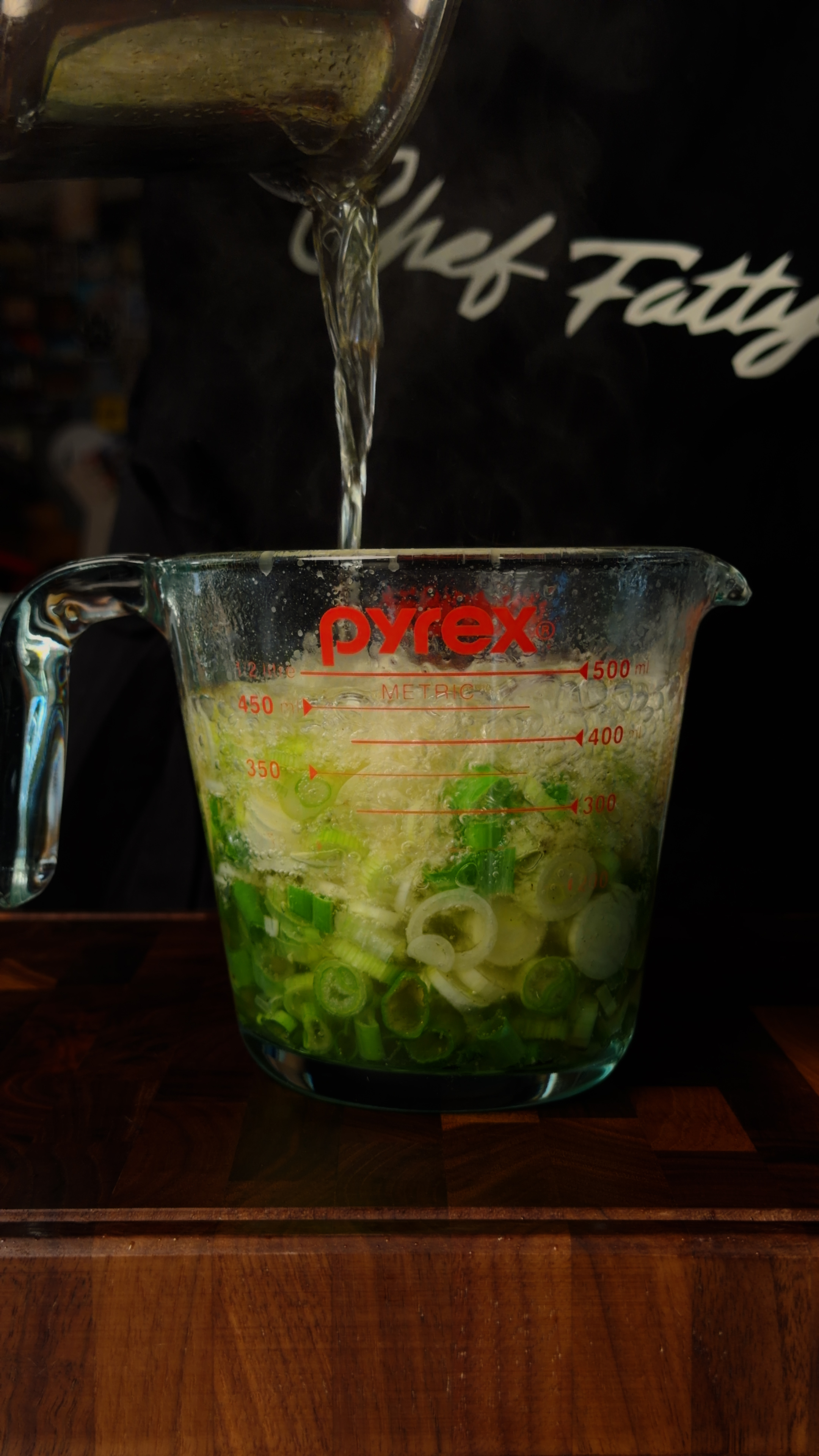
Have you noticed how adding garlic or onions to soups and stews doesn't really add much flavor? Thousands of recipes tell you to do it. But you're mostly wasting them. The flavor in your aromatics doesn't dissolve in water. It dissolves in fat.
The science behind why aromatic flavor dissolves in fat — not water — plus four infused oil recipes across two techniques: fast & hot and low & slow.

Have you noticed how adding garlic or onions to soups and stews doesn't really add much flavor? Thousands of recipes tell you to do it. But you're mostly wasting them. The flavor in your aromatics doesn't dissolve in water. It dissolves in fat.
The aromatic compounds in garlic, ginger, scallions, and shallots dissolve into fat. They do not dissolve meaningfully into water.
Most of what makes garlic, ginger, scallions, and shallots taste like themselves is fat-friendly. The compounds responsible for garlic's characteristic punch (diallyl disulfide, diallyl trisulfide, allyl methyl sulfide, the specific molecules your nose detects when garlic is sharp and pungent) strongly prefer fat over water. Scientists measure this preference with a number called log P, which compares how well a compound dissolves in fat versus water. Diallyl disulfide has a log P of about 1.6, which means it dissolves into fat roughly 40 times more readily than it dissolves into water. The compounds that give fresh ginger its brightness (zingiberene, bisabolene, both terpenes, the category of fat-soluble aromatic molecules found in most herbs and spices) behave the same way. So do most of the fragrant compounds in scallions and shallots.
When you simmer aromatics in water, only the water-friendly fraction comes out: amino acids, mineral salts, trace precursors. Enough to taste faintly of the ingredient. The compounds that make garlic taste like garlic and ginger taste like ginger stay locked inside the cells. There is no fat present to dissolve them. Sautéing in oil first, or finishing with an infused oil, is not a stylistic choice. It is the only way to actually extract these compounds into your food.
Every aromatic ingredient is made of cells. Each cell has a membrane (a thin wall built from fat molecules) that holds its contents inside. At 325 to 350°F (163 to 177°C), two things happen at once. The cell membranes rupture from the sudden heat. The rigid cell walls weaken. The intracellular contents (all those fat-soluble flavor compounds that water cannot touch) spill directly into the surrounding oil, which is right there to dissolve them.
Hot oil also extracts faster than cool oil because heat speeds up how fast molecules move. The hotter the liquid, the faster dissolved compounds can travel through it. This means extraction that would take minutes at room temperature happens in seconds at frying temperature.
Exposure time is deliberately short. The volatile compounds (the ones responsible for bright, fresh top notes) begin to evaporate and break apart at sustained high heat. Twenty to thirty seconds of active sizzle extracts the flavor. Longer cooking destroys it.
How to tell the oil is ready: dip a wooden chopstick into the oil. Steady bubbles streaming up around it means it is hot enough.
To understand the low and slow method, you need to know one thing about garlic. Raw garlic's sharpness comes from a two-step chemical process. When a garlic cell is damaged by cutting, crushing, or chewing, an enzyme called alliinase (an enzyme is a biological molecule that triggers a specific chemical reaction) contacts a compound stored in the cell called alliin and converts it into allicin. Allicin is the compound responsible for the burn and the aggressive raw-garlic smell.
At 200°F (93°C), alliinase breaks apart from the heat and stops working. This is called denaturing. Proteins (and enzymes are proteins) unravel when they get hot enough, the same way a raw egg white turns from clear to solid when you cook it. Alliinase starts to denature above 167°F (75°C). By the time garlic reaches 200°F throughout, it is completely inactive. Allicin production stops. The sharpness disappears entirely. What remains is the garlic's underlying sugars and its milder, rounder aromatic compounds.
At the same time, the pectin that holds garlic's cell walls together (pectin is the natural structural glue in plant cells, and it is also what makes jam gel when you cook fruit with sugar) slowly breaks down under sustained heat. This softens the garlic from the inside out, which is why confit garlic becomes fork-smushable. As the cell walls soften, fat-soluble flavor compounds diffuse gradually into the surrounding oil over 25 to 30 minutes. Because the process is slow and gentle, deeper aromatic compounds that a quick extraction never reaches have time to migrate out. The result is richer and more layered than the fast method, at the cost of the bright top-note character that rapid extraction preserves.
A 200°F oven works just as well as an air fryer for the recipes below. The air fryer preheats faster and circulates heat more actively, but the temperature and timing are the same either way.
Refrigerate for up to four days. Freeze for up to a few months (USDA and National Center for Home Food Preservation). Room temperature storage is not safe.
Fresh low-acid vegetables (garlic, ginger, scallions, shallots) carry spores of Clostridium botulinum, the bacteria that produces botulism toxin. The spores are harmless on their own. The problem is oil. Oil is an anaerobic environment (meaning no oxygen), and Clostridium botulinum thrives without oxygen. Given time and warmth, the spores germinate, bacteria grow, and toxin is produced. Refrigeration stops this.
Cooking at higher heat does not solve this. Destroying the spores requires 250°F of wet heat under pressure (the kind a pressure canner generates). In a confit, the garlic sits in oil, not water. Water conducts heat directly into proteins and helps break them apart. Oil does not. Without water, you effectively have dry heat, and dry-heat sterilization requires above 320°F. Garlic turns bitter above roughly 250°F. By the time you reach sterilization temperature, the flavor is gone.
Make small batches. Refrigerate immediately. Eat within four days.
Cantonese · Fast & Hot · Vivid green · ~1¼ cups · Active: 8 min
Ingredients
Method
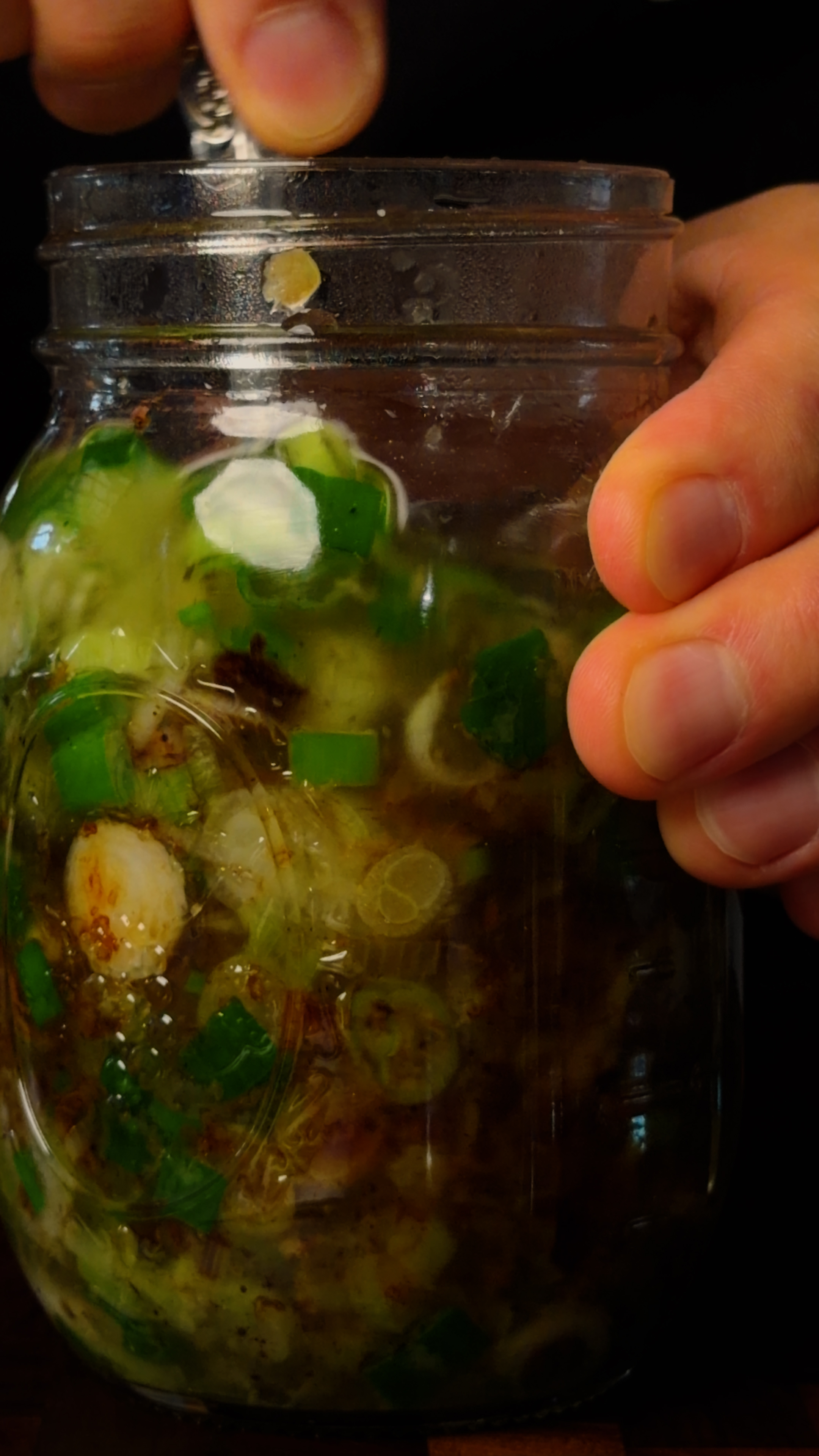
Use on
Hainanese chicken, steamed fish, rice, noodles, dumplings, scrambled eggs.
Spanish · Fast & Hot · Ruby red · ~1¼ cups · Active: 8 min
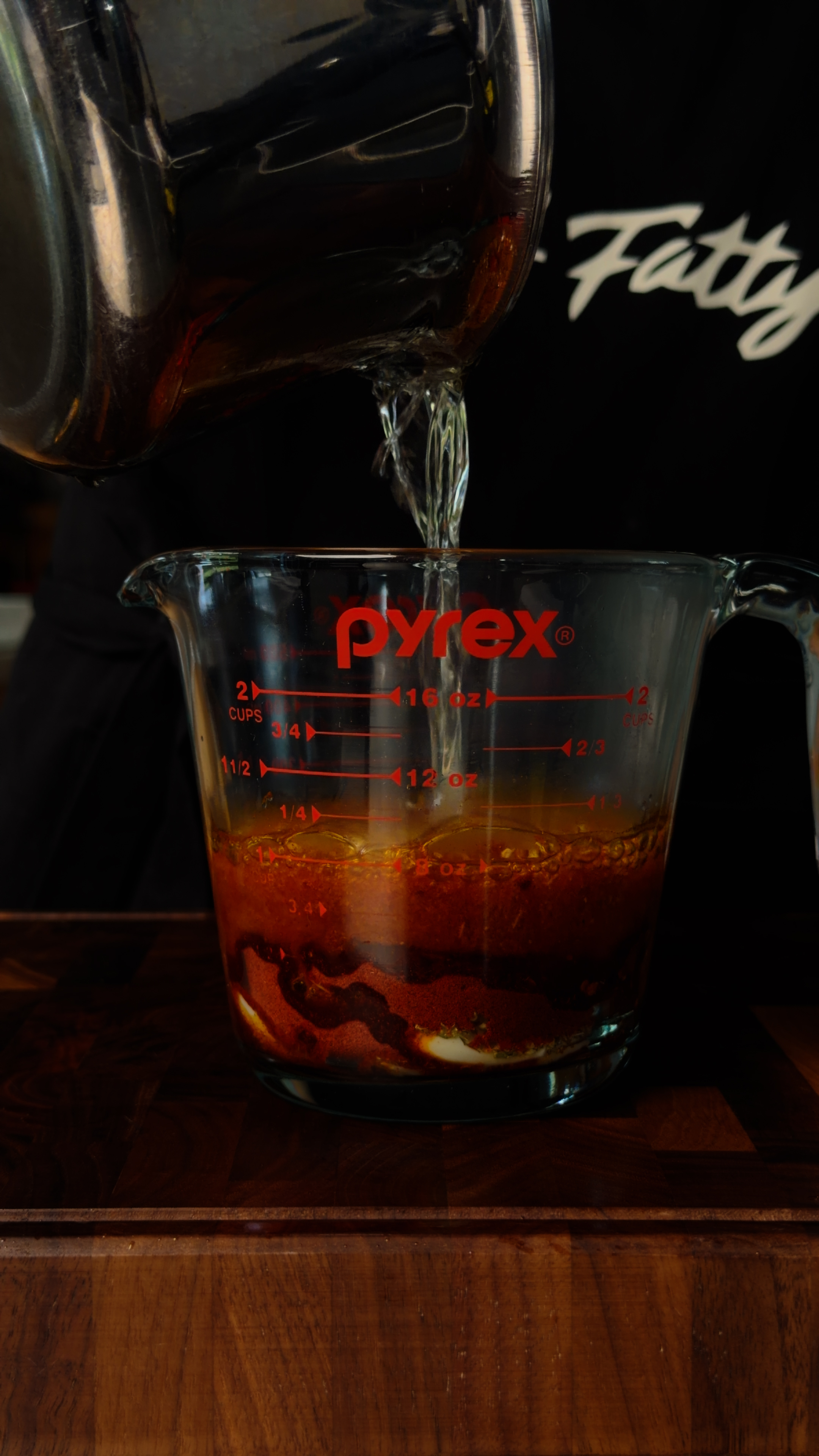
Ingredients
Method
Use on
Fried eggs, hummus, avocado toast, roasted potatoes, white fish, popcorn, butter beans, Spanish tortilla.
Italian · Low & Slow · Golden amber · ~1¼ cups + spreadable garlic · Active: 5 min · Cook: 30 min
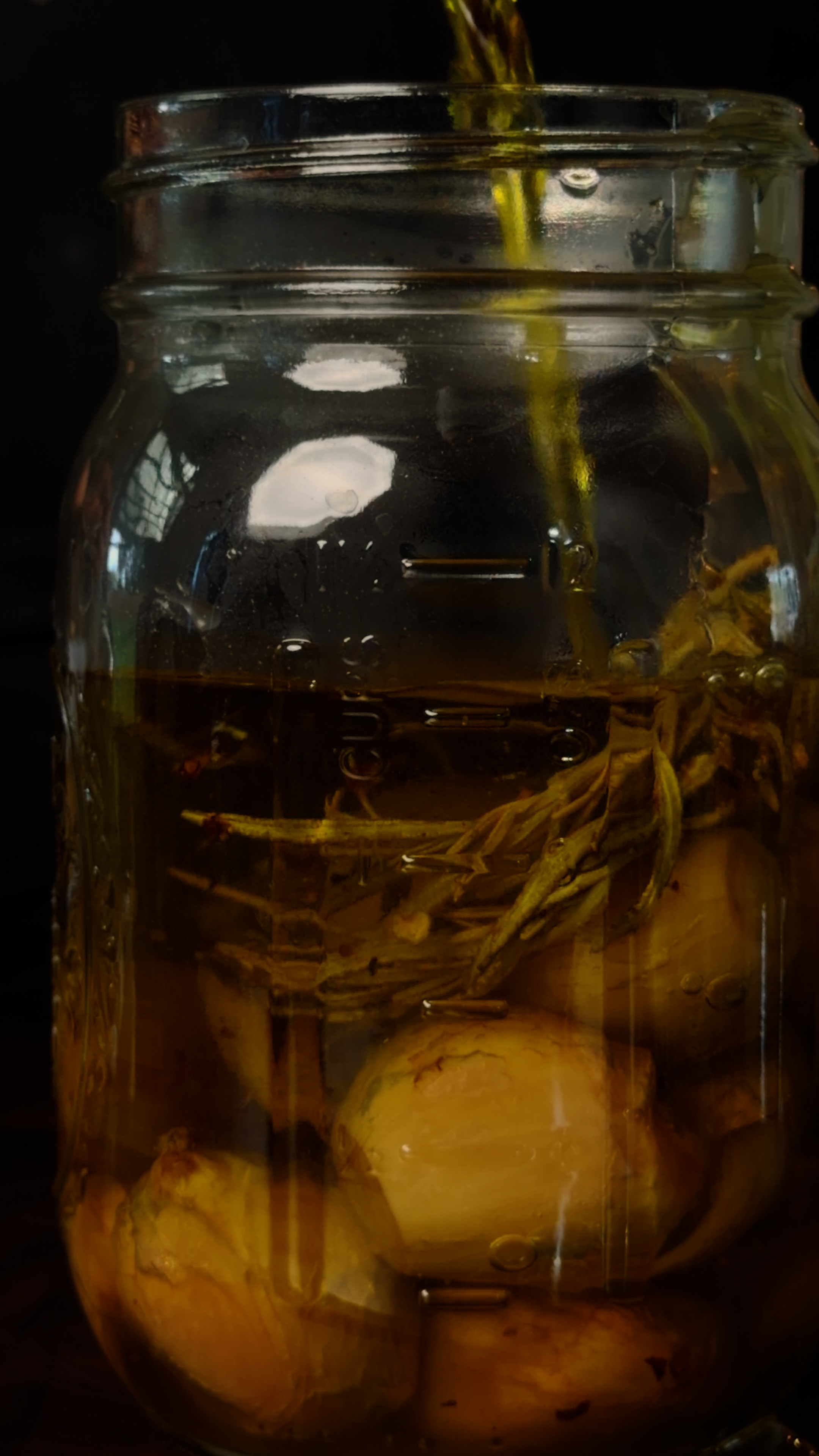
Ingredients
Method
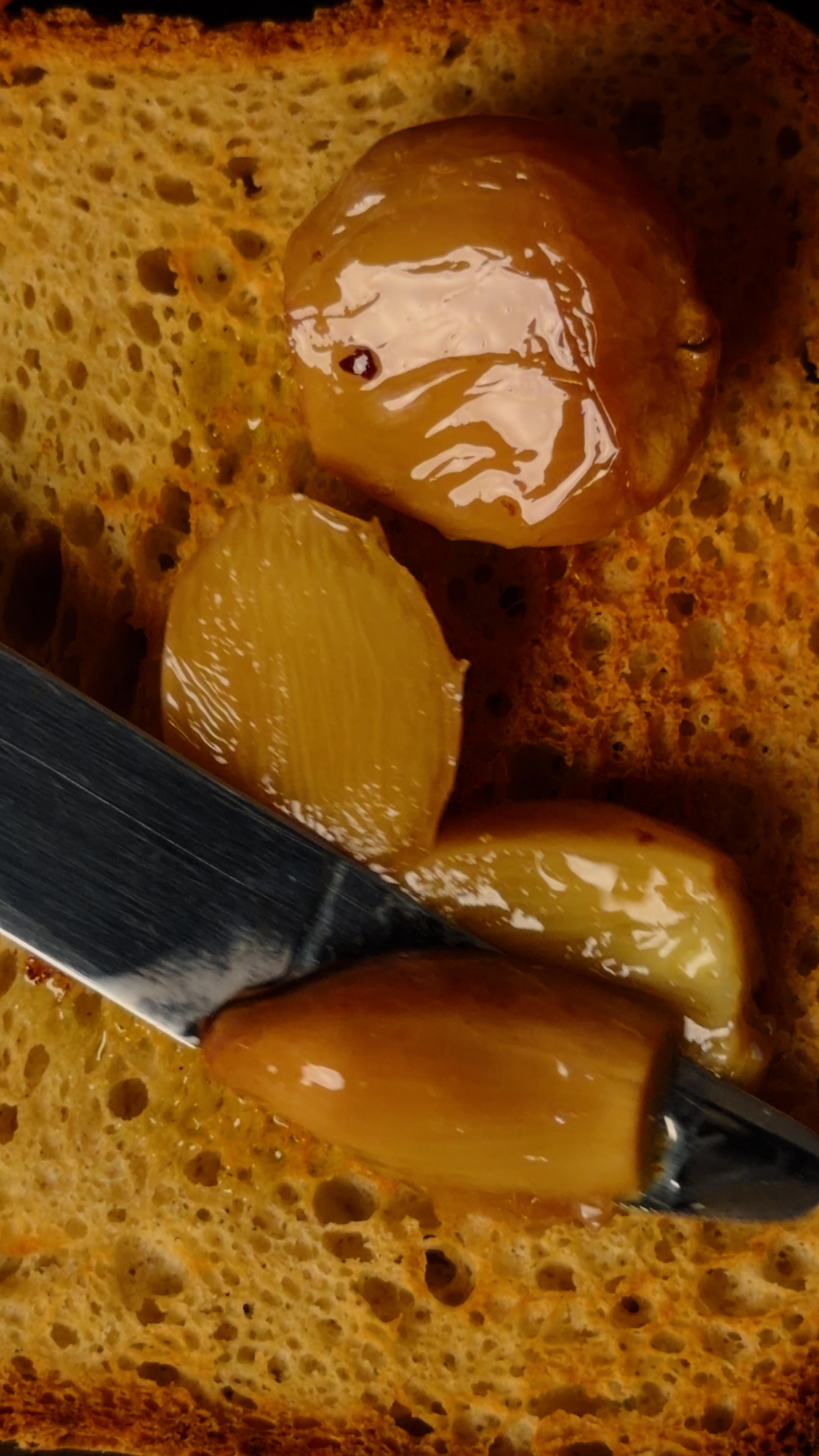
What you get
| The oil | Pizza, pasta, bread dipping, focaccia, drizzled on burrata |
| The garlic | Spread on toast, mash into potatoes, fold into hummus, swirl into pasta |
| The herbs + lemon | Leave in the jar. Keeps developing flavor for 2 weeks. |
Chef's note: At 200°F garlic does not brown. It CONFITS. Alliinase deactivates. Pectin softens. Sugars concentrate. The result is honey-sweet, soft, and infinitely spreadable.
Mexican-lean · Low & Slow · Amber-red · ~1¼ cups + soft shallot bits · Active: 8 min · Cook: 25 min
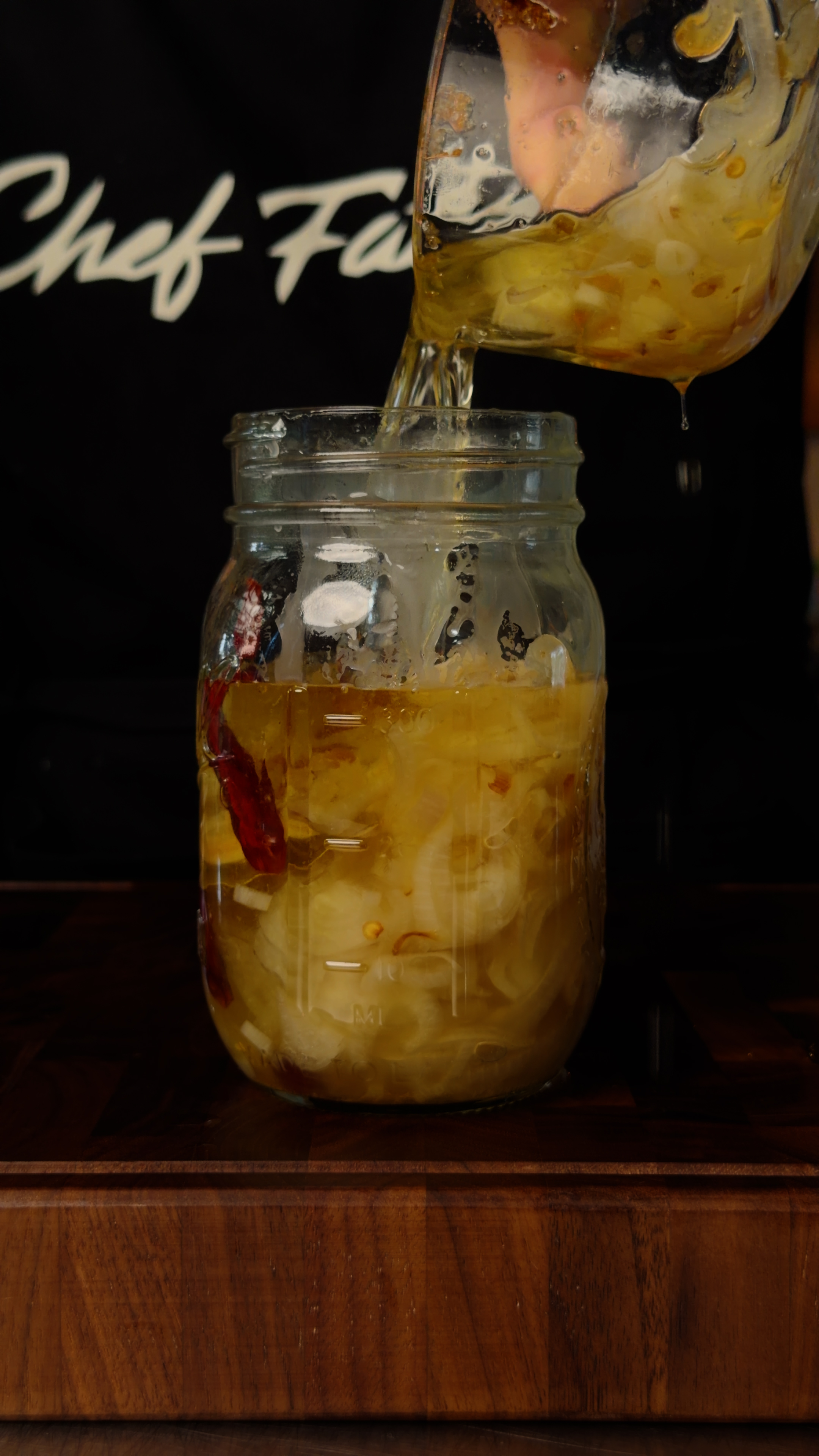
Ingredients
Method
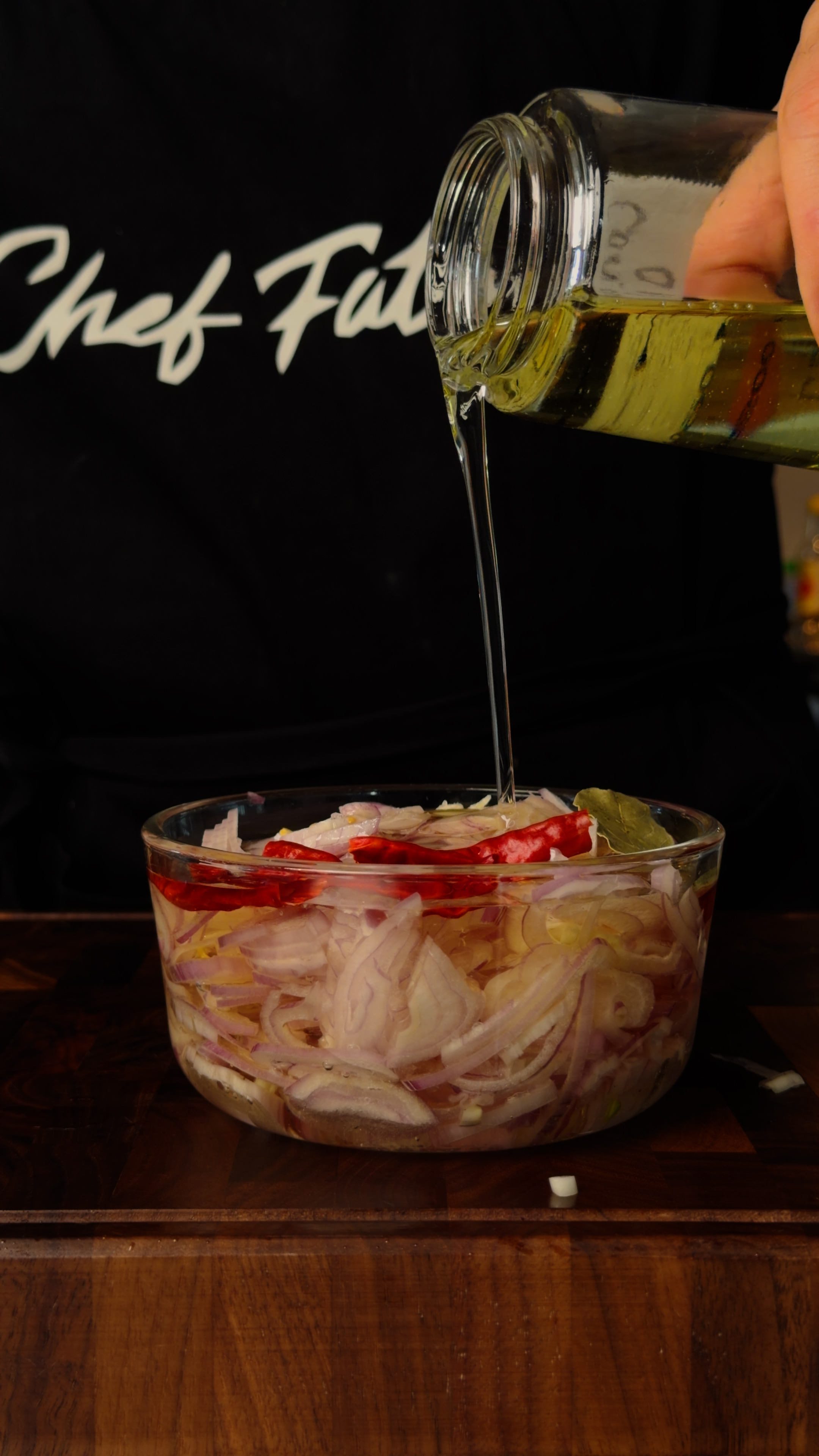
What you get
| The oil | Fried eggs, fried rice, tacos, grain bowls, grilled corn, soup garnish |
| The shallots | Spoon out as a soft garnish on anything |
| The chiles | Keep in jar for visual effect and ongoing infusion. Gets better in week 2. |
Pro touch: Toast the arbol chiles in a dry pan for 30 seconds before adding them to the oil. Dry heat triggers the Maillard reaction (a chemical reaction between amino acids and sugars that creates new flavor compounds. It is also why bread browns and meat gets a crust). In chiles, this produces smoky, roasty aromatic molecules called pyrazines that are fat-soluble and will infuse into the oil. Do not burn them. Pull when fragrant.
New food science article every week. Sign up free to get notified, or go ad-free with membership.
Remove all ads across the site, unlock chef's notes and dietary substitutions, and support the science content that keeps coming.
Get Membership