Chipotle Roast Chicken and Schmaltz Potatoes (The Science)
A spatchcocked chipotle chicken that roasts fast and crisp, over potatoes cooked in its own drippings until they shatter. Here is the food science behind every move, then the full recipe.
Charles Kim·Chef Fatty
August 5, 2026
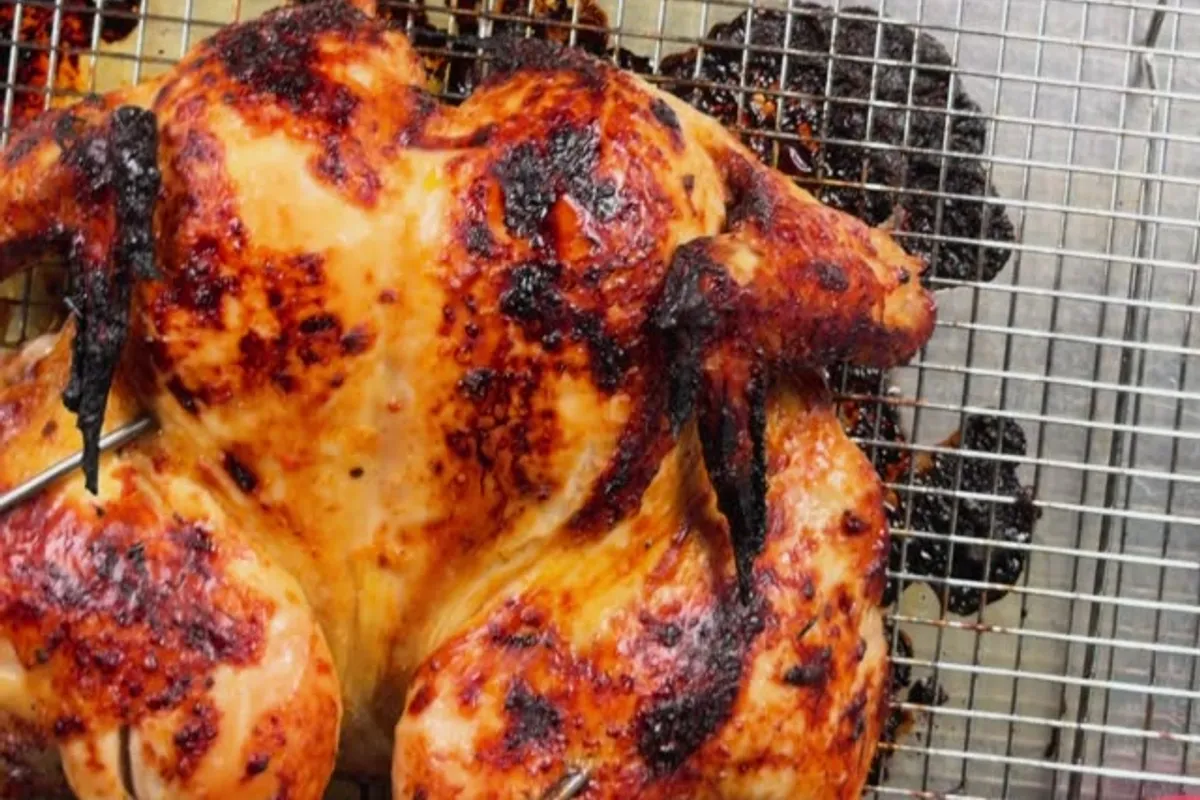
Deeply seasoned chipotle chicken, and potatoes roasted right in its drippings.
This is one sheet pan doing two jobs: a spatchcocked chipotle chicken that roasts fast and crisp, sitting over potatoes that cook in the chicken's own drippings until they shatter. Almost every step is a small piece of food science, so here is what each move is actually doing, then the full recipe.
The marinade tenderizes, it does not soak in
Here is the honest truth most marinade recipes get wrong: a marinade barely penetrates meat. The garlic, chiles, and spices sit near the surface no matter how long you wait. Two things in this recipe actually reach the inside, and neither is the marinade itself.
The first is salt. Salt is the only thing that diffuses inward, and as it goes it restructures the muscle so it holds onto its own juices. That is why you salt the bird directly on the meat, not just the skin, it is the salt, not the acid, that seasons deep and keeps it juicy.
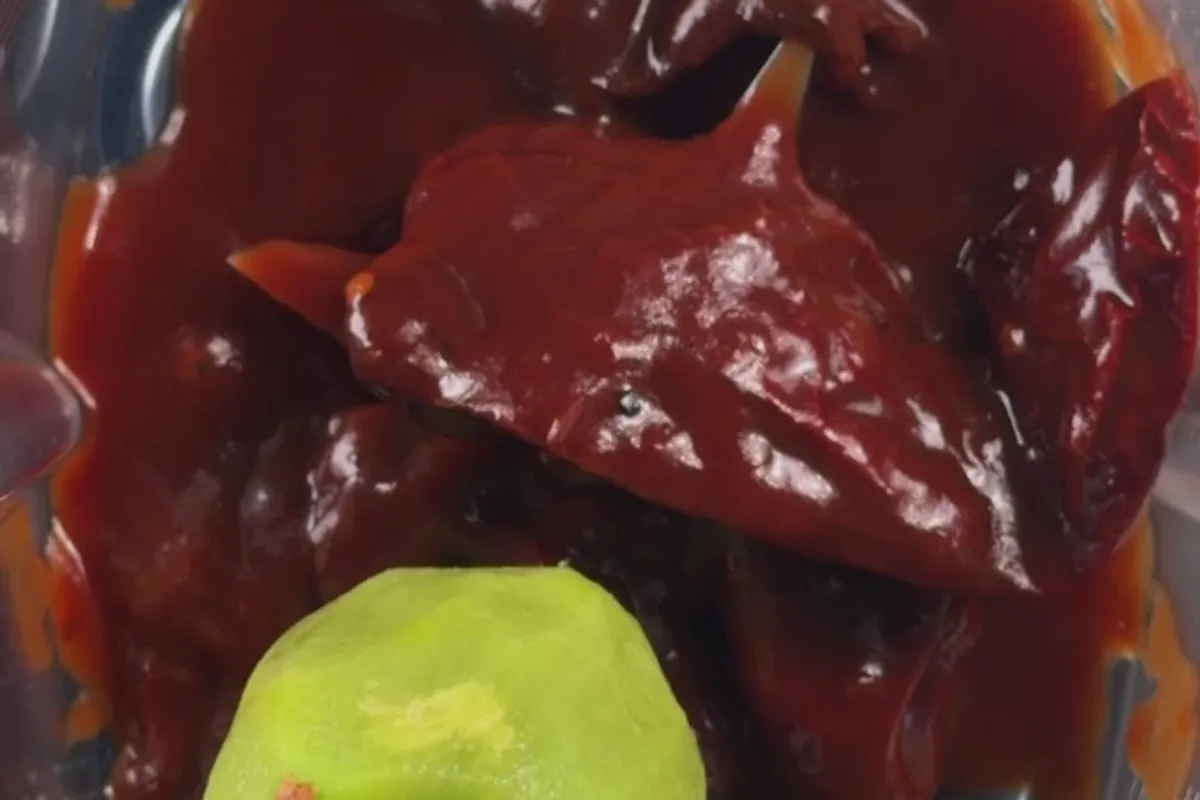
The chipotle marinade, with a peeled green kiwi. The kiwi is the tenderizer.
The second is the ripe green kiwi. Kiwi carries actinidin, an enzyme that genuinely tenderizes by breaking proteins down. The catch: it keeps working the entire time, even in the fridge, so it is on a clock. Keep this marinade to 2 to 4 hours. Overnight and the enzyme turns the surface pasty. Jaccarding (or a fork stabbed many times) helps here too, but not the way people think: it tenderizes by cutting fibers and gives the marinade more surface to grip. It does not carry flavor deep, and it actually speeds up the tenderizing, one more reason to respect the 4-hour ceiling.
Spatchcock for even cooking and crispier skin
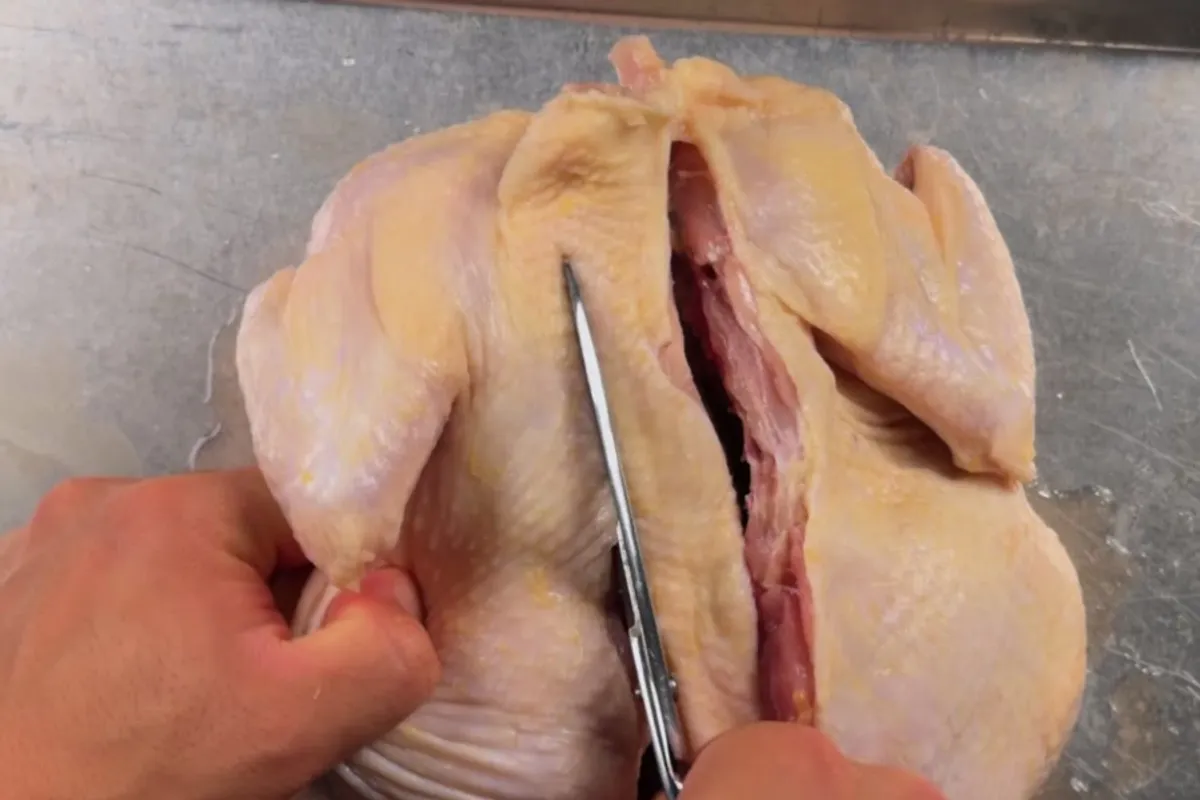
Cut out the backbone and press the bird flat and two things happen. It spreads into a thin, even layer that roasts in about 45 minutes instead of over an hour, and the breast and thighs finally finish at nearly the same time (a whole trussed bird overcooks the breast while you wait on the thighs). Flattening also turns more of the skin up toward the heat, so more of it crisps.
Shears down both sides of the backbone, then press the bird flat.
Crispy skin, no fuss
Crisp skin is just dry skin plus high heat. You do not need an overnight fridge ritual. Salt it, and right before it goes in the oven, wipe the skin surface dry, all the flavor is already locked inside from the marinade, so wiping the skin costs you nothing and buys you crackle. Roast hot, and if you want it even crisper, blast the skin for five minutes at the very end after the meat has rested.
Cook to temperature, not time
Forget the clock, use a thermometer. Pull the breast around 150 to 157F (the low end is juicier, and it climbs a few more degrees as it rests) and take the thigh to about 175F, where its connective tissue melts into gelatin and turns tender. One safety note on the juicy-side breast: at 150F the meat needs to hold at or above that for about 3 minutes to be safe, so measure at the thickest part with a good thermometer, and if you are cooking for anyone pregnant, very young, older, or immunocompromised, take it to the standard 165F.
Why baking soda makes the potatoes shatter-crisp
This is the single trick that separates a crispy roast potato from a soft one, and it starts in the boiling water. Add a little baking soda to the salted water and you make it alkaline, and that alkalinity does one specific thing: it breaks down pectin, the natural glue holding the potato's outer cells together. As the pectin dissolves, the surface layer of the potato loosens and releases its starch.
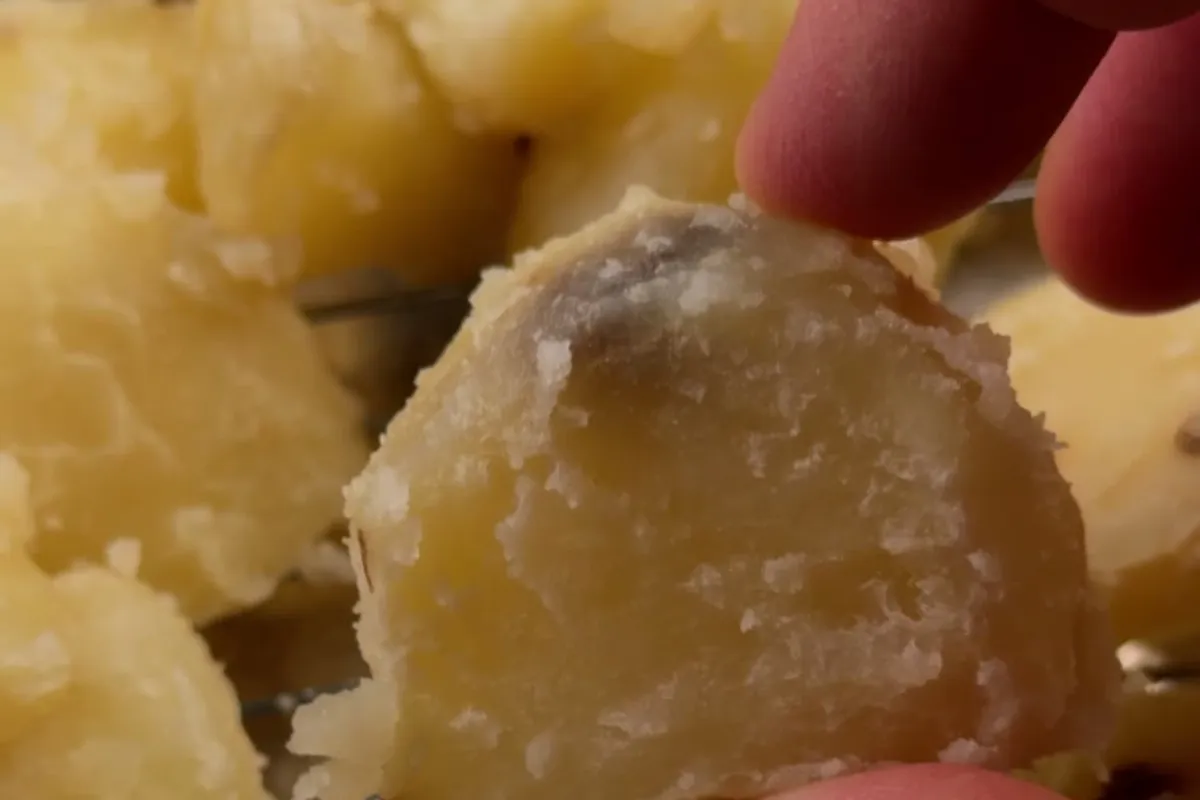
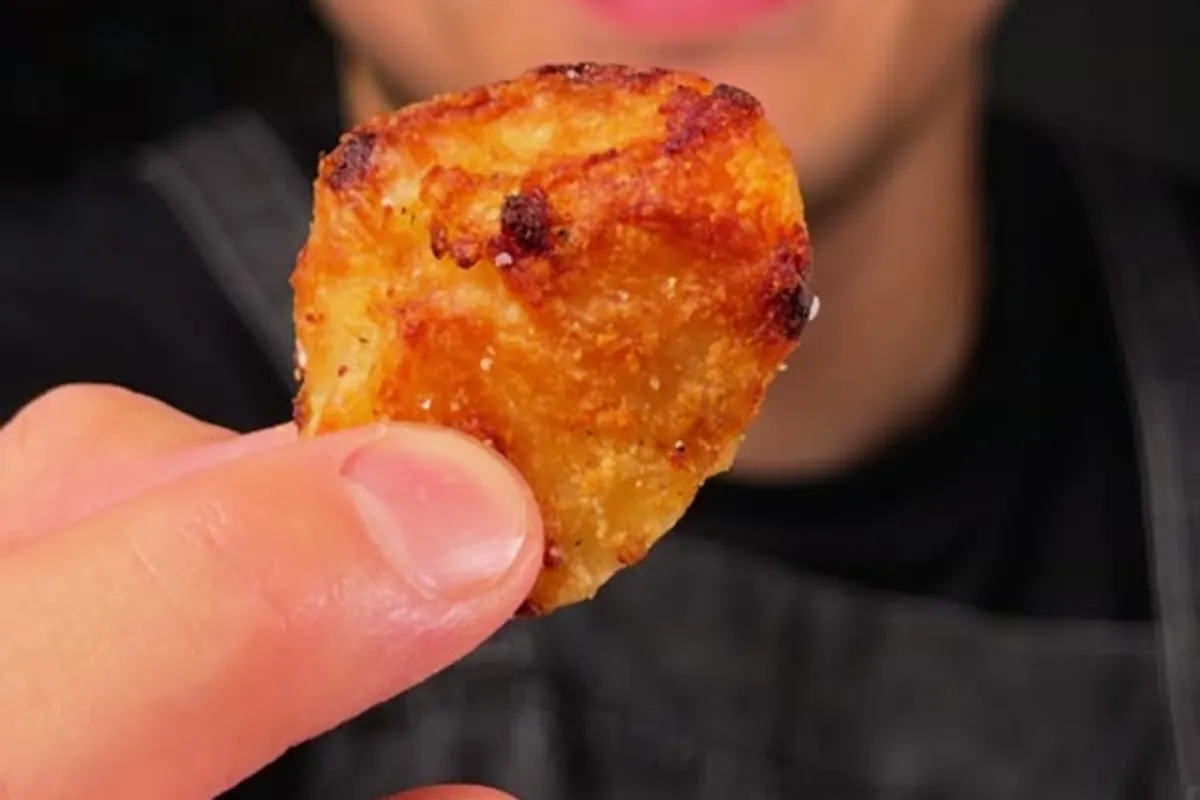
The baking soda breaks the surface down so it whips into this craggy, starchy paste. Craggy is what crisps.
Now the surface is soft and starchy instead of smooth and sealed. Drain the potatoes, let them steam-dry for a minute, then shake them hard in the pot. That agitation whips the loosened starch and broken-down surface into a rough, almost mashed-potato paste clinging to the outside of each chunk. That craggy paste is pure surface area, and surface area is what crisps: when it hits the hot fat and oven, every jagged edge browns and shatters. Skip the baking soda and the potatoes stay smooth and sealed, and smooth does not crisp.
Then roast them in the schmaltz
The craggy potatoes go into the chicken's schmaltz and chipotle drippings, which basically shallow-fries that rough surface, the fat fills every crag and drives heat into it for flavor and crunch. One thing to watch: rendered chicken fat smokes around 375F and the sugary drippings can scorch at a 450F roast, so if they are darkening too fast, drop the oven to 425F.
Roasted in the drippings until deep golden and shatter-crisp.
~1 Tbsp Diamond kosher salt (about 1% of the bird)
Chipotle marinade (keep it loose)
1 ripe green kiwi, peeled
3 chipotles in adobo + 2 to 3 Tbsp of the adobo
4 to 6 Tbsp neutral oil
1 1/2 Tbsp smoked paprika, or 3 Tbsp achiote paste
5 to 6 cloves garlic
1 Tbsp cumin, 1 1/2 tsp dried oregano
1 Tbsp brown sugar or honey
Juice of 1 orange
1 lime
Potatoes
4 russets, cut into 2-inch chunks
Salt + 1/2 tsp baking soda (for the boiling water)
Finish
Fresh lime, chopped cilantro
Prep (2 to 4 hours ahead)
Spatchcock: kitchen shears down both sides of the backbone, remove it, flip the bird, and press it flat.
Jaccard the meat: work a jaccard (or a fork stabbed many times) into the thick breast and thigh. This tenderizes and gives the marinade more surface to grip.
Salt: loosen the skin with your fingers, then salt about 1 Tbsp all over, on the skin and directly on the meat underneath. This is your real seasoning, and it is what keeps the meat juicy.
Make the marinade: whisk everything together, and keep it loose.
Rub it in: massage the marinade into the jaccard holes and under the loosened skin, right onto the meat.
Marinate 2 to 4 hours in the fridge. No longer, the kiwi keeps working and will turn the surface pasty overnight.
Cook
Heat the oven to 450F. Pour a thin layer of oil across a sheet pan (this catches the drippings for the potatoes). Wipe the chicken skin dry and set it skin-up on the pan.
Roast 40 to 50 minutes, until the breast reads about 150 to 157F and the thigh 175F (pull by temp, not time). Move it to a board and tent with foil to rest.
While it roasts, par-boil the potatoes: boil the 2-inch chunks in salted water with 1/2 tsp baking soda 8 to 10 minutes, until the edges are just tender. Drain, let steam-dry a minute, then shake them hard in the pot to rough up the edges.
Potatoes into the drippings: tip them into the hot schmaltz-and-chipotle drippings, toss to coat, and spread in a single layer. Roast 35 to 45 minutes at 450F, flipping once, until deep golden and shatter-crisp. If the fat or sugary drippings start to scorch, drop to 425F.
Blast the rested chicken skin 5 minutes at the end if you want it extra crisp.
Finish: squeeze fresh lime over the chicken, scatter cilantro, carve, and serve over the potatoes.
Weekly articles
Enjoy the science? There's more every week.
New food science article every week. Sign up free to get notified, or go ad-free with membership.
Produce does not stop living when you harvest it. This reference guide covers every common herb, leafy green, and vegetable with the exact storage method, the science behind it, and what to do when things start to look off.