The Real Reason Fruit Flies Keep Coming Back (And the Science of How to Actually End Them)
Fruit flies aren't actually after your fruit. They're after the yeast that grows on it through fermentation, and the biggest yeast farm in your house is somewhere you've never cleaned. Here's the science-backed three-step solution that actually ends the cycle.
Charles Kim·Chef Fatty
June 5, 2026
The cycle you can't escape
If you've ever battled fruit flies in your kitchen, you know the pattern. You see one or two flies. You toss the fruit. You set up a vinegar trap. A week later they're back, and now there are five.
The reason isn't that fruit flies are immortal. It's that you've been fighting the wrong battle.
Fruit flies are called fruit flies, but they're not actually after your fruit. And the real source of your infestation isn't anywhere you've been cleaning.
This guide walks through:
The actual biology of why fruit flies keep coming back
Where they're really breeding in your kitchen
A three-step science-backed solution that ends the cycle for good
What fruit flies actually are
Fruit flies (Drosophila melanogaster) are one of the most studied organisms in science. Their full life cycle takes just 8-10 days at room temperature: egg → larva → pupa → adult. A single adult female can lay around 500 eggs during her short life.
That math matters. One fruit fly in your kitchen today can mean hundreds more in a week if you don't address the source.
The myth: they want your fruit
Fruit flies are misnamed. Scientifically, their genus name Drosophila means "dew-loving." They're attracted to moisture and fermentation, not the fruit itself.
What they're actually after is the yeast that grows on rotting organic matter through fermentation. The yeast is the food source. The fruit is just one substrate where yeast happens to grow.
This single fact changes everything about how you fight them.
Where they're actually breeding
Yeast doesn't only grow on fruit. It grows anywhere there's moist organic matter sitting around long enough to ferment. In a typical kitchen, the biggest fermentation sources are:
Drain biofilm, the slimy bacterial colony coating the inside of your kitchen drains
Damp sponges holding food residue
Trash bins with fruit scraps
The garbage disposal seal
Spills under appliances
Compost bins
The biggest of these by far is drain biofilm, and most people have never cleaned it.
What biofilm actually is
Biofilm is a structured community of bacteria embedded in a slimy matrix they secrete. Inside your drains, it forms a layer of:
Decomposing food particles
Hair, soap scum, and grease
Bacteria, yeast, and fungi growing on it all
To a fruit fly, drain biofilm is paradise. It's moist, dark, food-rich, and undisturbed. A single female can lay 500 eggs in there that hatch in 8 days, completely invisible to you.
Why vinegar traps alone fail
The standard fruit fly solution is an apple cider vinegar trap on the counter. This works, but only halfway.
The trap kills adult flies you can see. Meanwhile, hundreds of eggs are hatching in your drain. As long as the biofilm exists, you have a self-replenishing fly factory under your sink.
This is why you can set traps, toss fruit, and scrub counters, and still see flies a week later. You're solving the visible 10% while the invisible 90% keeps producing.
The three-step solution: Starve, Trap, Flush
Real elimination requires attacking all three fronts at once.
Step 1: Starve
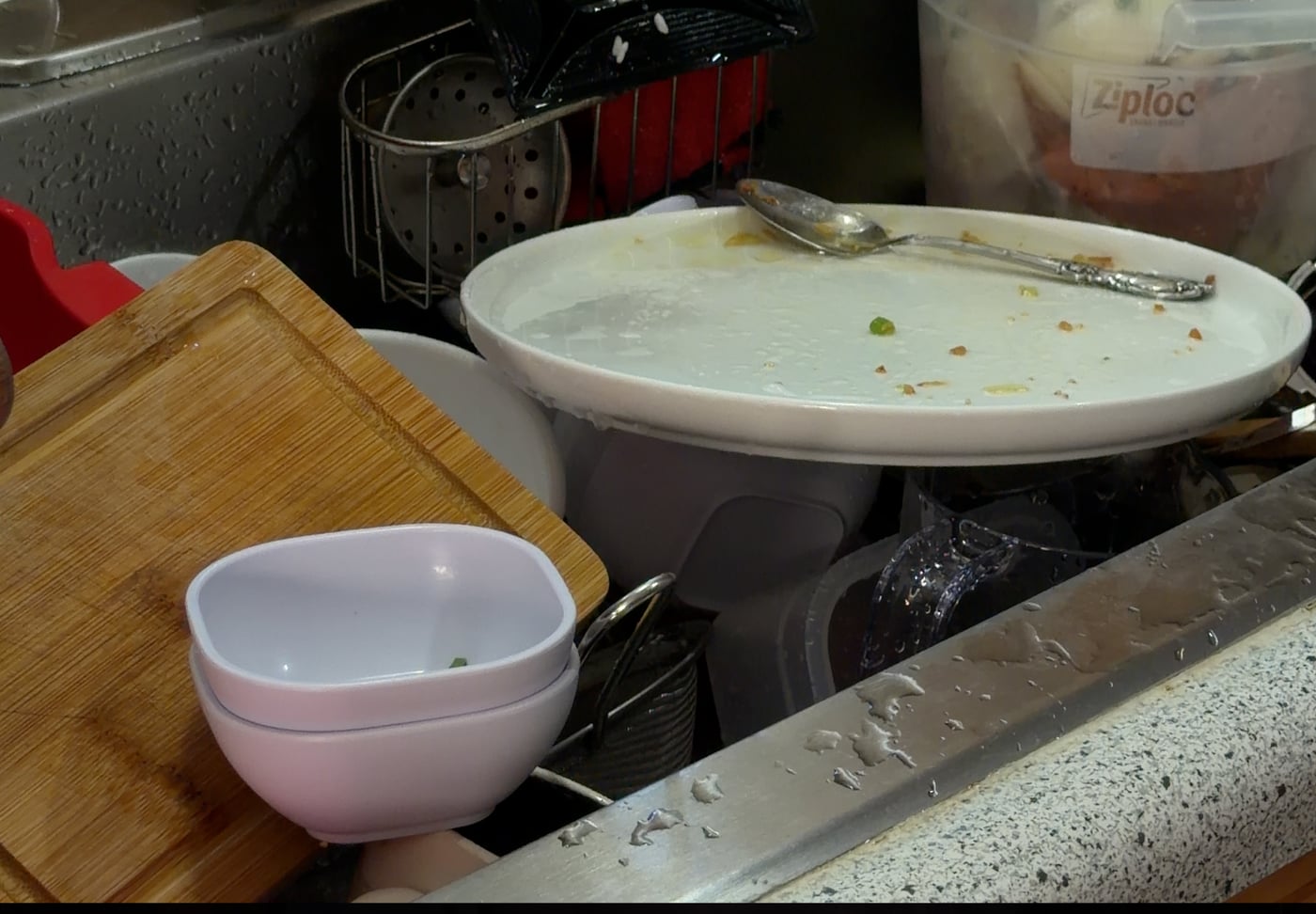
Dirty dishes left in the sink are a fruit fly buffet. Even a few food crumbs and standing water sustain them.
Remove the food sources they're feeding on:
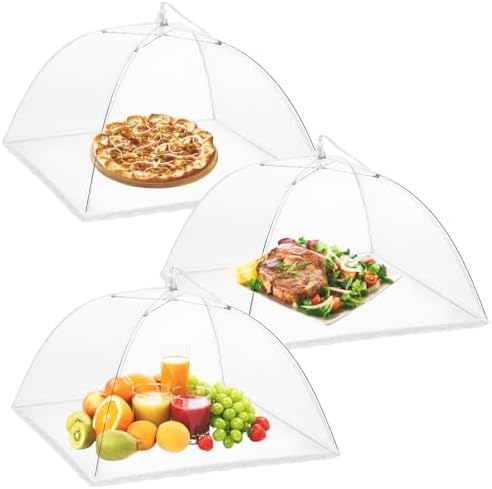
Cover your fruit bowl with a mesh dome. Fruit flies can't lay eggs on what they can't reach.
Clean dirty dishes promptly. Don't let plates with food residue sit overnight.
Wring out and dry wet sponges. Yes, fruit flies can live inside damp sponges. Replace sponges every 1-2 weeks.
Take out trash daily if it contains fruit or food scraps.
Empty compost bins frequently, daily during summer.
Step 2: Trap
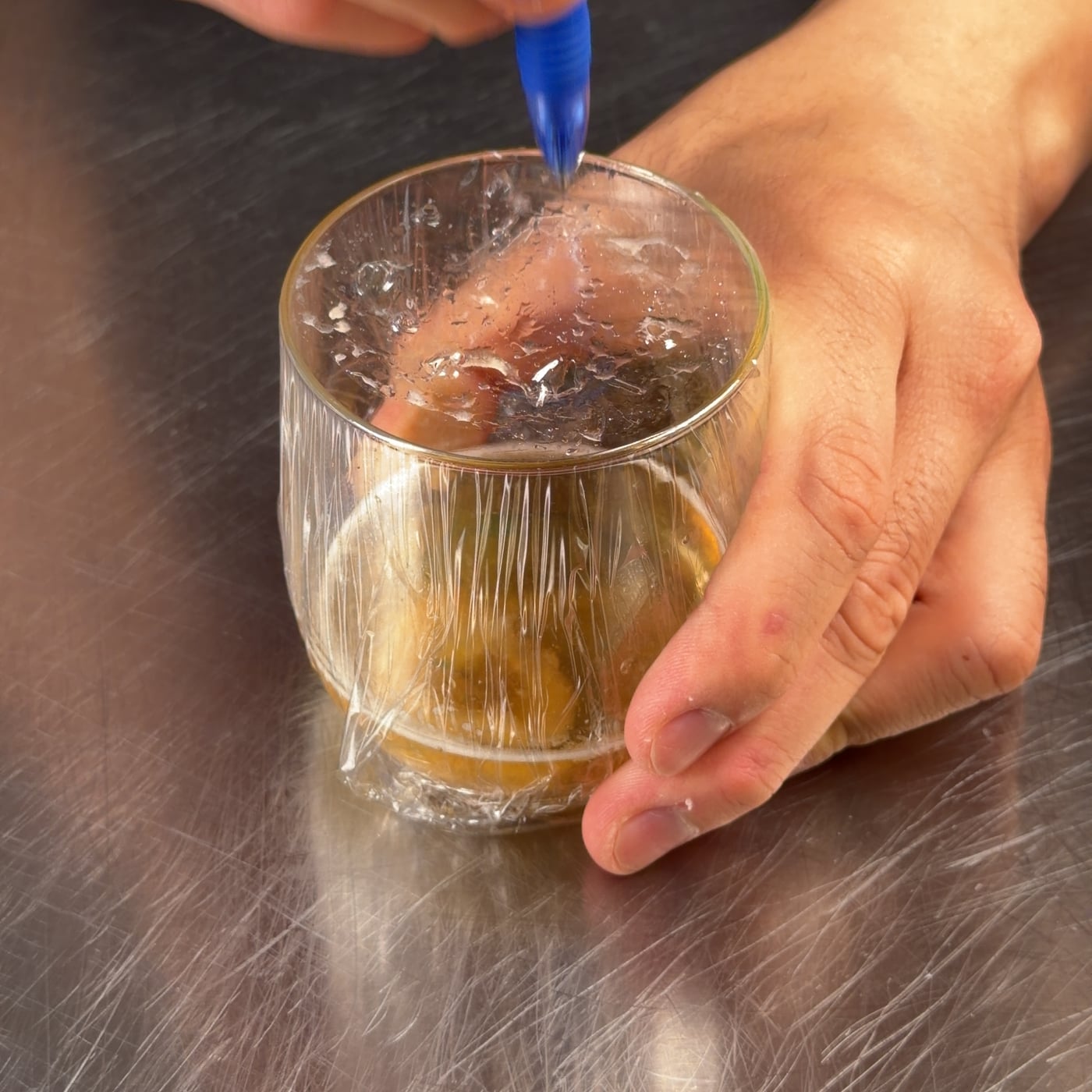
Poke pen-tip holes in plastic wrap covering the trap. Flies enter through the holes; the dish soap underneath traps them.
For the adults you already have, build a proper trap.
Recipe:
2 tablespoons apple cider vinegar
Splash of beer
Chunk of ripe banana
Few drops of dish soap
Mix all four in a cup. The vinegar, beer, and banana give off fermentation smells that attract fruit flies. The dish soap breaks the surface tension of the liquid so flies that land on it sink instead of standing on top.
The cover: stretch plastic wrap over the top of the cup. Rub the underside of the plastic wrap with a ripe banana to add even more attractant. Place it banana-side-down over the cup. Poke holes with the tip of a pen.
Set out for a few days. The trap will fill with adults.
Step 3: Flush
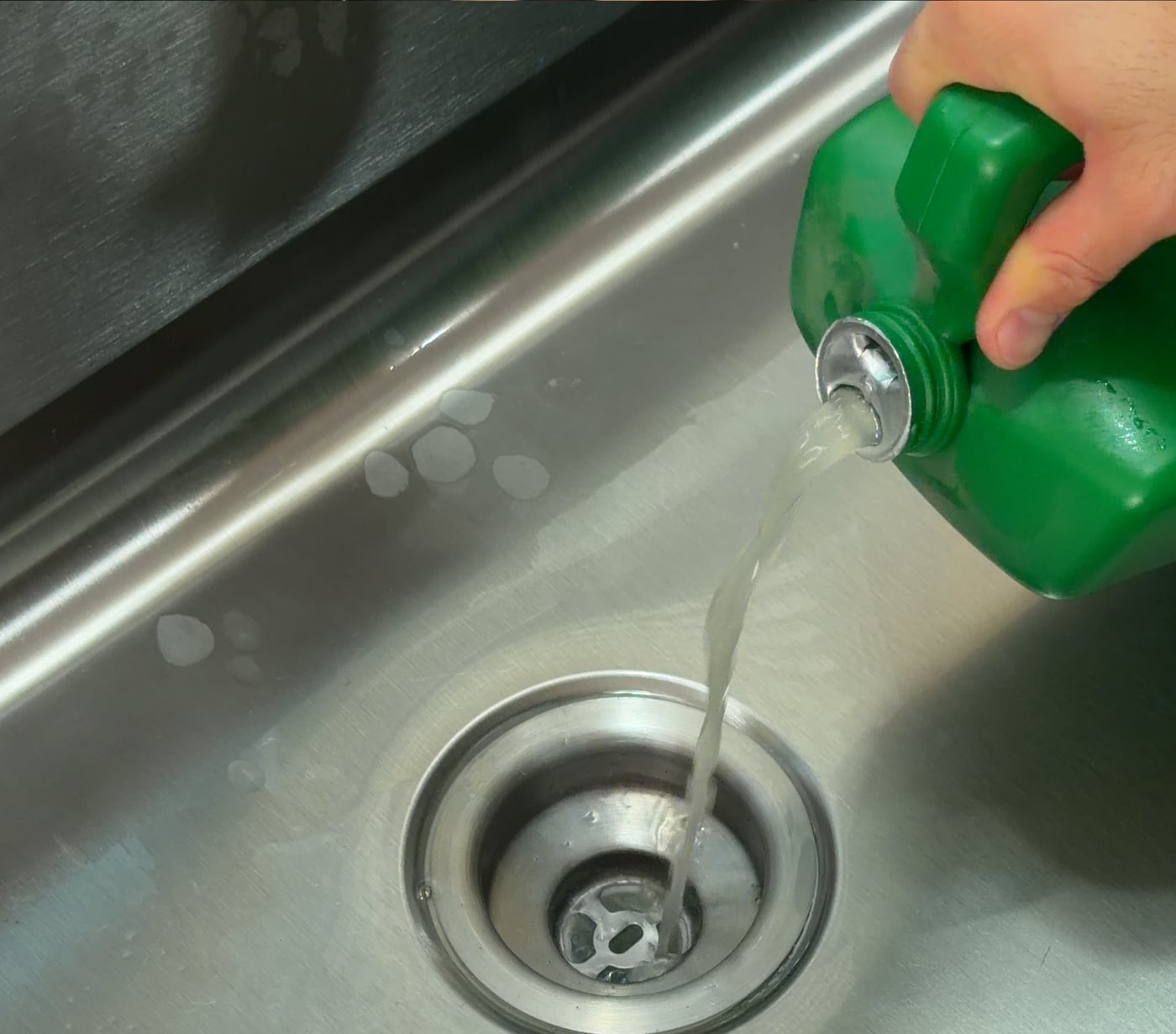
Pour enzyme drain cleaner into every kitchen and bathroom drain overnight. The live bacteria eat the biofilm where fruit flies breed.
This is the step most people skip, and it's the only one that actually ends the cycle.
You need to destroy the drain biofilm. The best tool for this is an enzyme drain cleaner.
How enzyme cleaners work:
Unlike chemical drain cleaners (which dissolve clogs but leave biofilm intact), enzyme cleaners contain live bacteria and enzymes. When you pour them down the drain:
Enzymes (proteases, lipases, amylases) break down proteins, fats, and starches in the biofilm into smaller molecules
Live bacteria eat those broken-down molecules
The bacteria establish a colony in your drain that competes with and crowds out the existing biofilm
They keep eating future buildup, preventing biofilm from regrowing
How to use:
Pour the recommended amount (usually 1-2 cups) into every drain in your kitchen and bathroom at night, just before bed. Don't run water for 6-8 hours so the enzymes can work undisturbed.
Repeat once a week for the first month, then monthly as maintenance.
Common myths
Myth: Boiling water down the drain kills fruit fly eggs.
The water cools too quickly as it descends to actually destroy biofilm. It might temporarily flush surface flies, but the biofilm and any eggs deep in the trap survive.
Myth: Bleach in the drain works just as well.
Bleach is harsh on pipes (especially older ones, P-traps, and garbage disposal seals), creates toxic fumes if mixed with anything, and doesn't leave behind colonizing bacteria. Enzyme cleaners do everything bleach can do for fruit flies, plus prevention.
Myth: They appear out of nowhere.
Fruit flies can hitchhike on store-bought produce as eggs. A bunch of bananas with brown spots can have dozens of fruit fly eggs ready to hatch. They also breed in drains continuously.
Myth: Cold weather kills them.
Fruit flies are temperature-resilient. Heated indoor spaces let them breed year-round, especially around dishwashers, garbage disposals, and kitchen sinks where moisture is constant.
How long does the process take?
If you follow all three steps consistently:
Days 1-3: Visible adult population drops as the trap catches them
Days 4-7: New flies still emerging from drain (because eggs were laid before treatment)
Days 7-14: Population drops to near-zero as the breeding ground is eliminated
If you only do steps 1-2 and skip the drain, the cycle restarts within 1-2 weeks. Every time.
Are fruit flies dangerous?
Fruit flies don't bite, sting, or transmit serious diseases. But they can carry bacteria on their bodies that spread to surfaces and food. In a kitchen, that's worth taking seriously, especially during food prep.
The bigger issue is what fruit flies indicate. If you have them, you have biofilm in your drains. That biofilm grows other things too, including odor-causing bacteria. Cleaning it out helps your overall kitchen hygiene.
The cooking through science takeaway
Most pest "solutions" treat symptoms. The fruit fly cycle keeps repeating because nobody addresses the actual source.
Understanding the biology, yeast as the real attractant, drain biofilm as the real breeding ground, and enzyme cleaners as biological warfare against biofilm, gives you the right framework to actually end the problem.
Starve, trap, flush. Miss any of the three and they come back.
Weekly articles
Enjoy the science? There's more every week.
New food science article every week. Sign up free to get notified, or go ad-free with membership.
Two products do most of the heavy lifting in the science-backed three-step solution: a mesh dome to starve them, and an enzymatic drain cleaner to flush the breeding ground.
Onarway Mesh Food Cover
Collapsible mesh dome that physically blocks fruit flies from laying eggs on your countertop fruit. Step 1 of the Starve phase.
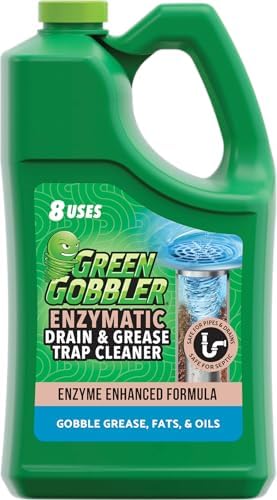
Live bacteria + enzymes that eat the biofilm in your drain where fruit flies actually breed. Step 3 of the Flush phase. Safe for pipes, septic, garbage disposals.
Most vinaigrettes break within minutes. The fix isn't shaking harder. It's understanding the chemistry of emulsification and choosing the right emulsifier for the flavor you want. Here are four vinaigrettes that follow one ratio, with one ingredient that changes everything.