Cast iron has a strong reputation and some of it is deserved. But after cooking with a thick cast iron skillet for years, I switched. Here are the three problems that made me change, and what I use instead.
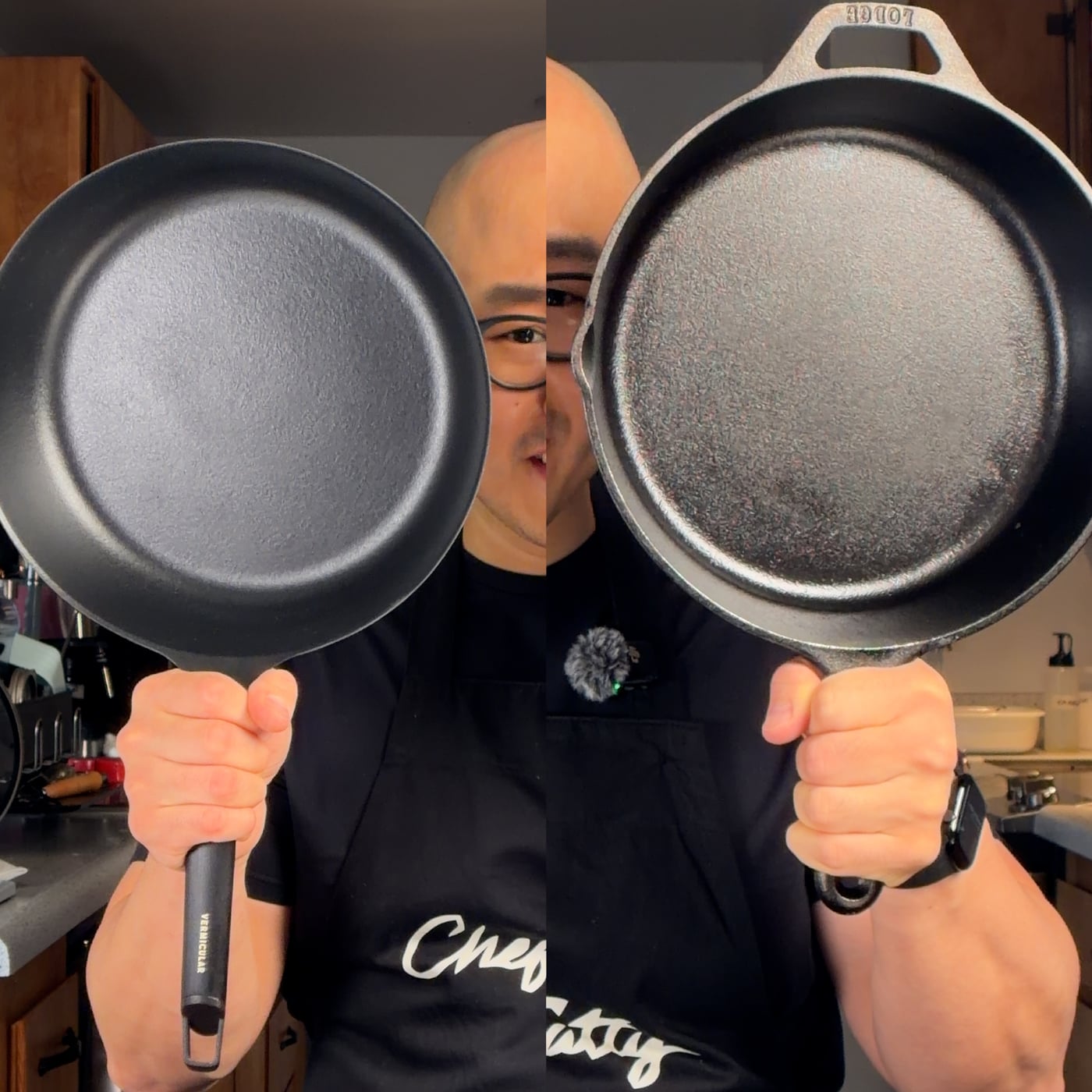
Two cast iron pans, two different design philosophies. The one on the left is what I use every day.
Cast iron is everywhere. Every cooking show, every gift guide, every serious home cook seems to have one. The reputation is not entirely undeserved. But after years of cooking with a thick cast iron skillet, I switched to a thin enameled cast iron pan. Here is why.
What cast iron actually does well
The case for cast iron is real, and it deserves a fair hearing before getting into its limits.
It is cheap. A 12-inch Lodge costs around $30 to $40. Nothing else at that price performs as well for searing. If budget is the constraint, cast iron wins without much debate.
It retains heat better than almost any other pan. A 12-inch cast iron skillet weighs around 2,500 grams. When cold food hits it, the temperature drop is smaller and shorter than in stainless or aluminum because there is simply more stored thermal energy in the pan pushing back. This is the reason cast iron produces a better sear at home than most other materials.
It is virtually indestructible. It does not warp, scratch, or degrade. It works on every heat source including induction and open flame, and goes from stovetop to oven to campfire without issue.
The three problems that made me switch
Problem 1: It is bad at moving heat, and slow to recover when it drops
Thick cast iron retains heat well, but when cold food goes in and the surface temperature drops, bringing it back up takes longer than most pans. The thicker the pan, the longer that recovery. This matters most when you need sustained high heat, like searing multiple pieces of meat back to back or stir frying with cold ingredients going in continuously. Once the surface drops below searing temperature, the Maillard reaction stops and food steams instead of browns.
To understand why, you need two properties: thermal conductivity (how fast heat moves across the surface) and heat capacity (how much heat a material stores). Cast iron has low conductivity and high capacity. The high capacity is the retention everyone praises. The low conductivity is what causes the slow recovery.
Thermal conductivity is measured in watts per meter per kelvin (W/m·K). The higher the number, the faster heat spreads.
Material
Thermal Conductivity (W/m·K)
Copper
400
Aluminum
205
Carbon steel
50
Cast iron
52
Stainless steel
16
Cast iron is near the bottom. Aluminum moves heat four times faster. Copper moves it almost eight times faster.
The equation behind this is Fourier's Law:
Q = k · A · (ΔT / Δx)
Q is heat flow rate. k is thermal conductivity. A is the surface area. ΔT is the temperature difference between hot and cold zones. Δx is the distance heat needs to travel.
In plain terms: the higher k is, the faster heat spreads from the burner to the edges. Cast iron at k=52 is slow. Copper at k=400 moves the same heat nearly eight times faster across the same pan. This is why a cast iron pan can sit on a burner for five minutes and still have noticeably cooler edges while the center is already at searing temperature.
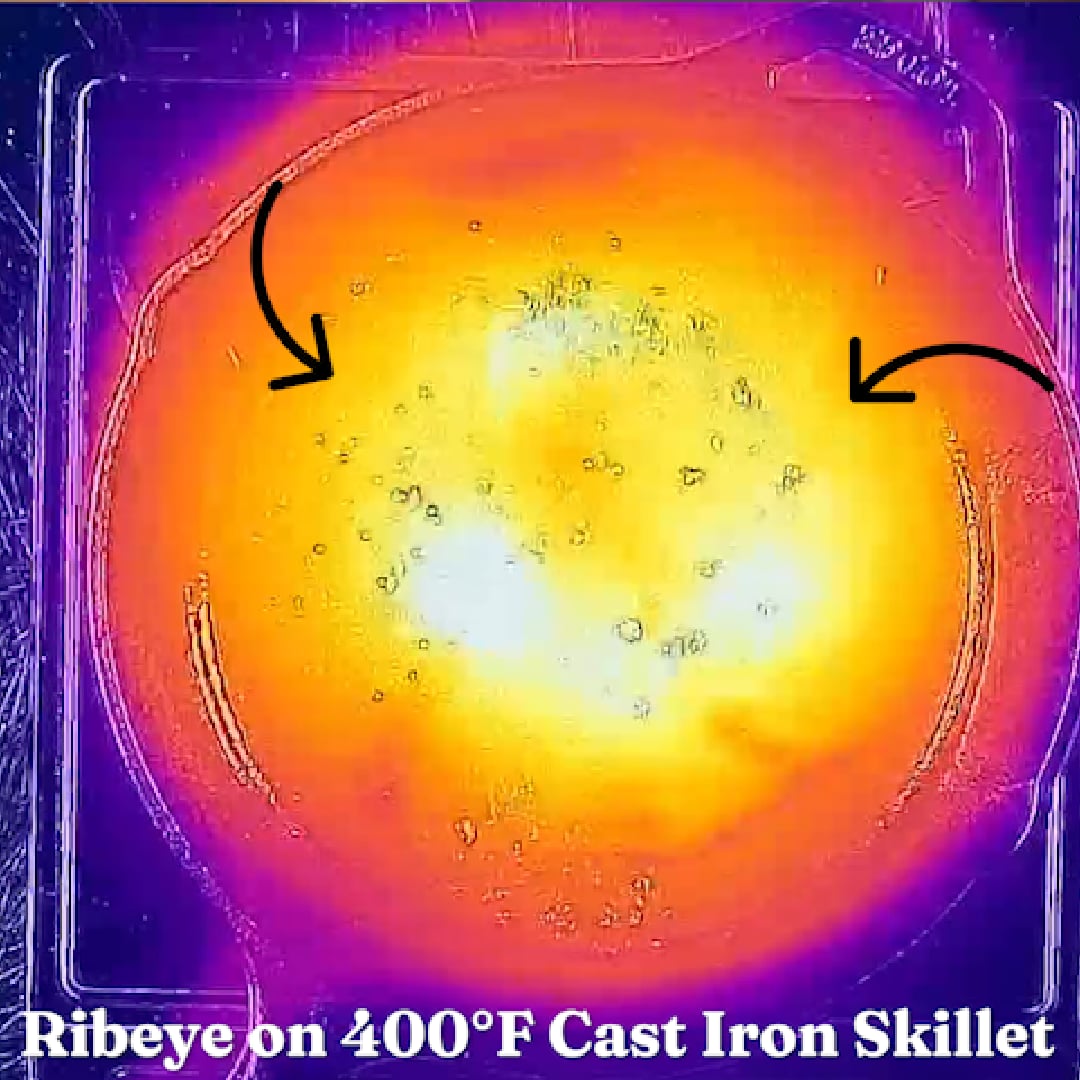
Traditional cast iron
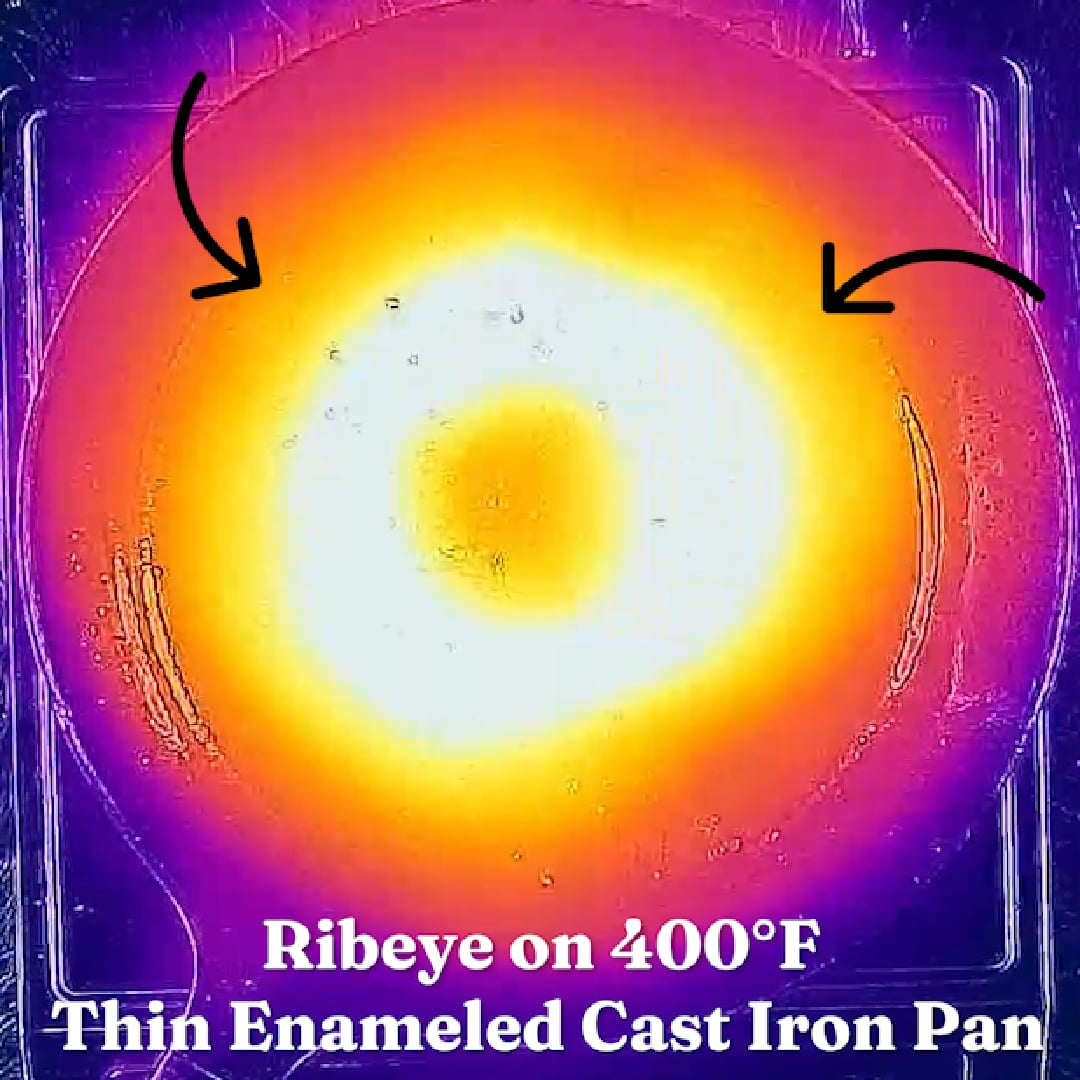
Thin enameled cast iron
Both pans at 400°F with a ribeye on the surface. The traditional skillet on the left shows a bright hot center with darker, cooler edges. The thin enameled pan on the right shows more uniform heat distribution across the cooking surface.
The fix is a proper preheat: at least five minutes at medium heat, not two minutes on high. Medium gives heat time to spread. High makes the center dangerously hot before the edges catch up.
Problem 2: Seasoning requires constant maintenance
Without a protective layer, cast iron will rust within hours of being left wet. Seasoning provides that protection. It is polymerized oil, fat molecules heated past their smoke point and bonded to the iron surface, forming a hard chemically stable coating. To build it from scratch: dry the pan completely, apply a very thin layer of high smoke point oil (flaxseed, vegetable, or Crisco), wipe off almost all of it, and bake upside down at 450°F for one hour. Repeat three to four times.
The problem is this layer degrades faster than most people expect.
Acidic foods are the most damaging. A single braise with tomatoes, wine, or citrus for 30 to 60 minutes can strip seasoning in that area. The acid breaks the polymer bonds chemically. After one use you will often see the pan turn reddish and metallic where the acidic ingredient sat.
Soaking in water does significant damage within 30 minutes. Water penetrates the polymer layer and begins oxidizing the iron underneath. Never leave cast iron sitting in water.
On frequency: cook regularly with fatty foods and avoid acidic ingredients and each cook re-seasons the pan naturally. If you do cook something acidic, dry the pan on the burner immediately after washing, wipe a thin layer of oil while still warm, and heat for a couple of minutes to re-seal. A formal oven re-seasoning every two to three months is a reasonable baseline for most home cooks.
One caveat worth knowing: modern dish soap does not damage seasoning the way people think. The old "never use soap" rule came from lye-based soaps that were genuinely aggressive. Modern soap will not strip well-established seasoning in a single quick wash. A fast wash and dry is fine.
Problem 3: It is a specialist pan, not an everyday one
Thick cast iron's properties make it genuinely excellent for a specific set of dishes and a poor fit for most others.
Where it works well:
Searing thick cuts. Steaks, pork chops, chicken thighs. High retention keeps the surface hot when cold meat goes in. This is the dish cast iron was built for.
Oven cooking. Cornbread, frittatas, skillet cookies, braising. In the oven, heat comes from all directions and the uneven conductivity problem disappears. The mass holds and radiates heat steadily from the surface.
High-heat and campfire cooking. Cast iron handles extreme heat that would warp or damage other pans.
Where the properties work against you:
Acidic dishes. Tomato sauces, wine braises, citrus-based dishes. The acid strips seasoning in a single cook and bare iron leaches into the food, affecting flavor.
Delicate fish. Thin fillets need a fast temperature drop to stop cooking at the right moment. Cast iron holds heat too aggressively to respond in time.
Pan sauces. After searing, bringing cast iron down to a precise simmer takes longer than you want. The retained heat keeps cooking the sauce past where you intended to stop.
Stir fry. Needs constant high heat recovery as cold ingredients go in repeatedly. Slow conductivity means recovery is delayed every single time.
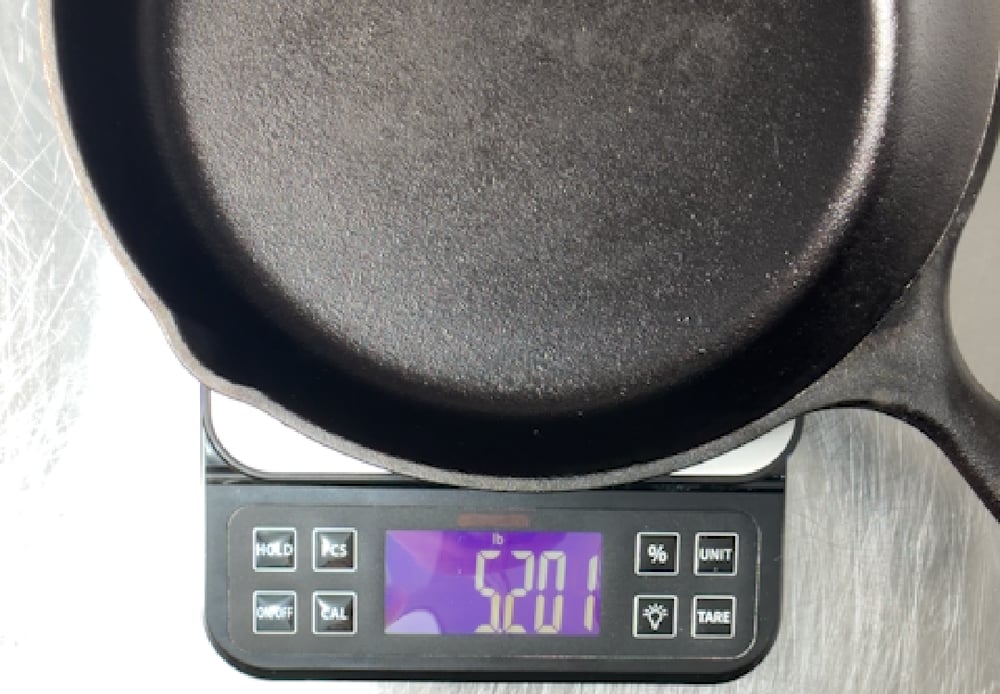
Anything where weight matters. Tossing vegetables, flipping, moving the pan frequently. A 12-inch cast iron skillet is around 5 to 6 pounds.
10" traditional cast iron · 5 pounds
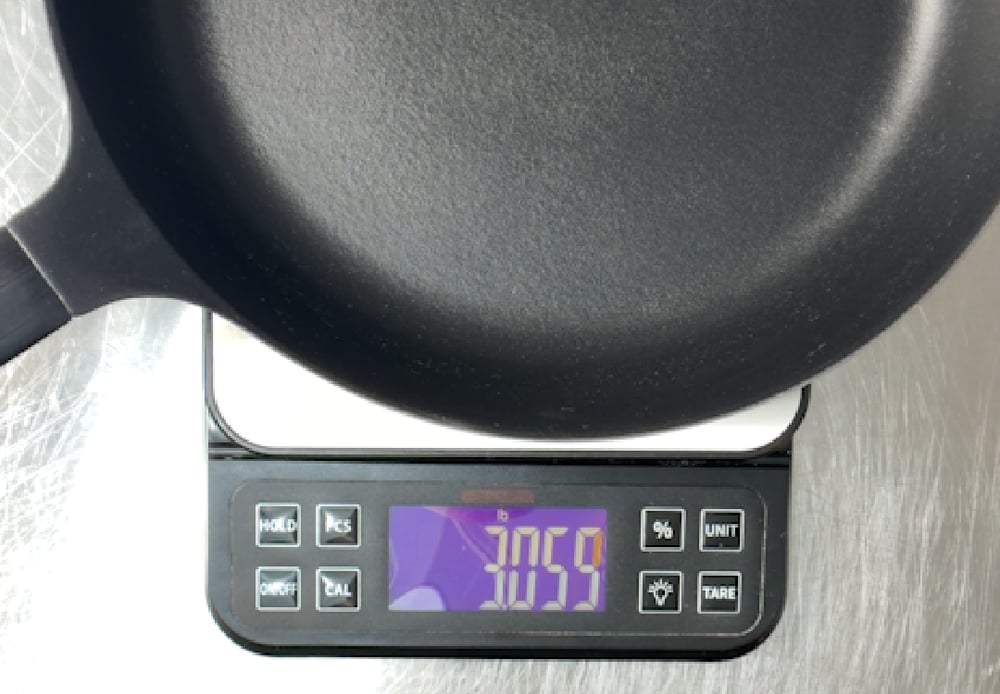
11" thin enameled · 3 pounds
The thin enameled pan is one inch larger across and still weighs roughly 40 percent less. The difference shows up the moment you start tossing or moving the pan one-handed.
Most home cooking falls in the second column more than the first. Cast iron earns its place, but it is a specialist tool, not a default.
The alternative solves all three problems without giving up what makes cast iron worth having.
Thinner iron body. Less thickness means a smaller Δx in Fourier's Law. Heat reaches the cooking surface faster, recovery after cold food is quicker, and the pan responds faster when you adjust the burner. It heats up in two to three minutes instead of five to eight. You still get meaningful heat retention for searing, without the sluggishness everywhere else.
Enameled surface. Fused glass bonded to the iron. No reaction with acidic foods, no rust, no seasoning. Cook tomatoes, wine, citrus freely. Wash it like a normal pan.
A few brands worth knowing:
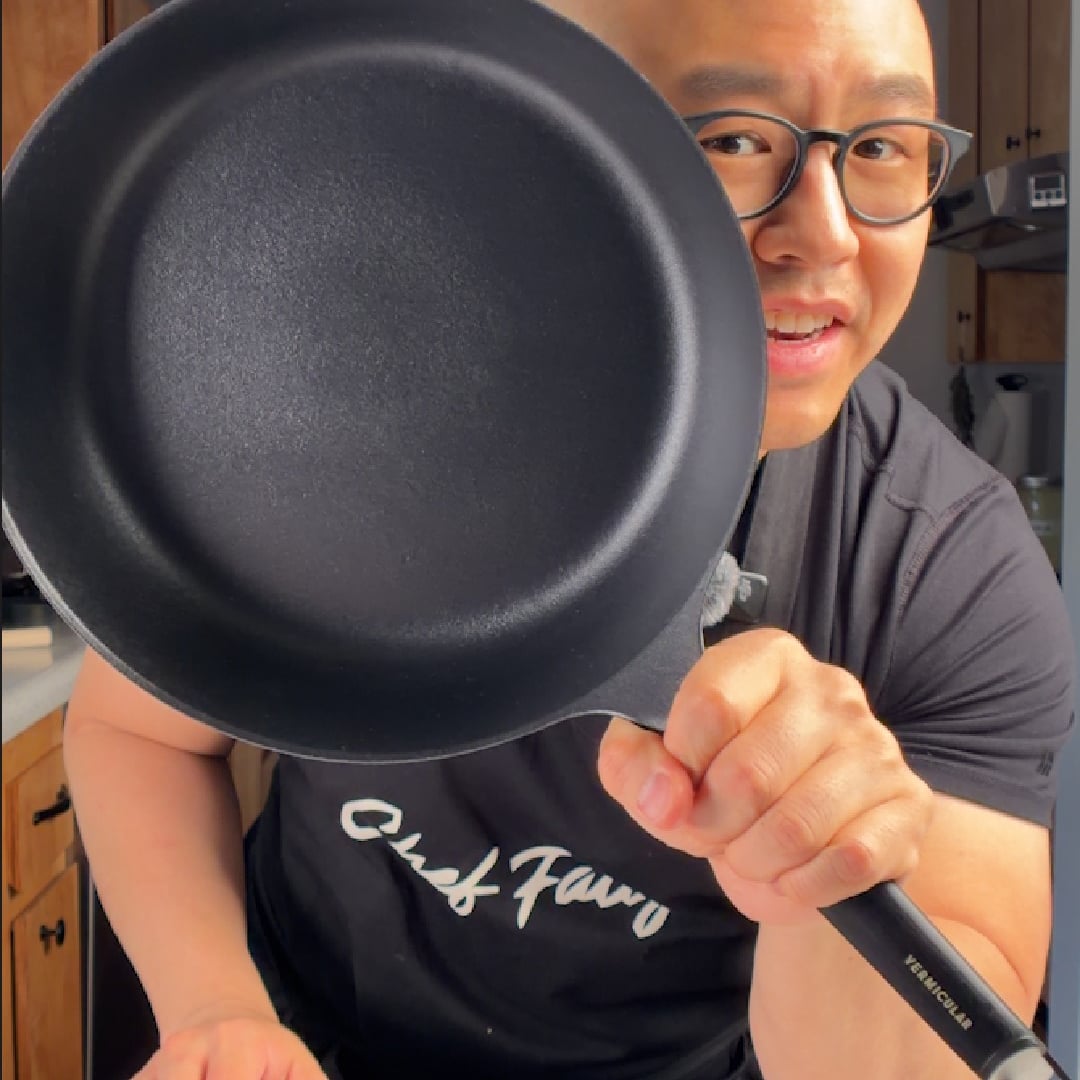
Vermicular (Japan) is the most precise option. Their frying pans use an extremely thin iron casting, the thinnest of any brand here, with a tight enamel surface. $195 to $275 depending on size. Worth it if you cook daily and want the most responsive cast iron available.
Made In (USA) makes a solid thinner enameled cast iron skillet at $100 to $150. Good quality enamel, noticeably lighter than a Lodge, and accessible enough to become an everyday pan rather than a specialty item.
Milo is the most affordable entry point at around $75 to $100. Thinner than traditional cast iron, enameled, and a genuinely good pan for the price if you want to try the category without committing to the premium.
One thing to keep in mind: keep stovetop heat to medium-high and oven temperature under 500°F to protect the enamel. Higher than that risks cracking or discoloring the coating over time. A good visual cue: the pan is ready when a few drops of water evaporate on contact within one second. If they pool, it is not hot enough. If they spit and scatter across the pan, ease back slightly.
For searing steak this is not a limitation. The Maillard reaction starts at around 280 to 300°F at the meat surface and accelerates as temperature rises. The ideal pan temperature for a clean brown crust is 400 to 450°F, which is well within enamel-safe range.
Above 500°F, a second process starts competing: pyrolysis. From the Greek for "fire breaking," pyrolysis is the thermal decomposition of organic compounds at high heat. Where the Maillard reaction produces hundreds of complex, savory flavor compounds, pyrolysis breaks proteins, fats, and sugars down into simpler compounds that are bitter and acrid. At searing temperatures between 400 and 450°F you are getting almost entirely Maillard. Push past 500°F and pyrolysis starts taking over. The surface chars before the browning compounds can fully develop, and the crust tastes burnt rather than seared. Protecting the enamel and cooking steak correctly point in exactly the same direction.
The trade-off is cost. Thin enameled starts around $75 where bare cast iron is $35. But what you get in return is versatility. Without the seasoning constraint, without the acidic food restriction, and with a pan that responds faster to heat changes, thin enameled cast iron covers a much wider range of dishes than thick bare cast iron does. For a lot of home cooks, that is what makes the difference between a pan that lives in the cabinet and one you reach for every day.
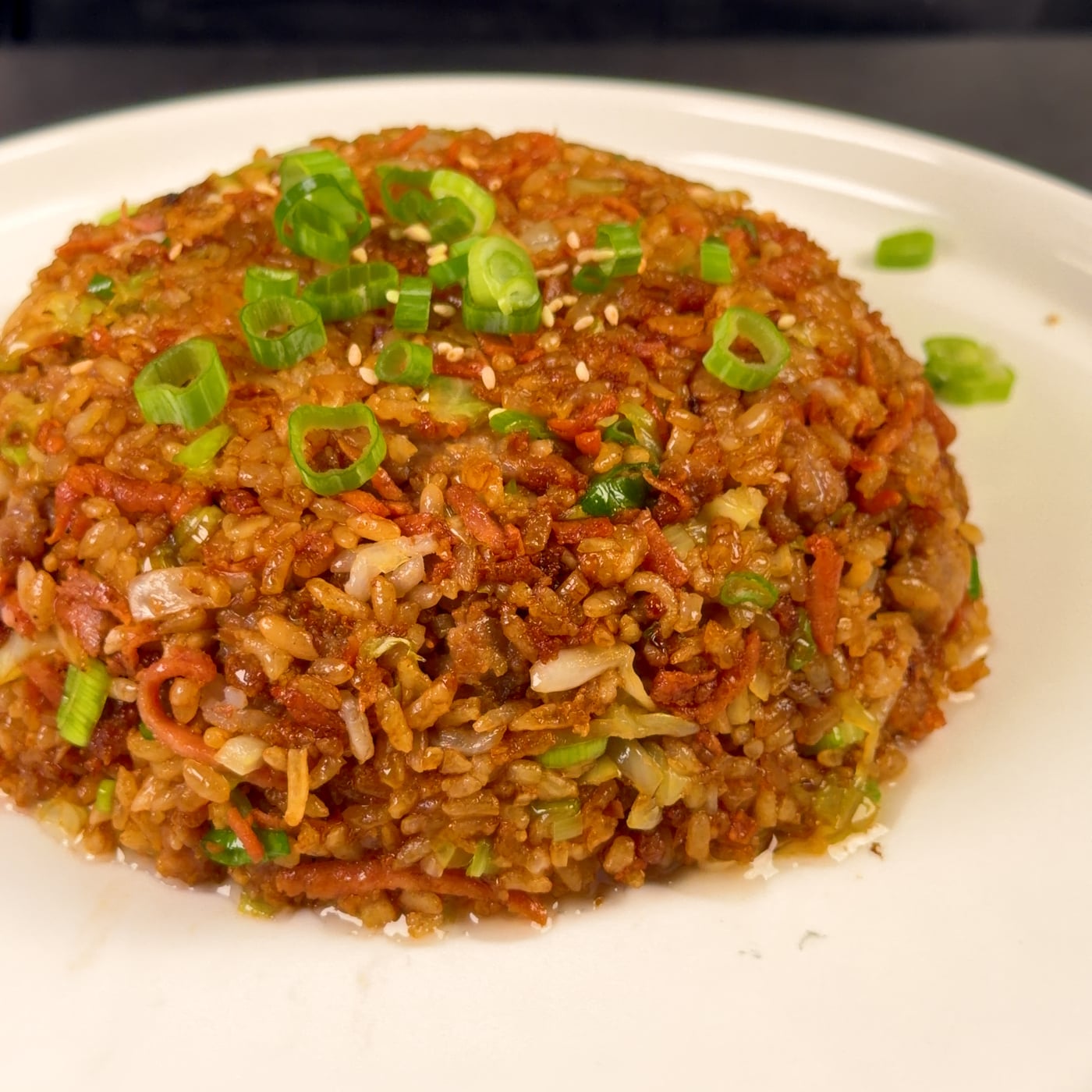
Crispy Pork Fried Rice. The recipe is built around the heat recovery speed of a thin enameled cast iron pan, which is what lets the rice crisp without steaming.
This is the recipe I cooked in the video. It is a stir-fried rice that depends on two things a thin enameled cast iron pan does better than a traditional cast iron skillet: fast heat recovery when cold ingredients hit the surface, and a smooth enamel that does not react with the soy and oyster sauce in the finishing step. You can make it on any pan with enough mass for a sear, but the texture is best when the pan keeps recovering between each addition.
Serves 2 to 3.
Rice
2 cups cooked jasmine rice, day-old (the dryness is what crisps)
Or, spread fresh rice on a sheet pan, 170°F convection, oven door slightly open, 20 minutes
Proteins
150g (5oz) ground pork
1/4 can of Spam, shredded fine on a box grater
White pepper and a splash of light soy for the pork
Vegetables
2 cups cabbage, roughly chopped
1 bunch green onions, sliced thin, greens and whites separated
Sauce (mix ahead)
2 tsp light soy sauce
1 tbsp oyster sauce
1 tsp fish sauce
1 tsp dark soy sauce
1 tsp toasted sesame oil
1/2 tsp white pepper
Method
Mix the sauce in a small bowl and set aside within reach of the stove.
Heat your Vermicular pan on high until a drop of water evaporates in under a second. Add a thin film of neutral oil. Drop in the ground pork. Season with white pepper and a splash of light soy. Brown hard, break it up fine, and do not rush it. Ground pork carries more moisture than the Spam, so it needs the extra time to render out and crisp. Remove to a plate.
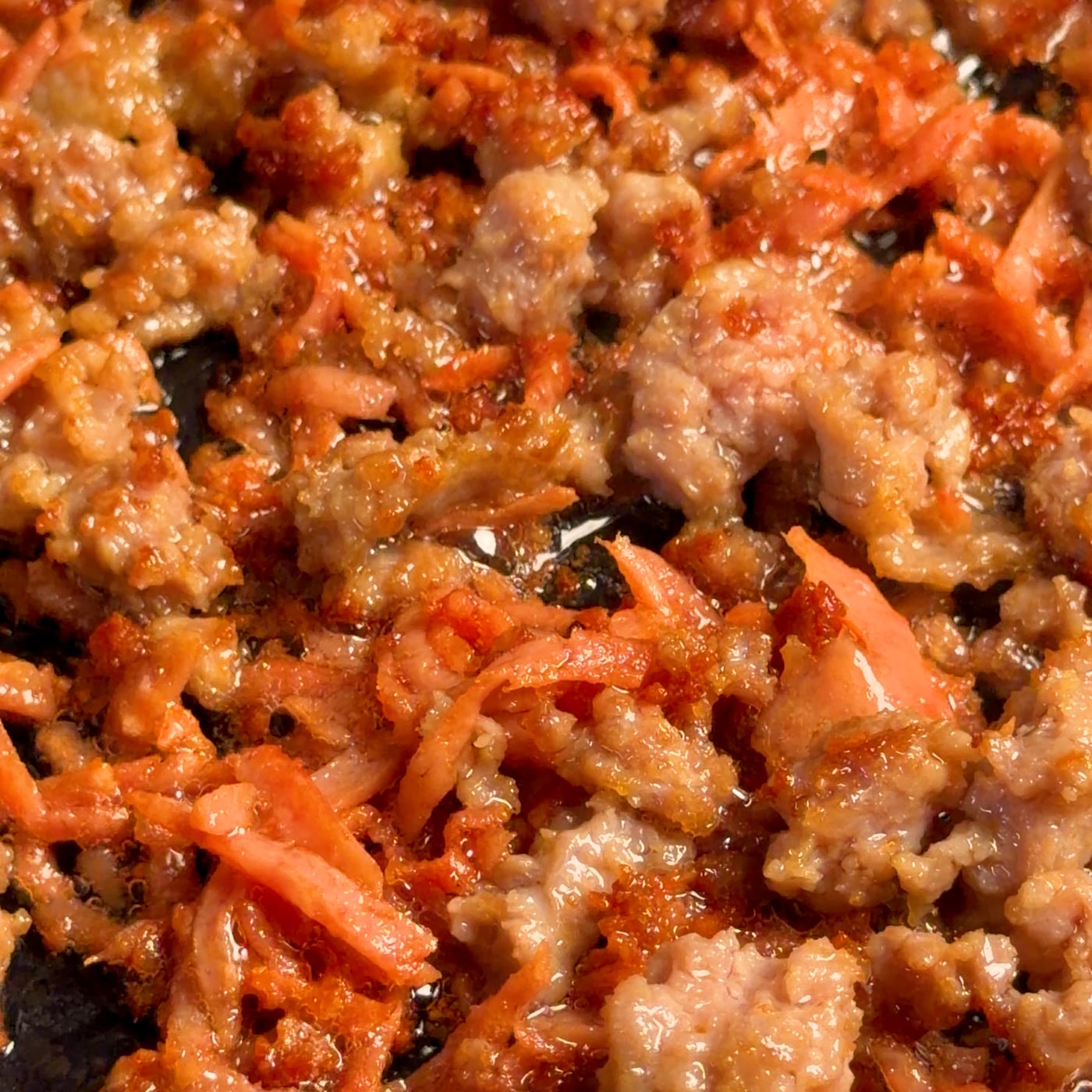
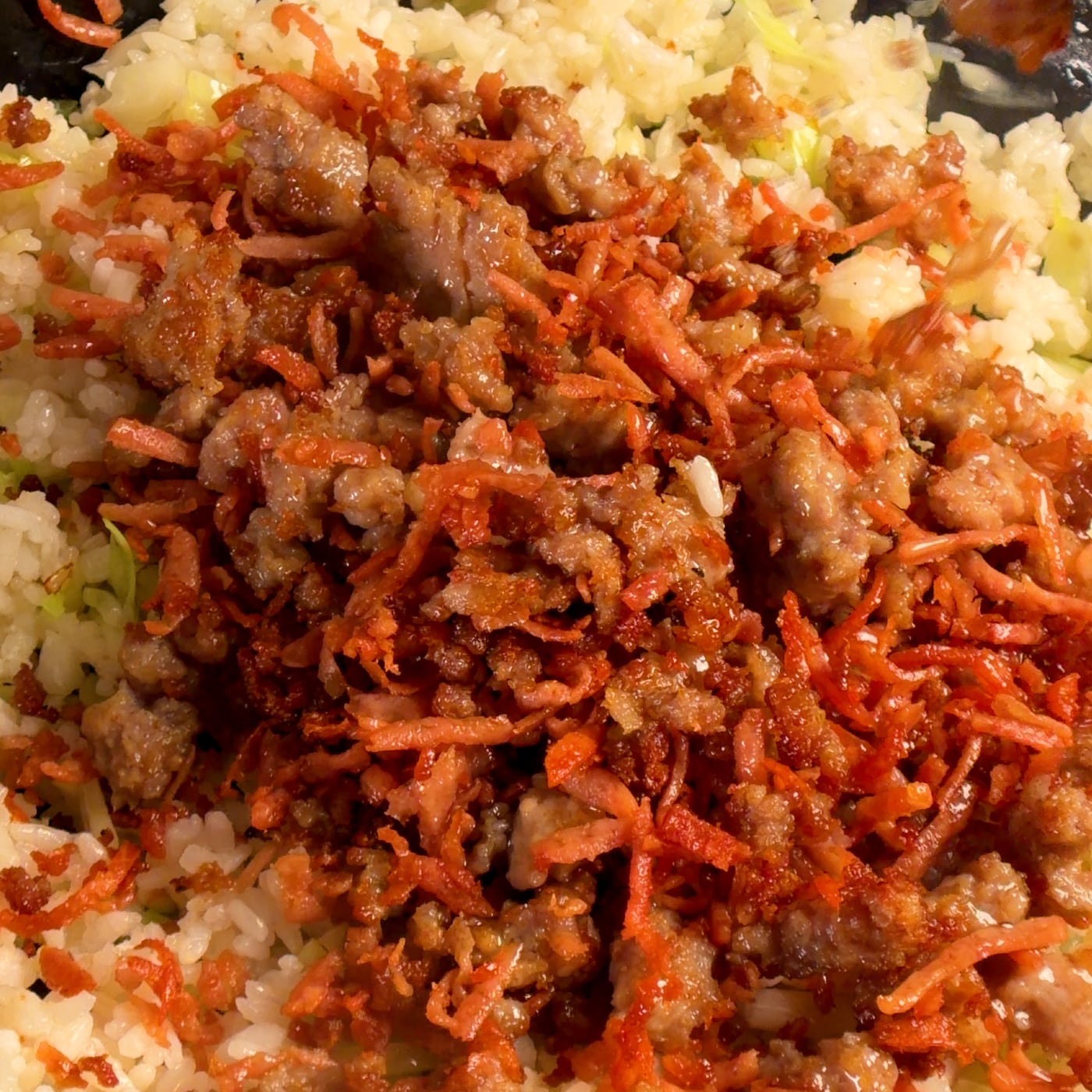
The Spam and ground pork get pushed hard until the edges crisp. Patience here. Stirring too early steams the meat.
Shredded Spam next. Spread it out in an even layer and let it sit untouched until the edges are dark and crispy. Remove and set aside with the pork.
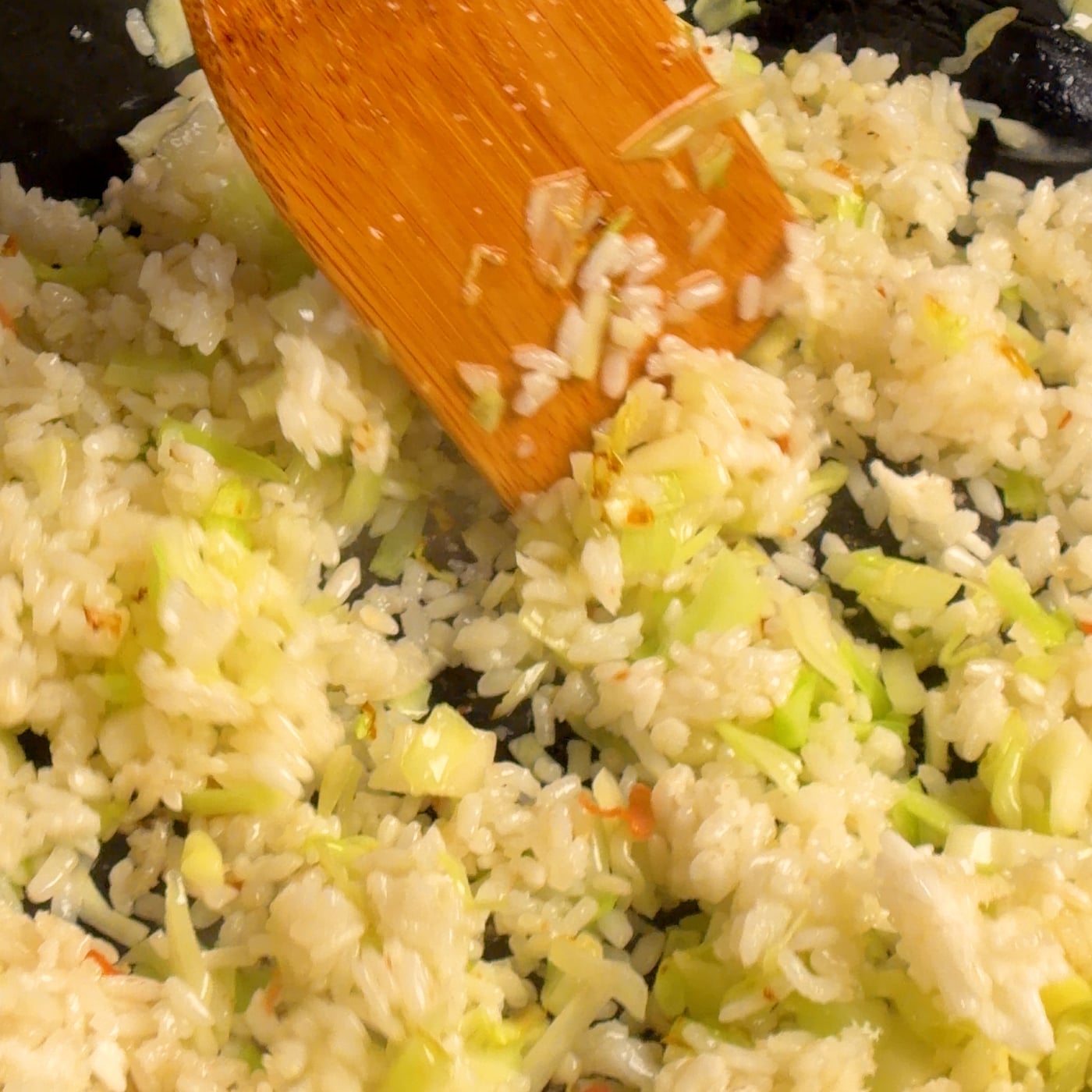
Cabbage and the whites of the green onions in. Cook until the edges char slightly. The pan should still be very hot.
Rice in. Spread it across the pan and stir frequently to break up clumps and get every grain in contact with the hot surface.
Frequent stirring breaks up clumps and gets every grain in contact with the hot surface. This is where the crisp builds.
Crispy Spam and ground pork back in. Final toss to combine everything.
Folding the crispy protein back in before the sauce keeps it distinct in the final dish.
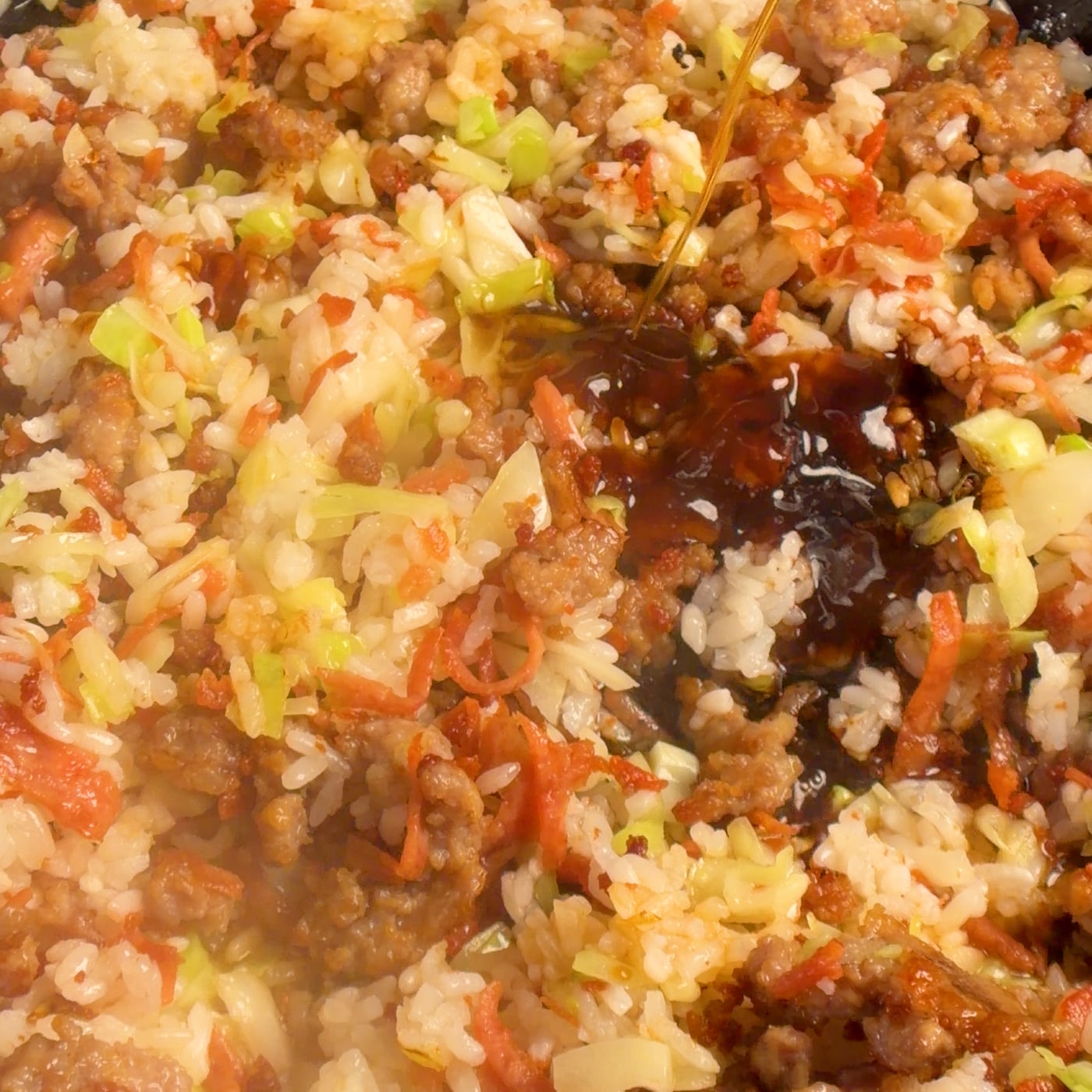
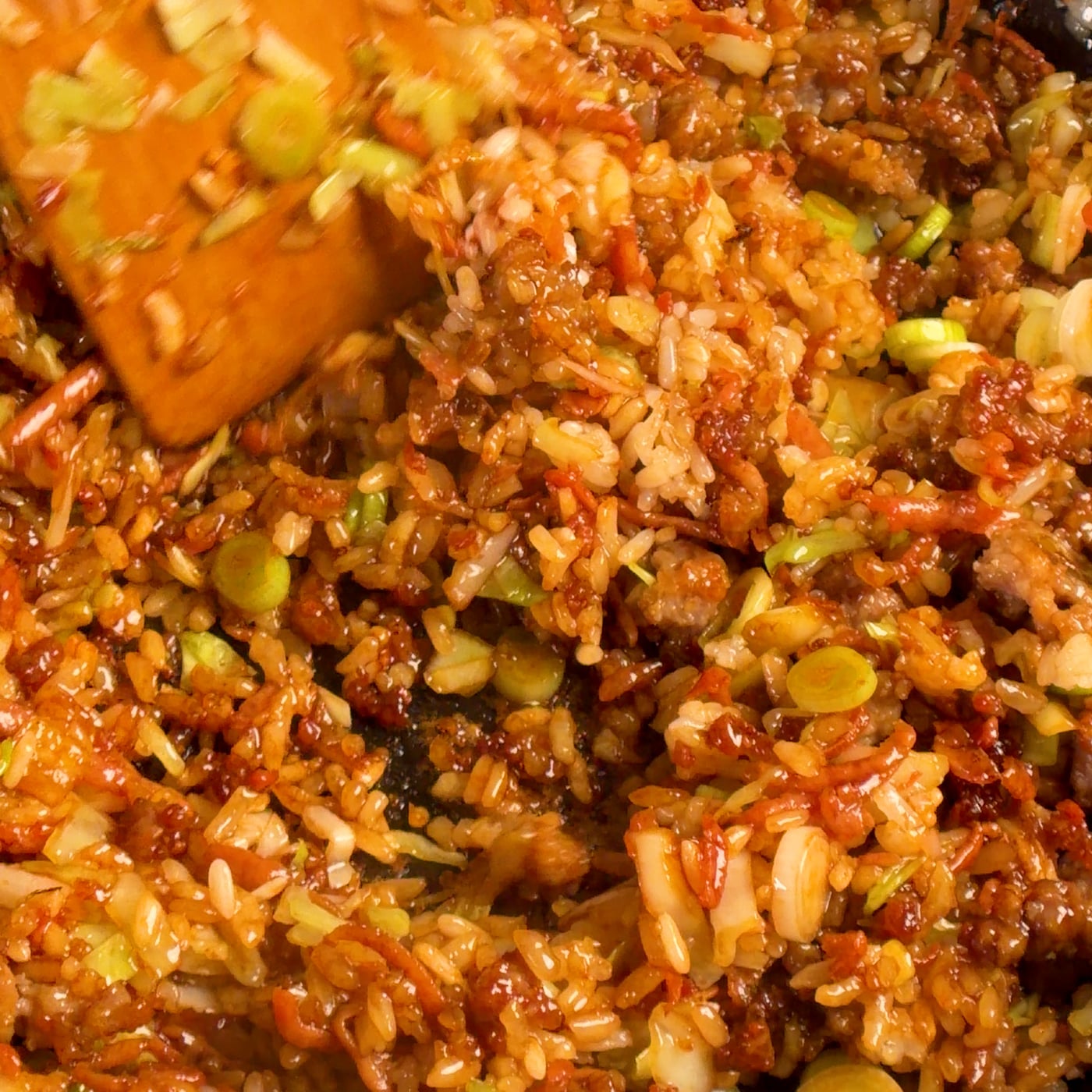
Pour the sauce in and toss everything together. The hot pan surface develops the soy in seconds.
Sauce in, then toss fast. The hot pan develops the soy in seconds.
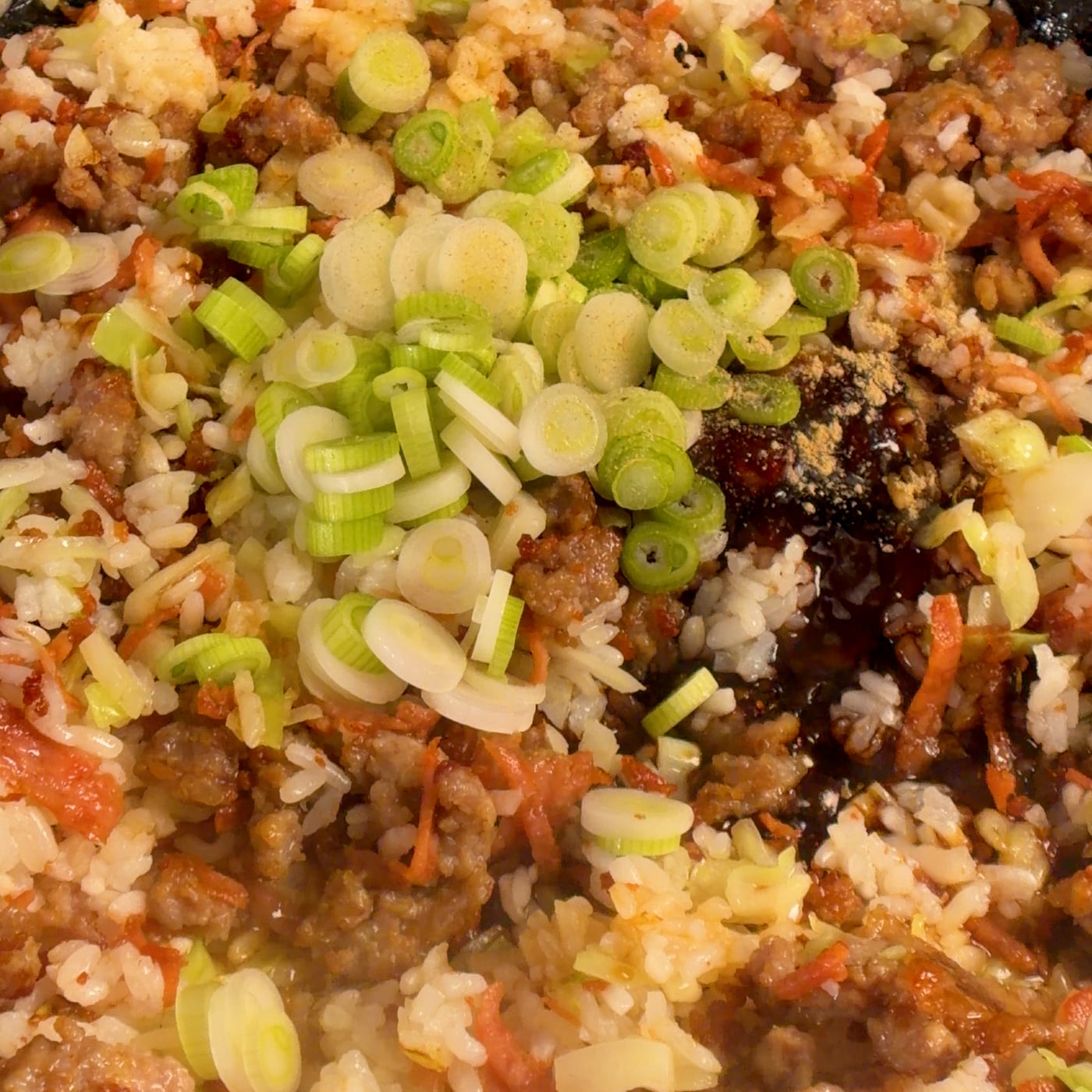
Finish with the green onion greens off the heat. Plate and serve immediately while everything is still hot.
The green onion greens at the end. Their crispness is the textural counterpoint to the caramelized rice underneath.Finished in the pan. The dark, caramelized crisp comes from a hot surface that kept recovering every time something cold hit it.
This is the kind of dish where the pan matters. A traditional cast iron skillet can do it, but the surface temperature drop every time you add cold ingredients (the cabbage, the rice, the sauce) takes longer to recover. A thinner enameled cast iron pan brings the heat back faster, which is what keeps the rice crisping instead of steaming.
Weekly articles
Enjoy the science? There's more every week.
New food science article every week. Sign up free to get notified, or go ad-free with membership.
Dawn Power Wash is a genuinely good formula. Read the ingredient list and you can see exactly why it works, and that you can build the same thing at home for about a quarter of the price. Here is the science, the recipe, and a side by side test.