Pesto just means paste, and it's a formula, not a recipe. Two cups basil, half a cup of nut, half a cup of cheese, half a cup of oil, then swap the nut. Here are five to make this summer, plus the science that keeps them bright green instead of brown.
Charles Kim·Chef Fatty
June 19, 2026
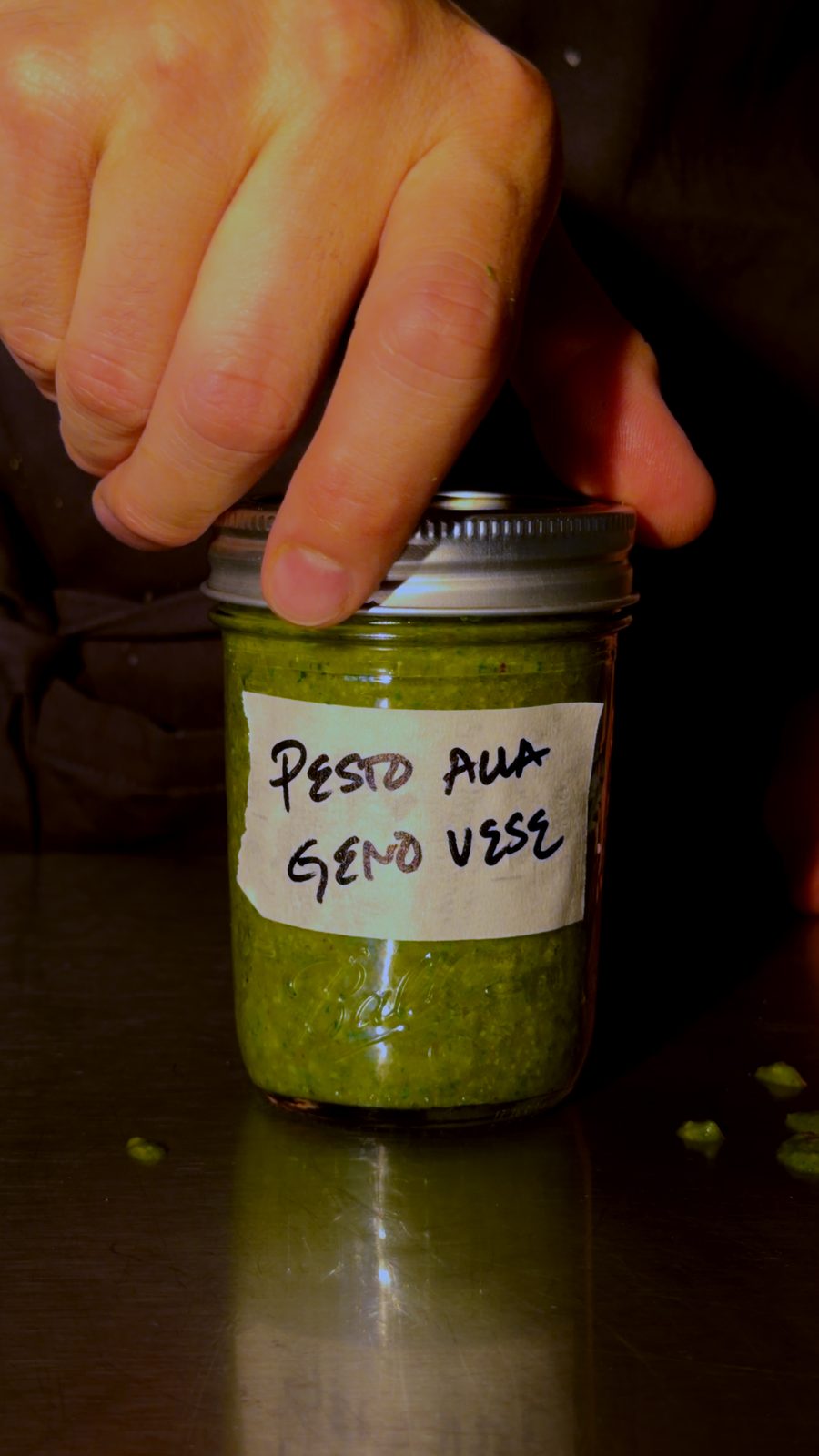
This is the one everyone knows, pesto alla Genovese. It's just the most famous of five.
Pesto is not a recipe. It's a formula. The word just means paste, from the Italian pestare, to pound or crush, the same root as the word pestle. So pesto is not one sauce, it's a method: pound a green, a nut, a hard cheese, garlic, and oil into a paste. Basil and pine nuts is only the most famous version, the Genovese. Once you see the formula, you can build a hundred of them.
Here are five worth making this summer, and the little bit of science that keeps any of them tasting bright instead of dull and brown.
The short version
For anyone who just wants the cheat sheet. The why is below.
The formula, per batch: 2 cups basil, ½ cup nut or seed, ½ cup cheese, ½ cup oil, plus garlic, acid, and salt to taste. Hold the basil and the ratio steady, swap the nut, and you have a new pesto.
Keep it green: blanch the basil 15 seconds, then shock it in ice water and squeeze it dry. That switches off the enzyme that browns it. Skip the blanch if you're eating it within the hour.
Don't cook it in the machine: pulse and stop early, or use a mortar. Over-processing heats the blades and turns the basil bitter. Stir the cheese and oil in by hand at the end.
Toast where it helps: pistachios and pepitas get toasted for depth, pine nuts and almonds stay raw.
Pesto just means paste
The name is the recipe, in a way. Pestare is the verb for pounding something in a mortar, and pesto is just the thing you get when you do it. There is no rule in the word that says basil, and no rule that says pine nuts. Those belong to one regional version from Liguria that got famous enough to stand in for the whole category.
That is good news, because it means the parts are swappable. Every pesto is the same five jobs: a green for the body, a nut or seed for richness and texture, a hard cheese for salt and savory depth, garlic for bite, and oil to carry it all and smooth it out. Change the nut and you change the whole sauce, while everything else holds steady.
The formula
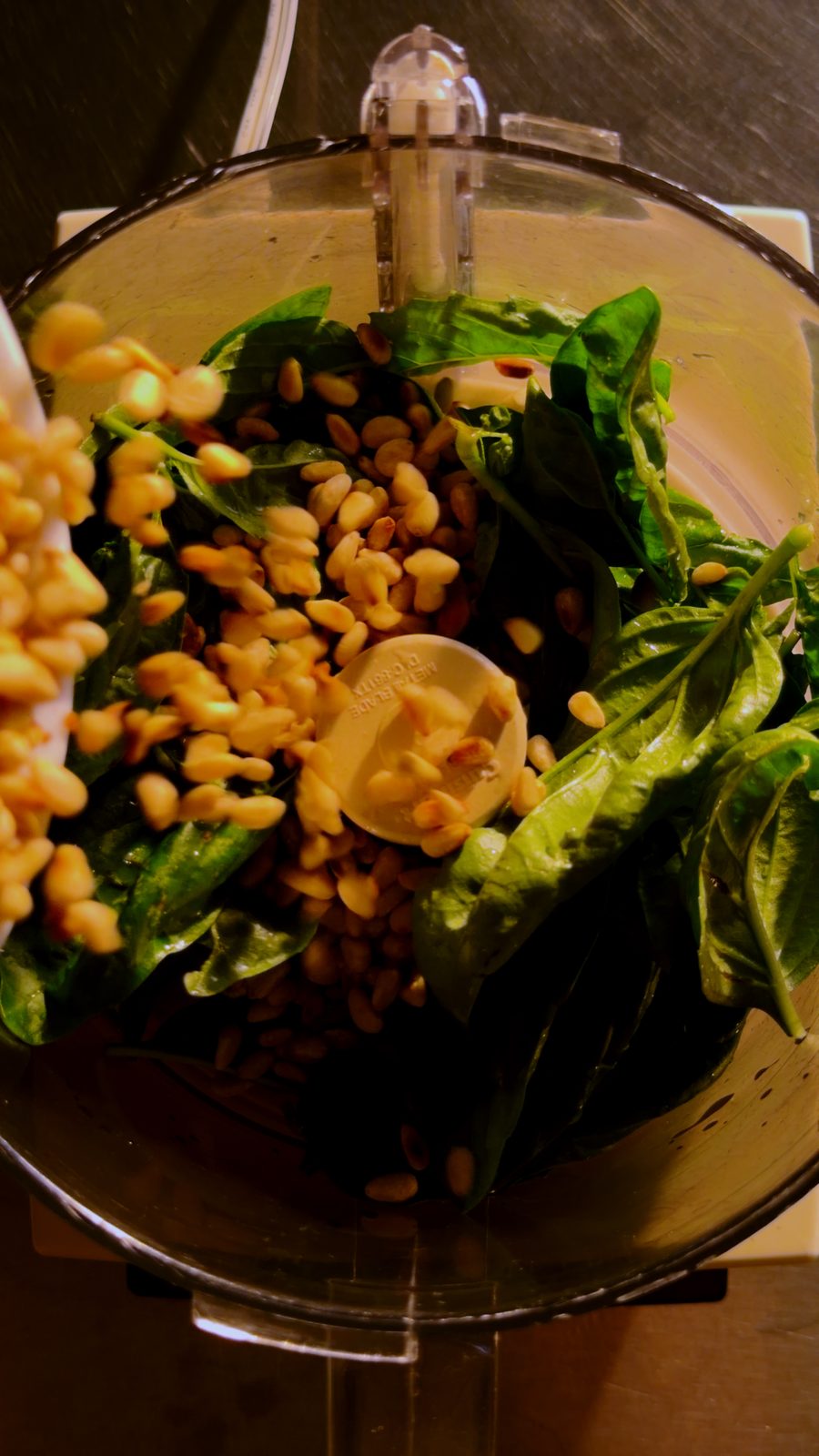
The base, every time: a green, a nut, cheese, garlic, oil. This one is heading toward Genovese.
Here is the ratio I build every pesto on:
2 cups basil
½ cup nut or seed
½ cup cheese
½ cup oil
plus garlic, acid, and salt to taste
Hold the basil and that ratio constant, and swap the nut. Pine nuts give you Genovese, pistachios give you the Sicilian version, almonds plus tomato give you Trapanese, and from there you can leave Italy entirely. The amounts shift a little to suit each nut, but the skeleton never moves.
Why pesto turns brown, and how to keep it green
Cut into a basil leaf and you start a clock. Basil is full of an enzyme called polyphenol oxidase, and when you bruise or crush the leaf, that enzyme meets the oxygen in the air and starts turning the leaf's natural compounds brown. It's the same browning you see on a cut apple or a sliced avocado. Heat speeds it up, which matters in a second.
There are two honest ways to deal with it.
Blanch it if you want a jar that stays vivid. Dunk the basil in boiling water for about 15 seconds, then shock it in ice water and squeeze it bone dry. That quick hit of heat deactivates the browning enzyme, so the pesto stays a bright, almost unreal green for days. This is the move for a jar you want to photograph, gift, or keep in the fridge through the week.
Or skip it for pure fresh punch. If you're eating the pesto within the hour, raw basil tastes brightest and most peppery, and it has no time to brown anyway. Skip the blanch and go.
Three rules for any pesto
Once the basil is sorted, three small habits separate a pesto that pops from one that tastes flat.
Toast where it helps
Pistachios and pepitas get toasted in a dry pan first, because heat wakes up their flavor and gives the sauce more depth. Pine nuts and almonds stay raw, because they are softer and more delicate and you want them along for texture, not toasted bitterness. Toasting is a tool, not a default.
A mortar is best, a processor is fine
If you want the best version, reach for a mortar and pestle. The sauce is named for the pounding, after all. Crushing the basil and nuts presses their oils out slowly, with no friction heat, so the flavor stays bright and everything comes together into a silkier, more cohesive paste than spinning blades can manage. This is the preferred way if you have the time and the arm.
That said, a food processor is what most of us actually grab, and it makes very good pesto. Just pulse it and stop early. Run it too long and the spinning blade heats everything up, which speeds the browning along and turns the basil bitter and dull. You're making a paste, not cooking a sauce in the bowl.
Add the cheese and oil last
Stir the cheese and oil in at the end, once the basil is already a paste. If you can, do it by hand, because olive oil can turn bitter when you whip it hard in a machine. But a food processor is fine here too, just pulse it enough to bring everything together and stop. This is also where you taste and adjust, a squeeze of acid, a pinch of salt, until it tastes alive.
The five
Same base every time. You just swap the nut.
1. Pesto alla Genovese (pine nut)
The original, from Liguria. Bright green, and the benchmark every other pesto is measured against.
½ cup finely grated Parmigiano-Reggiano (or half parm, half pecorino)
½ cup extra-virgin olive oil
1 small garlic clove
½ tsp salt, to taste
Method
Optional: blanch and shock the basil, then squeeze it very dry.
Pound or pulse the garlic, pine nuts, and a pinch of salt into a coarse paste.
Add the basil and work it to a paste.
Stir in the cheese by hand, then the olive oil. Season with salt.
Great with: caprese (pesto, tomato, mozzarella), any pasta, swirled into minestrone, or on a sandwich.
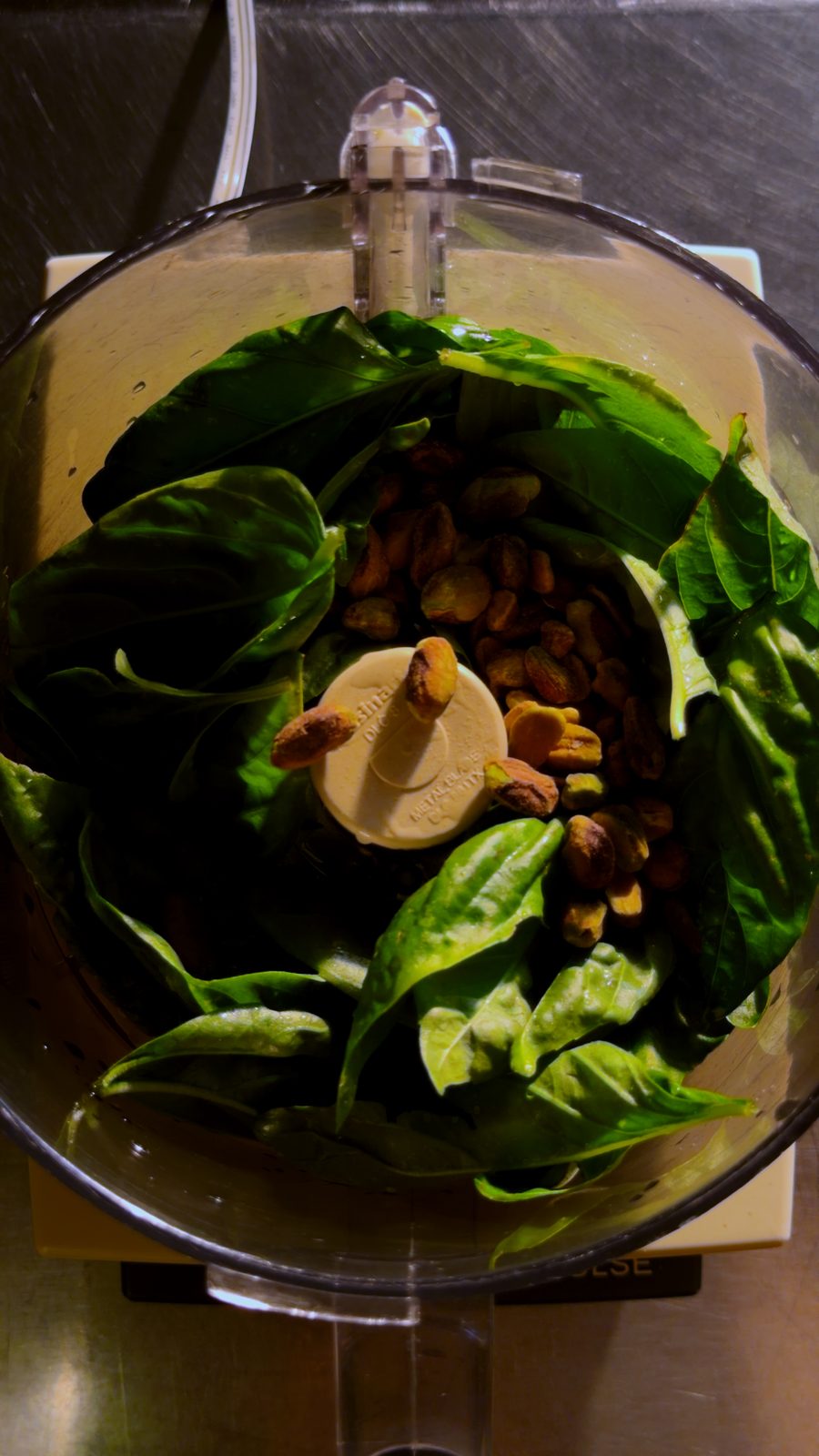
2. Pesto di Pistacchio (pistachio)
Pistachio pesto, traditionally from Bronte in Sicily. Pale jade, creamy, not oily.
A Sicilian classic. Keep a light hand with the cheese so it stays creamy rather than salty.
Ingredients
2 cups packed basil (plus a few mint leaves, optional)
½ cup shelled pistachios, toasted (reserve a few, chopped, for garnish)
¼ cup grated pecorino (light hand, so it stays creamy)
½ cup extra-virgin olive oil
1 small garlic clove
zest of ½ lemon, plus a squeeze
salt to taste
Method
Toast the pistachios until fragrant, then cool. Blanch the basil if you like.
Pulse the garlic, pistachios, and salt to a paste, leaving a little texture.
Add the basil and mint, work to a paste.
Stir in the pecorino, lemon zest, and oil by hand. Loosen with a splash of water if needed.
Great with: hot pasta loosened with starchy pasta water into a silky cream, finished with mortadella or shrimp, or on crostini under burrata.
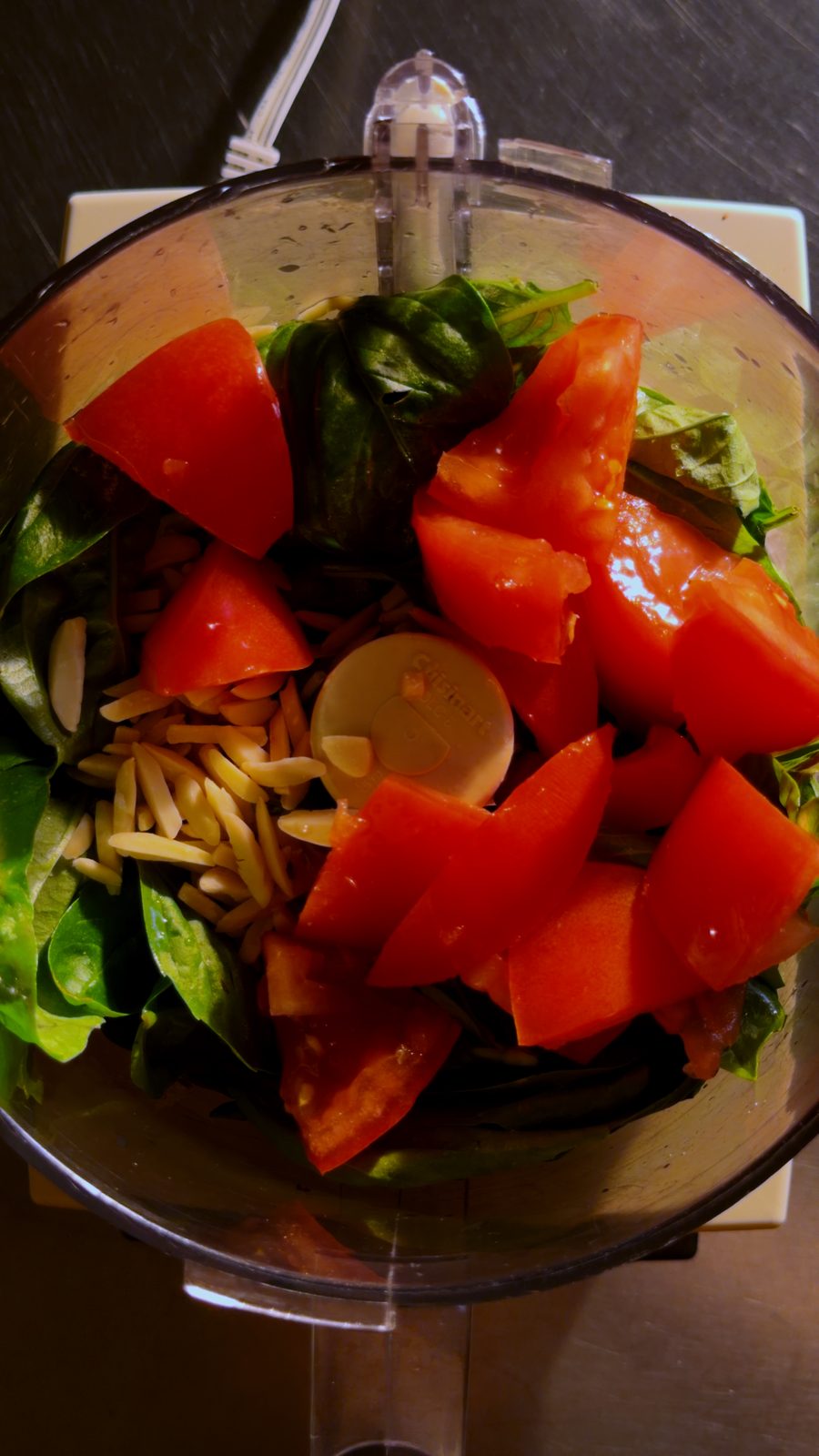
3. Pesto alla Trapanese (almond + tomato)
Trapanese, from Trapani in western Sicily. Coral red, a raw summer sauce.
The almond-and-tomato version. It's a raw sauce, so use good ripe tomatoes and keep it a little chunky.
Ingredients
2 cups packed basil
½ cup blanched almonds (raw)
2 medium ripe tomatoes (about 2 cups), cored, seeded, chopped (or 1 cup cherry tomatoes)
⅓ cup grated pecorino
⅓ to ½ cup extra-virgin olive oil
1 garlic clove
pinch of chili flakes
salt to taste
Method
Pound or pulse the garlic, almonds, and salt to a coarse paste.
Add the basil, work to a paste.
Add the tomatoes and pulse to a rustic, slightly chunky sauce. Stop before it liquefies.
Stir in the pecorino, chili, and oil. Season.
Great with: busiate or spaghetti (the classic), spooned over grilled fish or swordfish, or on toasted bread.
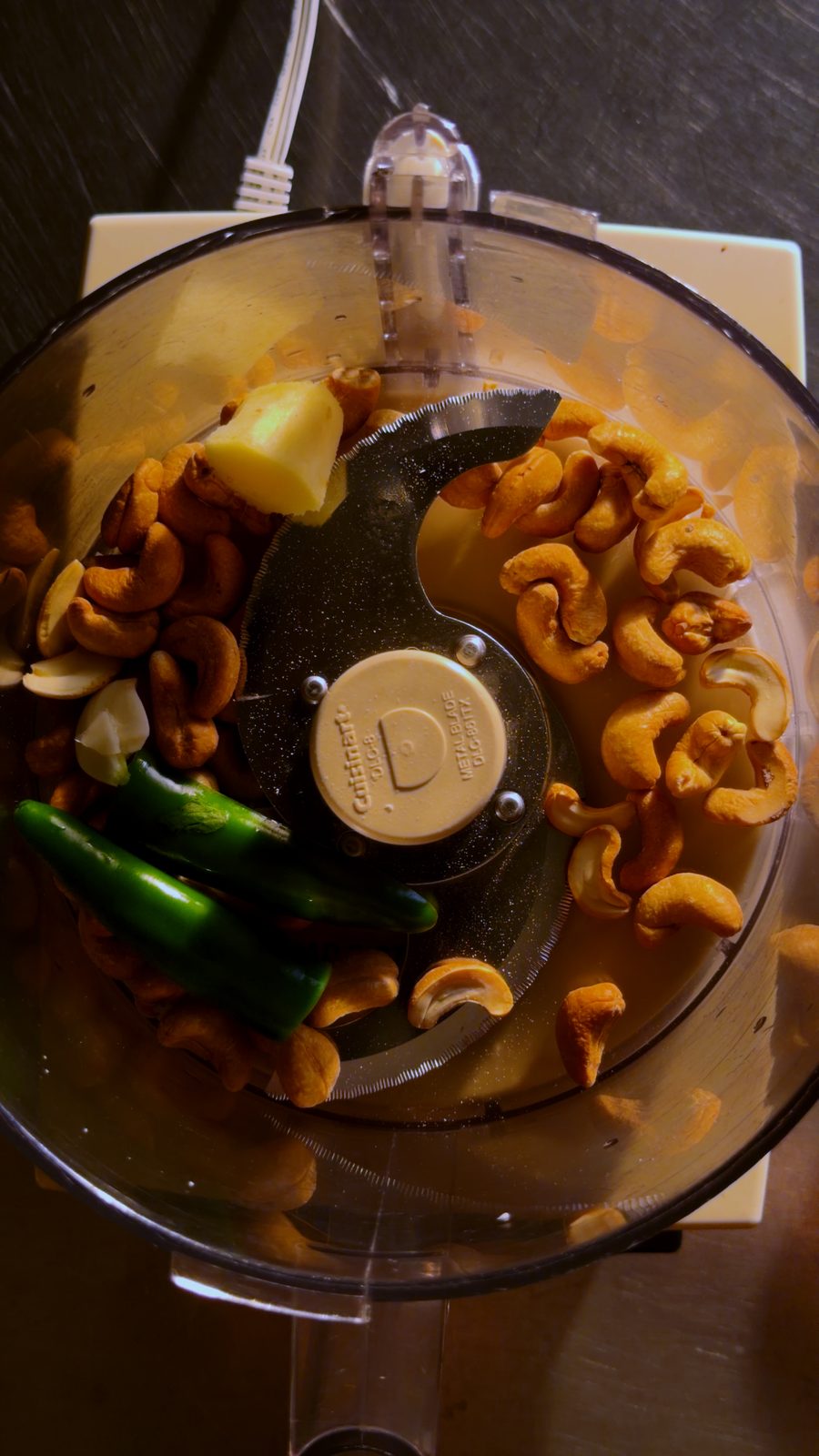
4. Asian Fusion Pesto (cashew)
My riff, built on Southeast Asian herb pastes. Parmesan and fish sauce stack into a double hit of umami.
This one leaves Italy. Thai basil if you can get it, and go easy on added salt since the parm and fish sauce are both salty.
Ingredients
1.5 cups packed basil (Thai basil if you can get it)
½ cup cilantro
½ cup roasted cashews
½ cup grated parmesan
1 garlic clove
1 inch fresh ginger
1 to 2 Thai or serrano chilies, to taste
juice of 1 to 2 limes
2 tsp fish sauce (less than a full pesto's worth, to balance the parmesan's salt)
1 tsp sugar
½ cup neutral oil
salt to taste (go easy, the parm and fish sauce are both salty)
Method
Pulse the cashews, garlic, ginger, and chili to a paste.
Add the basil and cilantro, pulse.
Add the lime, fish sauce, and sugar, then stir in the parmesan and stream in the oil by hand. Taste and balance the lime, fish sauce, sugar, and salt until it pops.
Great with: tossed through cold rice noodles, as a marinade and sauce for grilled chicken thighs, or thinned with water as a rice-bowl drizzle. For a dairy-free or vegan version, skip the parmesan and swap the fish sauce for white miso.
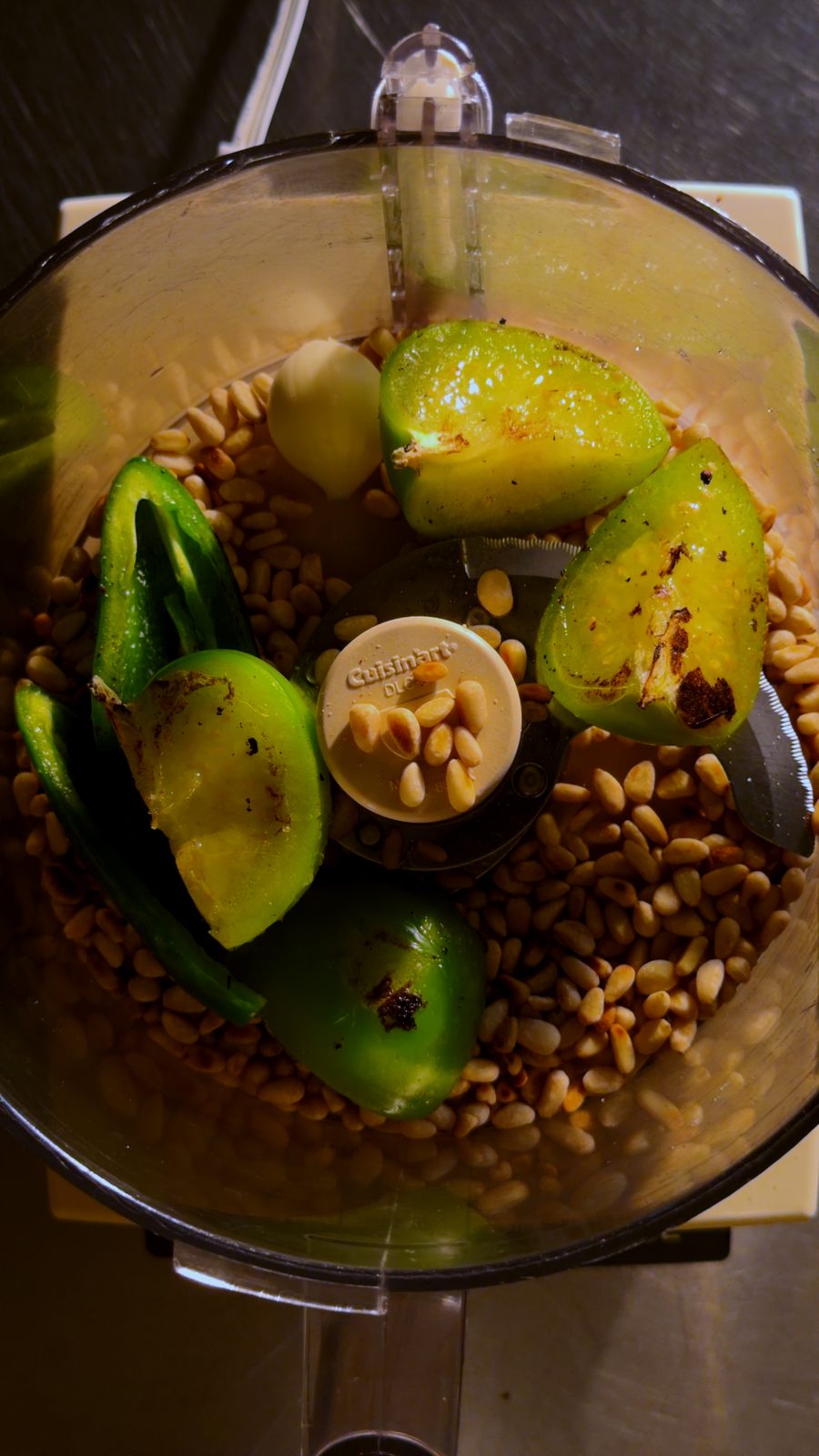
5. Mexican Pepita Pesto (pumpkin seed)
My riff, inspired by pipián verde. Cotija is the cheese, and it's the one seed-based, nut-free option.
Pumpkin seeds instead of nuts, so it's the nut-free one. Toast the pepitas until they puff and pop.
Ingredients
1.5 cups packed basil
½ cup cilantro
½ cup pepitas (raw pumpkin seeds), toasted (reserve some for garnish)
⅓ cup crumbled cotija, plus more to finish
1 garlic clove
1 serrano or jalapeño (seeds out for less heat)
juice of 1 to 2 limes
1 small tomatillo, roasted (optional, for tang)
½ cup neutral oil or light olive oil
pinch of cumin (optional)
salt to taste
Method
Toast the pepitas in a dry pan until they puff and pop, then cool.
Pulse the pepitas, garlic, chili, tomatillo, and salt to a paste.
Add the basil and cilantro, pulse.
Stir in the cotija, lime, cumin, and oil. Season.
Great with: spooned over grilled chicken or fish, drizzled on tacos, or tossed with grilled corn and extra cotija for a quick pesto elote.
Storing it
Keep any of these in the fridge with a thin film of oil poured over the top, which seals out the air that browns it. The cheese-based ones hold for about a week. The raw-tomato Trapanese is best within two to three days. And all five freeze beautifully in an ice cube tray, so you can pop out a cube of summer in the middle of winter.
Five sauces, one formula. Learn the ratio, respect the basil, and you never have to buy a jar again.
Weekly articles
Enjoy the science? There's more every week.
New food science article every week. Sign up free to get notified, or go ad-free with membership.